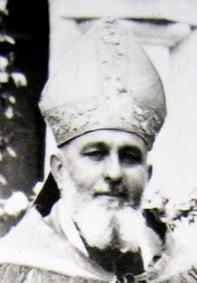
Members of the San Luigi Orders: Bishop Paulo Miraglia Gulotti of the National Episcopal Church of Italy

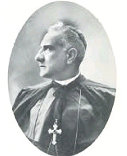
Louis Prota Giurleo Miraglia Gulotti (1857-1916) was the first Primate of the Chiesa Episcopale Nazionale Italiana. He was Prelate-Commander of the Order of the Crown of Thorns for Italy.

He was ordained priest in the Roman Catholic Church in Italy in 1879, taking the name Paulo, and joined the Society of Jesus. On 2 May 1895 he founded the Chiesa Cattolica Italiana Indipendente, and as a result was excommunicated by Rome on 15 April 1896. He founded the journal Le Jerome Savonarole. Prince-Abbot Joseph III consecrated him in Paris as Bishop of Piacenza and head of the Chiesa Episcopale Nazionale Italiana on 6 May 1900. Hearing of this event, Pope Leo XIII excommunicated Prince-Abbot Joseph III and confirmed the earlier excommunication of Gulotti on 13 June.

On 15 September 1900, Gulotti established the Seminario Teologico di Formazione Presbiterale, Milan. Between 1900 and 1904 he was a refugee on Corsica, and there joined an independent Old Catholic mission. In May 1908 he settled in New York where he was Prince-Abbot Joseph III’s suffragan, and with him subscribed to the Declaration of Ecclesiastical Principles issued on 6 January 1910. He ministered extensively to Italian-American communities and established missions in New York, Ohio, New Jersey and West Virginia. In addition, he visited England, and consecrated William Patterson Whitebrook, a barrister, at Headley, Hampshire, on 27 December 1908.

During 1916, Mgr. Gulotti was partially paralyzed and came to live with Prince-Abbot Joseph III at the rectory of Our Lady in Chicago. On June 25 he died of heart disease. His jurisdiction was subsequently incorporated into the North American Old Roman Catholic Church, which has several successor bodies that survive today.

Members of the San Luigi Orders: Bishop Jules-Ernest Houssaye (Abbé Julio) of the Gallican Church

Jules-Ernest Houssaye (1844-1912) was known as the Abbé Julio and was a French Gallican bishop known for his writings on esoteric matters.

He was admitted a member of the Order of the Crown of Thorns by Prince-Abbot Joseph III in 1893 and served as Prelate-Commander and its representative in France (later Switzerland) until his death, maintaining a Secretariat at 21 Croix-des-Petits-Champs, Paris. He was formally invested by Prince-Abbot Joseph III in 1898 at 5, Rue Vernier, Paris. His episcopal arms bear a suspension of the jewel of the Order and a photograph of his office shows his commander’s collar together with the sword of his commandery.

He was ordained priest in the Roman Catholic Church on 16 March 1867 by Casimir Wicart, Bishop of Laval, and in 1870 was vicar of Grand Oisseau. At the outbreak of the Franco-Prussian War he volunteered and became a military chaplain. He was acclaimed as a national hero after on a single day rescuing ten wounded soldiers under enemy fire; that same night he led twenty soldiers who had become lost through the forest. After the war he became vicar of Juvigné, but his health broke down as a result of his war service and he was admitted to a military hospital.

He returned as vicar of St Joseph in Paris, where his social and religious views, although popular with his laity, aroused the ire of Cardinal Richard, his ultramontane ordinary, who caused Houssaye to be deposed in 1885.

From this time, Houssaye turned to writing and teaching, issuing periodicals and promoting a Gallican and democratic viewpoint in church affairs. A chance meeting at that time with noted healer Jean Sempé led to an interest in Divine Healing, and Houssaye subsequently made a long study of this subject as well as gaining a reputation as a practitioner. His wide interests embraced much esoteric philosophy including studies in Gnosticism and Martinism, and he was a particular advocate of the use of pentacles. Nevertheless he maintained a strict orthodoxy of belief and worship. During 1901, he met Prince-Abbot Joseph III, and in 1904 founded the Liberal Catholic Church of France, for which he was consecrated by Paulo Miraglia Gulotti (a bishop consecrated by Prince-Abbot Joseph III) on 4 December 1904. Between 1908 and 1912 he served as Primate of the Eglise Catholique Gallicane. His successor was Mgr. Louis-Marie-François Giraud (1876-1951). His relics are preserved in a small chapel in Haute-Savoie.

His books (some published under the pseudonym Benoît Gogo) include: Gorin et Cie, Société d’exploiteurs, Bruxelles 1886; L’Archevêque de Paris et les dames Carreau, Paris 1887; Passibonqueça, histoire véridique et peu surprenante d’un curé de Paris, manuscrit de l’abbé Le Gallo, Paris 1888; Un forçat du bagne clérical, Paris 1888. He was editor of L’Étincelle religieuse libérale, organe de l’Union des Églises and La Tribune populaire, organe de la démocratie religieuse et de la défence du clergé.

Members of the San Luigi Orders: Bishop Louis-Marie-François Giraud of the Gallican Church

Bishop Louis-Marie-François Giraud (1876-1951) was Primate of the Eglise Catholique Gallicane (the Gallican Church) in succession to Bishop Jules-Ernest Houssaye. He was a Prelate-Commander of the Order of the Crown of Thorns.

Giraud became a choir-brother at the Cistercian monastery of Fontgombault aged sixteen, and received the minor orders. In 1905, the monastery was dispersed and the following year Giraud, having heard of Prince-Abbot Joseph III, placed himself under his jurisdiction and was ordained conditionally up to the priesthood, that last order being conferred on 21 June 1907. He served the parish of the Holy Apostles in Paris from 1907-08 and his popularity led to his election as bishop in the latter year.

He moved to the parish of Ardin, and by 1911, he was serving as vicar to the Abbé Julio (Houssaye) at the chapel of Aïre in Switzerland. Houssaye consecrated him but died the following year. Giraud then returned to France and established himself at La Mine-Saint Amant Roche-Savine (Livradois). In 1913 his work bore fruit when he dedicated a church there to the Holy Trinity. He served in the war of 1914-18 as a military chaplain and was twice mentioned in dispatches for rescuing wounded soldiers under fire. He was Primate of the Eglise Catholique Gallicane and Prelate Commander for France of the Order of the Crown of Thorns from 1912 until his retirement in 1950.

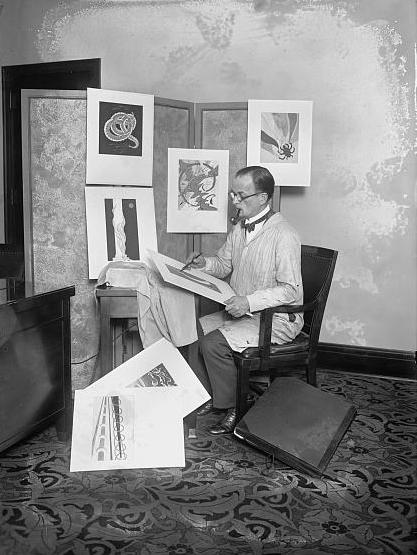
Members of the San Luigi Orders: Bishop-Count Victor de Kubinyi (Mar Paul) of the Apostolic Episcopal Church

Bishop-Count Victor de Kubinyi (1873-1966) was, as Mar Paul, a bishop of the Apostolic Episcopal Church from 1932 onwards, having served in other churches previously with a special ministry to Hungarian immigrants to the United States. He was a member of the Order of the Crown of Thorns and received the distinction of Doctor Christianissimus.

He was a Hungarian nobleman and the godson of the Emperor Franz Josef of Austria. On 18 March 1897 he was ordained priest in the Roman Catholic Church by Bishop Osaszka. In 1905, he moved to the United States. Having left the Roman Catholic Church in 1911, he founded the Hungarian National Church, South Bend, Indiana, in the following year, and was consecrated for that body by Arnold Harris Mathew of the Old Catholic Church of Great Britain on 13 June 1913. On 7 December 1913 he and his church were admitted to the Protestant Episcopal Church by Bishop John Hazen White of Northern Indiana. He became associated with Prince-Abbot Joseph III and, having resigned his ministry in the PEC, was consecrated by him on 9 October 1918, serving as bishop in the American Catholic Church, of which he was appointed an Ordinary on 16 October 1924. In November 1924 he was additionally admitted to the Cathedral Chapter of the African Orthodox Church.

In 1925 he left the American Catholic Church for the North American Old Roman Catholic Church under Carmel Henry Carfora, and because Carfora did not accept Holy Orders from the Vilatte lineage, was consecrated conditionally by him on 13 May 1925. He built up a community known as The Traditional Christian Catholic Church (L’Eglise Chrétienne Catholique Traditionelle). In 1932 he and his community joined the Apostolic Episcopal Church, and he was conditionally consecrated on 27 November 1932 by Mar Antoine Lefberne (1862-1953), bishop and exarch of the Chaldean Catholic Church. In 1935, he returned to Hungary where the remainder of his ministry took place.

His books include The King of Rome, New York 1907; Napoleon I, New York 1911; True Religion, South Bend 1913; Behind the Curtain, South Bend 1913; Through Fog – To Light, South Bend 1914; Hungarian Service Book, South Bend 1915; Franz Josef I, South Bend 1917; Mr Man, New York 1920; As We Are, New York 1929. He was also known as a painter and lecturer on modern art and is depicted in that role in the photograph to the right.

Members of the San Luigi Orders: Patriarch Daniel Alexander of the African Orthodox Church of South Africa

Archbishop Daniel William Alexander (1882-1970) was Archbishop and Primate of the African Province of the African Orthodox Church, one of the churches founded by Prince-Abbot Joseph III, and later the first Patriarch of the African Orthodox Church of South Africa after that church separated from its American parent body.

He was a Prelate-Commander of the Order of the Crown of Thorns and a member of the Order of the Lion and the Black Cross, and can be seen wearing the insignia of both Orders in the photograph. He was also awarded the distinction of Doctor Christianissimus in the San Luigi Orders. A draft in the hand of Prince-Abbot Edmond I of his brevet of Chevalier in the OCT is reproduced below (click for enlargement).

Daniel Alexander was born in South Africa on 23 December 1882, the son of a Black South African mother and a father who had emigrated to South Africa from the West Indies. Although baptized an Anglican, he attended Roman Catholic schools until 1895. Shortly before the outbreak of the Second Boer War in 1899 he married Maria Horsely. He was conscripted into military service and while serving his wife died. Once released from the army, he sought to pursue a vocation in the Church, initially with the Anglicans, and subsequently with the Ethiopian Catholic Church in Zion, before eventually coming to the African Orthodox Church.

The African Orthodox Church had been established by George Alexander McGuire (Patriarch Alexander I, 1866-1934), a former Episcopalian priest and close associate of Marcus Garvey, who was concerned at the discrimination he and his fellow Black clergy suffered within the denomination. He was consecrated for the new African Orthodox Church by Prince-Abbot Joseph III in 1921 and Garvey’s periodical The Negro World carried a report of the event. Alexander in turn read of the AOC’s work in the press and this prompted him to make contact with Archbishop McGuire with the request that he and his African congregation should affiliate with the AOC.

McGuire responded to the request with a thorough investigation of the bona fides of Alexander and his fellow clergy. Eventually in 1927 he invited Alexander to the United States and on 11 September consecrated him to the Episcopate in Boston.

Returning to Kimberley, Alexander established his church, St Augustine of Hippo, as the cathedral for the AOC in South Africa. He travelled throughout the country setting up missions and parishes wherever there was interest. Further afield, he visited Kenya, Uganda and Rhodesia, where he baptized candidates and trained ordinands. He set up a seminary in Kimberley and an annual synod for the province.

Relations with America were maintained on an amicable basis until 1960, when a delegation from the American church including Patriarch James I was invited to South Africa by Alexander. Alexander was now 78 and was concerned for the future of the church after his death. He had agreed with McGuire that only the Patriarch of the church could consecrate a bishop to succeed him, and produced two candidates for consecration from among his priests, Surgeon Motsepe and Ice Walter Mbina.

Unfortunately, the two new bishops took advantage of the presence of the Patriarch to further their own ends, and informed him that Alexander was incompetent and incapable of discharging his duties. The Patriarch believed their account and obliged Alexander to resign in favour of the new bishops, which Alexander refused to do, claiming that such a request was ultra vires. The matter proceeded to court, but before things could get under way, both Patriarch James I and Motsepe died. The new Patriarch, Peter IV, reconciled with Alexander and persuaded him to retire in favour of Mbina. This, however, was a short-lived solution, and in 1963 Alexander, convinced that this was not the relationship he and McGuire had intended for the Province, led his followers into independence as the African Orthodox Church of the Republic of South Africa with himself as patriarch.

In the event, both Mbina and Alexander were to leave branches of the AOC that survived them. On Alexander’s death in 1970, he was succeeded by his godson Daniel Kanyiles (Patriarch James II) (1924-2003). Under Patriarch James II, the church established intercommunion with the Apostolic Episcopal Church, of which the present Prince-Abbot is a bishop, in 1974. It continues to exist today.

Information in this article is taken from “The African Orthodox Church: Its General History” by Archbishop Philippe de Coster (Editions Eucharist and Devotion, 1993-2008)

Members of the San Luigi Orders: St. George Alexander McGuire of the African Orthodox Church

George Alexander McGuire (1866-1934) was the first Patriarch of the African Orthodox Church under the regnal title of Alexander I. Consecrated in 1921 by Prince-Abbot Joseph III at the foundation of the church, he led the denomination to become a thriving example of Orthodox witness that continues today. He is considered an important figure in the development of religious movements among the Black community in the United States during the first half of the twentieth-century.

Patriarch McGuire was a member of the Order of the Crown of Thorns and received the title of Prince of the Crown of Thorns from Prince-Abbot Joseph III. He was invested by him as a Prelate-Commander of the Order in 1923 and in the same year, Prince-Abbot Joseph III bestowed the Grand Prix Humanitaire upon his wife, Ada, who was organist at the AOC Cathedral Church of the Good Shepherd, New York.

At the time of his death in 1934, the African Orthodox church claimed over 30,000 members, fifty clergy and thirty churches located on three continents: North America, South America and Africa. According to Bertil Persson, emeritus Primate of the Apostolic Episcopal Church, McGuire was a layworker in The Moravian Church, St. Croix, West Indies, between 1888 and 1893, and was ordained minister in that church in 1893. He then joined the African Methodist Episcopal Church in the USA. On 22 October 1897 he was ordained priest in the Protestant Episcopal Church by Boyd Vincent (1845-1935), PEC Coadjutor Bishop of Southern Ohio between 1889 and 1904. He was Field Secretary of The American Church Institute for Negroes of the PEC. In 1919 he left the PEC and became a minister in the Reformed Episcopal Church.

In 1918 he joined the Universal Negro Improvement Association. Marcus Garvey, the UNIA’s president, appointed him the first Chaplain-General of the organization, at its inaugural international convention in New York in August 1920. In this position McGuire wrote two important documents of UNIA, Universal Negro Ritual, New York 1921, and Universal Negro Catechism, New York 1921, the latter containing both religious and historical sections, reflecting his interest in religion and race history. Between 1921 and 1931 he was editor of The Negro Churchman. McGuire broke with Garvey in 1924.

McGuire had approached Prince-Abbot Joseph III to request that his church should receive the Apostolic Succession, and was particularly attracted to the Orthodox faith since, unlike the Roman Catholic or Anglican churches, the Orthodox had no history of support for racial segregation or ties to the prevailing establishment in the United States.

Accordingly, in the Church of Our Lady of Good Death, Chicago, Prince-Abbot Joseph III ordained to the minor orders, diaconate and priesthood from 25-27 September McGuire and William Ernest James Robertson (1875-1962) (who would eventually succeed McGuire as Patriarch of the AOC), and then on 28 September, assisted by Bishop Carl Nybladh, consecrated McGuire who was subsequently elected Patriarch of the AOC. In the period following this, McGuire initiated positive contact and discussions with the Ecumenical Patriarch of Constantinople, but while the Patriarch accepted the Holy Orders of the AOC as valid and its belief as Orthodox, he seems to have considered its liturgical basis to have been too Western in nature, and closer links were not to be forthcoming.

McGuire’s church spread in the United States, as well as abroad, and continues today as a highly active denomination. In 1929, the AOC General Synod decreed that 1 July with its Octave should be observed as a Festival of the Church in honour of Prince-Abbot Joseph III “in joyful Thanksgiving for the labour of this Apostle through whom we received our glorious heritage in the Catholic Episcopate. Let all the Clergy and Congregations observe this Festival.”

He was canonized by the African Orthodox Church on 31 July 1983.

Information in this article is taken from “The African Orthodox Church: Its General History” by Archbishop Philippe de Coster (Editions Eucharist and Devotion, 1993-2008) and from Rachel Gallaher’s biography of McGuire at blackpast.org
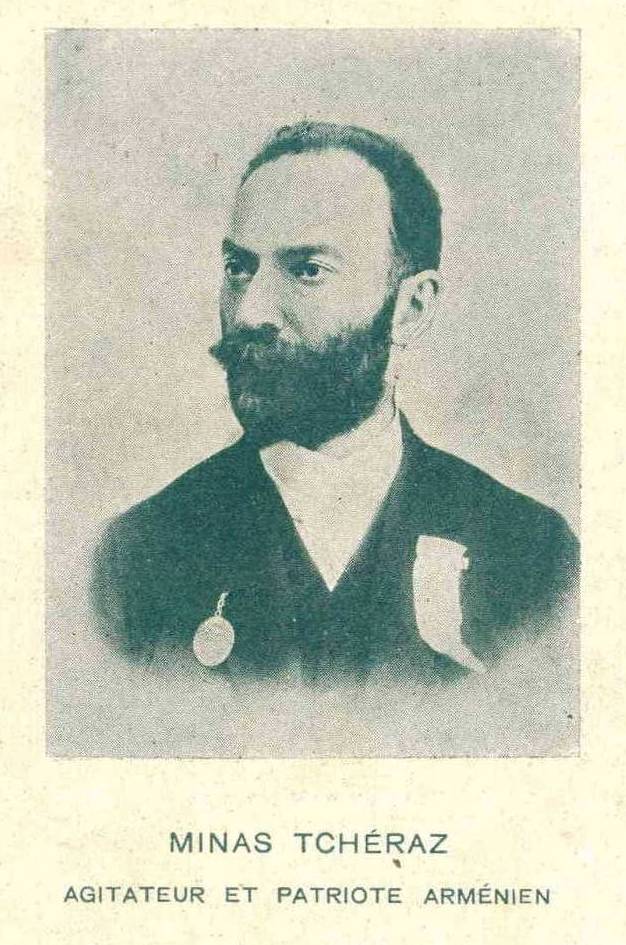
Members of the San Luigi Orders: Professor Minas Tcheraz

Minas Tcheraz (1852-1929) is an important figure at the inception of modern Armenian studies. He was a Patron of the Order of the Crown of Thorns.

Tcheraz was the first Professor of Armenian at King’s College, London, and held this chair for seventeen years in all. Politically active throughout, he was an activist for the Armenian Patriarchate and edited the literary and political bimonthly journal Armenia. He was part of the Armenian delegation at the Berlin Congress of 1878, acting as secretary to the Armenian Patriarch. In 1886 the Kedronakan school of higher education was founded in Constantinople under the auspices of Patriarch Nerses Varzhabedian, and Tcheraz served as its President for its first three years. He attended the World’s Parliament for Religions at Chicago as a delegate for the Armenian Church in 1892.

He became a member of the Anglo-Armenian Association in 1893 and was also elected to the Royal Asiatic Society in the same year. Through his lectures and writings he was instrumental in drawing British attention to the persecution of Armenians by Turkey, a situation that was worsening with the Hamidian Massacres of 1894-96 and that would culminate in the Armenian Genocide immediately following World War I.

Tcheraz’s proposal for the resolution of the Armenian situation was that the British should extend colonial protection to the country and that they should settle and invest there to build up its industrial and commercial base. The might of British imperial power would thus act as an effective deterrent to Turkey.

Tcheraz was also a published poet and wrote several books on Armenian culture and history.

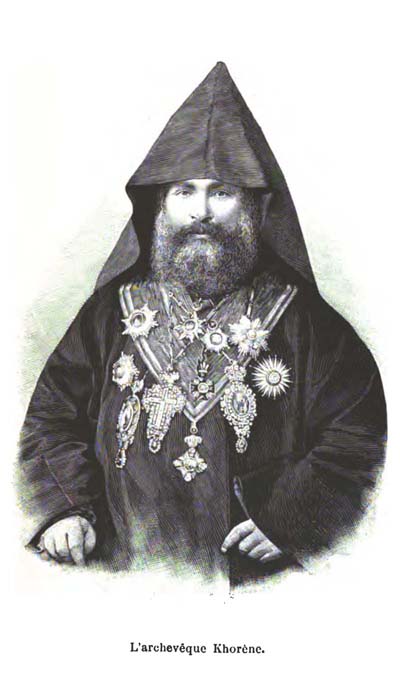
Members of the San Luigi Orders: Archbishop Khorene Nar Bey de Lusignan of Constantinople

Archbishop Khorene Nar Bey de Lusignan (1838-92) was the Armenian Archbishop of Constantinople. In the last year of his life he became a Patron of the Order of the Crown of Thorns.

His older brother Prince Guy de Lusignan (Ambroise Calfa) was also a Patron of the Order of the Crown of Thorns.

He was born in Constantinople into an originally Jewish family that had converted to Catholicism as Djivan (John) -Khoren or Chorene Calfa, and claimed descent from the historic Lusignan dynasty that had once ruled Jerusalem, Cyprus and Lesser Armenia. He underwent primary education in his birthplace and higher education at the Mekhitarist institution at Venice. He embraced the Armenian Apostolic Church, and was consecrated bishop in 1867 at Ejmiatsin by Khrimian Hayrik (Mkrtich Krimian), Archbishop of Constantinople and later Armenian Catholicos. Appointed Archbishop of Béchiktache in 1873, he represented the Armenian Patriarchate of Constantinople and defended the interests of his people during the negotiations leading to the signing of the Treaty of San Stefano (1878) . At the Berlin Conference he accompanied Khrimian Hayrik and performed valuable service for him as a translator. He also undertook a diplomatic mission from the church to St Petersburg.

He was offered the patriarchate at Polis which he declined, and instead devoted himself to literature and linguistics, also becoming a published poet. His writings are strongly revolutionary and nationalistic; indeed so much so, as attested by the biography by Alice Stone Blackwell, that his demise is suspected to be as a result of poisoning by the Ottoman powers.

The Armenian Church enjoyed good relations with Prince-Abbot Joseph III for some years. In 1923 the Primate of the American Catholic Church, Frederick E.J. Lloyd (who had been consecrated by and worked closely with Prince-Abbot Joseph III), met with the Armenian Patriarch in Jerusalem, and the Armenian Church in Los Angeles was made available for services for Lloyd’s clergy. In London, the Armenian Church of St Sarkis was used by Lloyd’s archbishop in London, Churchill Sibley. Meanwhile in France, the Armenian archimandrite (later bishop) Uramchabank Kibarian d’Artchongetz (also a Patron of the Order of the Crown of Thorns) worked closely with the Gallican Church bishops of the Vilatte succession. The photo on the right shows Gallican bishop and OCT Prelate-Commander Pierre-Gaston Vigué with Archimandrite Kibarian at the Coronation of the Virgin (photograph: Eglise Gallicane).

This close co-operation with the Armenians was ended by the malicious intervention of the Anglicans in the 1930s, who had been incensed by the involvement of members of their clergy in the London services.