
H.E. Dr. Norbert Wójtowicz, Grand Prior of Continental Europe for the San Luigi Orders, is to be among the speakers at the forthcoming conference of the “Polskie Stowarzyszenie Badań nad Zachodnim Ezoteryzmem” – the Polish Society for the Study of Western Esotericism – in Kraków on 30-31 May. The aim of the organization is to conduct academic research on Esoteric Traditions and to bring together scholars interested in the field. Dr. Wójtowicz will speak on “William Blake and his mysterious world”.
Category: News
William Leo Timlin and his false claims
On a number of occasions on social media, William Leo Timlin of Coon Rapids, Minnesota, USA, has falsely claimed to be a member of the San Luigi Orders, using images of our insignia taken from this website. Screenshots are provided below.


Timlin is not and has never been a member of the San Luigi Orders, and his claims are a baseless and fraudulent imposture. Timlin has a long history of assuming titles for himself without the slightest legitimate authority. He has previously declared himself to be King of Redonda, a “canonical” and “orthodox” bishop, and indeed Pope Adrian VII and Patriarch of the West. When Timlin was challenged as to his false representations regarding the Order of the Crown of Thorns he responded with a campaign of lies, malice and hatred against us on social media which has revealed his true nature very clearly. We have naturally refrained from responding in kind to his insults.
A police report from the Coon Rapids Police Department in our possession, dated April 2014, records a number of relevant matters. The complainant in the report is recorded as having found after research that Timlin was “not a validly ordained bishop, and Timlin had a history of fraudulent behavior with other bishops, priests, etc. [Reporting party] said he found numerous complaints of similar incidents involving Timlin from other churches in the nation.”
We find the following findings in the police report particularly troubling,
“[The investigating officer] attempted to call Timlin in an attempt to set up an interview. [Officer] spoke with an unidentified male who said Timlin was sleeping, and usually woke up at around 11am…in his taped statement, Timlin was extremely deceptive, and changed his story multiple times…Timlin denied that he was a bishop.”
This conduct is amply sufficient to cause us to warn the faithful against this man and his pretensions. We declare that, after his own exact words, how very truly he is indeed not a bishop, and further that his person should be anathema to all who seek to follow Christ.
Prince-Abbot honoured by four State Governors
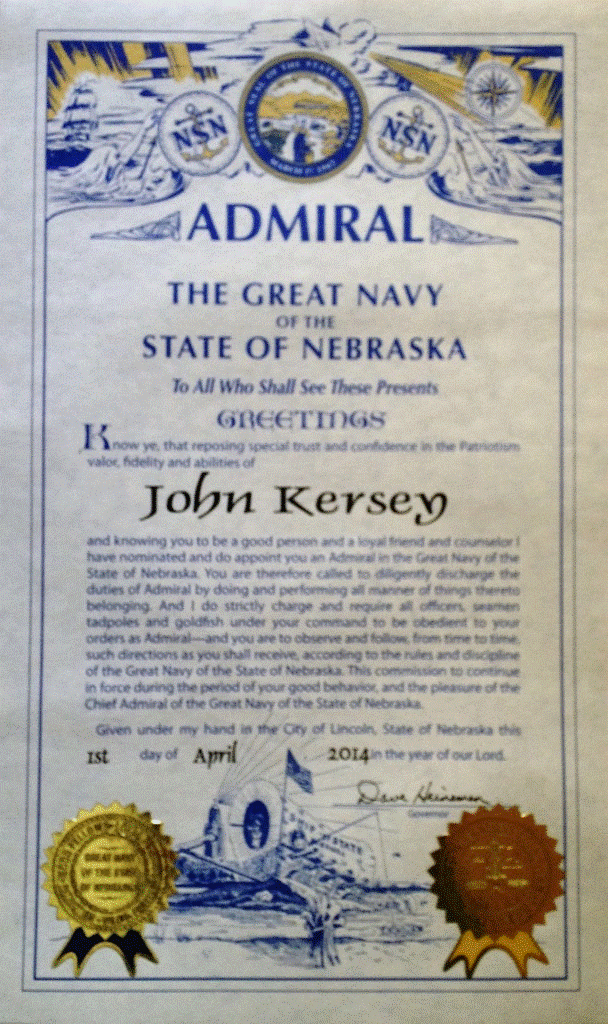
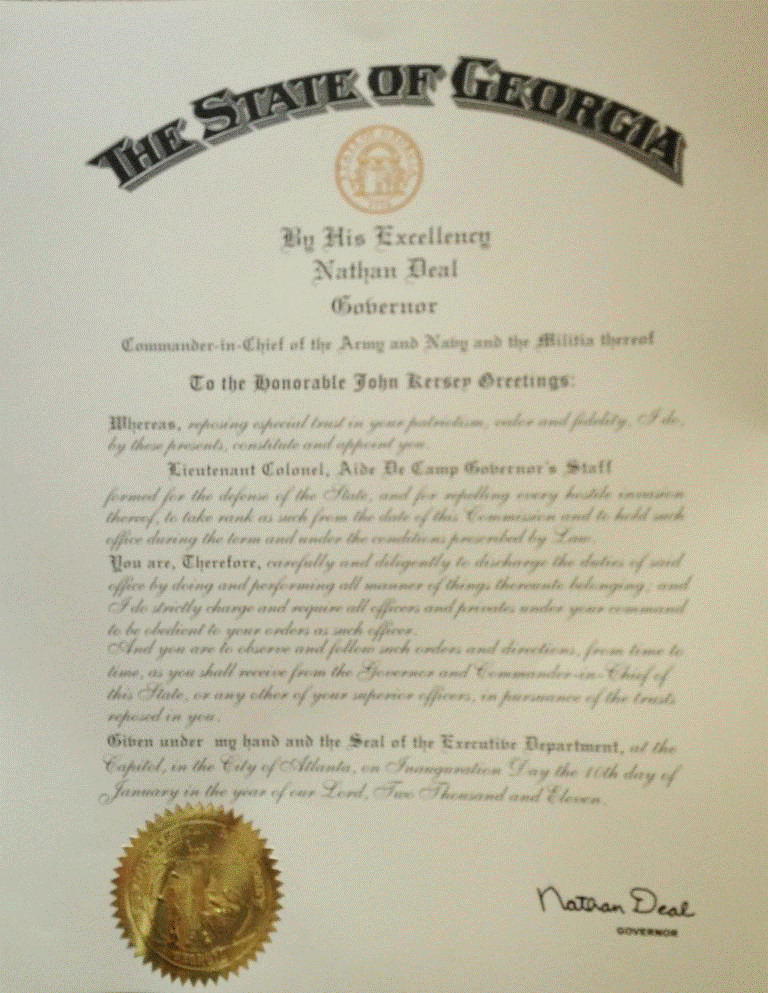
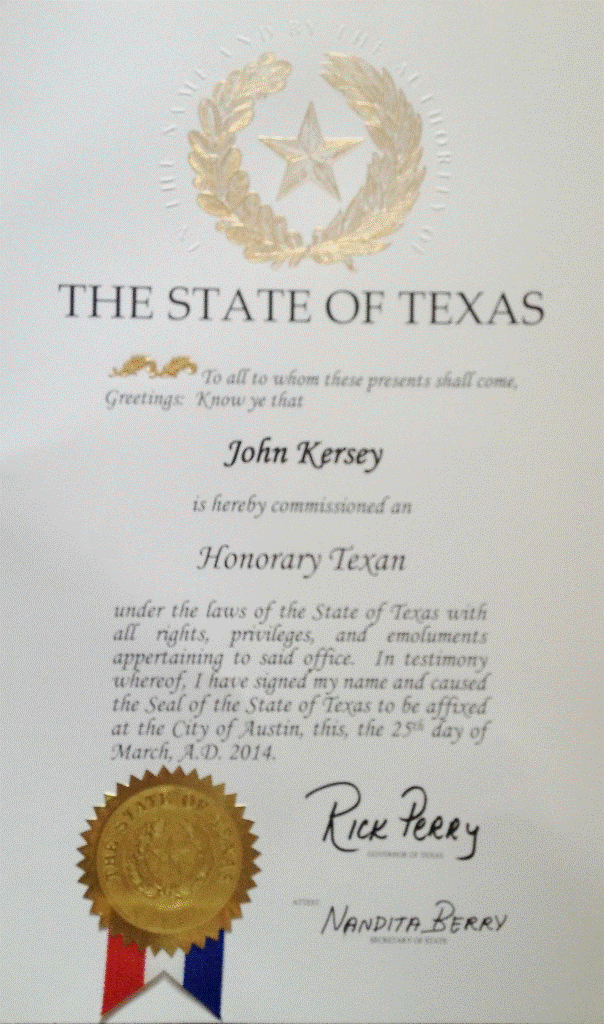
The United States of America does not recognize titles of nobility, but that does not mean that it has not developed a system of honours of its own. To receive a titular military commission from those states that maintain such a system is an honour that can be traced back to the antebellum era, when the landed gentry received such awards for financing the militia without being expected to take actual command. In some cases there is a tongue-in-cheek element to the award – Nebraska appoints Admirals of its Great Navy, but the state is landlocked, and the Admiral commission makes reference not only to command over officers and seamen, but also tadpoles and goldfish.
Over the years, the Prince-Abbot has received honours from four State Governors of the United States. He is a Kentucky Colonel (Kentucky’s highest honour), a Nebraska Admiral (Nebraska’s highest honour), a Lieutenant Colonel, Aide de Camp Governor’s Staff by commission of the Governor of Georgia, and an Honorary Texan by commission of Governor Rick Perry. These awards emphasise the warm relationship that exists between the Prince-Abbot and the United States as well as continuing over a century of history of the Abbey-Principality there.

800th anniversary of the birth of St Louis
 St Louis was born at Poissy, France, on 25 April 1214, some eight hundred years ago. He was the sixth child of King Louis VIII of France and his Queen, Blanche of Castile.
Crowned king of France at the age of twelve in the Cathedral at Rheims, his father having died three weeks previously, his coronation was accompanied by specially-composed music, “Gaude, Felix Francia” – Rejoice, fortunate France! France would indeed come to rejoice under him.
The traditional History of the Order of the Crown of Thorns informs us that this Order was founded by authority of St Louis in 1239. A later French King, Philippe IV le Bel, (who reigned from 1285 to 1314), the grandson of St Louis, laid the first foundations of the Order in direct opposition to the Order of Templars, which he dissolved in 1308, appropriating all its wealth; all the spiritual and chivalric ideology of the Templars survived in the new Order, of which King Philippe IV became the first Grand Master. In the modern era, the Order was re-founded by the first Prince-Abbot of San Luigi in 1883, and independently by the Syrian Orthodox Patriarch of Antioch in 1891, these two branches being formally united in 1899.
Easter Blessings
 The Abbey-Principality wishes you every blessing this Eastertide.
Jesus saith to her: Mary. She turning, saith to him: Rabboni (which is to say, Master). Jesus saith to her: Do not touch me: for I am not yet ascended to my Father. But go to my brethren and say to them: I ascend to my Father and to your Father, to my God and to your God. [John 20:16-17]
Death of Archbishop Hector Roa y Gonzalez

Archbishop Hector Roa y Gonzalez with Archbishop Peter Paul Brennan of the OCR and the San Luigi Orders at St Lucy’s Cathedral, New York.
Yesterday, the funeral Solemn Mass for Archbishop Hector Alejandro Roa y Gonzalez, OCR, was held at St Lucy’s Old Roman Catholic Cathedral, New York. The principal celebrant was Archbishop Louis Elias Milazzo, OCR, Primate of the Old Roman Catholic Church, with concelebrants Archbishop Francis C. Spataro, OCR, OA, GCCT, Presiding Bishop of the Apostolic Episcopal Church and Bailli and Official Representative for the State of New York of the Abbey-Principality of San Luigi, and Archbishop Peter Paul Brennan, OCR, OA, GCCT, Universal Primate of the Order of Corporate Reunion and Grand Prior of the San Luigi Orders for the United States. Bishop John Theodore Mascoll OCR, OA, of the African Orthodox Church on Long Island and the Order of Antioch, was also present. The Mass was well attended, and following the Parastas the women of the Rosary Society stood watch with the body of Archbishop Roa and recited the Holy Rosary.
Archbishop Roa was born on 2 February 1935 in Puerto Rico. As a young man, he was a recruiter for the United States Navy. Inspired by the Polish National Catholic Church, he saw the potential for a similar Spanish-speaking body in Puerto Rico. On 8 December 1958 he founded the Puerto Rican National Catholic Church, professing the Old Catholic faith according to the 1889 Declaration of Utrecht, and built up an enthusiastic lay following. He entered into negotiations with the P.N.C.C. to seek affiliation in 1959, but these broke down in 1960 when the P.N.C.C. withdrew rather than risk compromise to the ministry of the Protestant Episcopal Church in Puerto Rico.
After this, Roa began negotiations with the Patriarchal Exarchate of the Russian Orthodox Church to see if they would receive his community. These discussions were fruitful and in late 1961 union was achieved, under which the Puerto Rican church was permitted to use a revised version of the Tridentine Rite. In 1962 it was incorporated as La Santa Iglesia Catolica Apostolica Orthodoxa de Puerto Rico, Inc. After due preparation, Roa was ordained to the priesthood on 26 November 1964 by Exarch Ioann (John) Wendland of the Russian Orthodox Church at New York City.
As is often the case with such situations, an expectation developed among the hierarchy that after a short period of adjustment, Roa’s mission should be absorbed fully into the mother church. The Russian Orthodox ritual was soon translated into Spanish and Roa’s parishes were required to use it instead of the Tridentine Rite, and other changes of a similar nature followed. Roa led the protests against “Russification” but when Exarch Wendland was replaced, he lost his leading supporter in the hierarchy. By 1968, Roa felt that his church had lost its Hispanic identity and heritage. If he wished to preserve it, there was no option, as he saw it, but to separate from the Russian Orthodox Church, and consequently Roa, together with a substantial minority of the clergy and layfolk, re-established the Western Rite Vicariate as an independent body. During this period, having lost the church’s property to the Russian Orthodox Church, they were compelled to extend their missionary efforts to other Spanish-speaking areas beyond Puerto Rico, and concentrated on the Dominican Republic, the United States, and Brazil.
In the 1970s, Roa came into contact with Archbishop Luis Silva y Vieria of the Brazilian Catholic Apostolic Church, who had been a close associate of Archbishop Salomao Ferraz. Ferraz had been consecrated within the Brazilian Catholic Apostolic Church but had then reconciled with Rome and was an auxiliary bishop in the Diocese of Sao Paulo as well as participating in some of the sessions of Vatican II.
Roa united his mission with that of Silva and on 7 July 1977 was consecrated bishop by him, although he was permitted only to undertake a restricted range of episcopal duties. In 1979, the Silva and Roa missions adopted the overall name United Old Catholic Episcopate with Roa designating his jurisdiction as the United Hispanic Old Catholic Episcopate in the Americas. Unfortunately, the use of the term “Old Catholic” led to great confusion, as the U.O.C.E. accepted the First Vatican Council and was thus not Old Catholic in the correct sense of the term. This situation swiftly led to a further change of name to the Confraternity of Christian Doctrine – Saint Pius X.
The church also formally accepted Vatican II but generally maintained pre-Vatican II doctrine and practice. It used the Tridentine Rite, of which Roa said that it was “more elaborate, reasonable and well received by the Spanish people, than the Roman, or Anglican, liturgies” but also permitted the use of the Mass of Paul VI. It allowed men to marry before they received the priesthood, but encouraged celibacy for all clergy and required of its bishops that they should be celibate. Many of its priests served in the Roman Catholic Church before Vatican II.
In 1987, Silva resigned from the Confraternity, renounced his episcopate, went to Portugal, and reconciled with the Roman Catholic Church as a layman. This act caused doubts to be raised as to the validity of the episcopal orders that Roa had received from him, and consequently on 2 October 1988, at the Church of Our Lady of Aparecida, Sao Paulo, Brazil, Roa was consecrated subconditionally by Archbishop Manoel Ceia Laranjeira of the Confraternity of Christian Doctrine – Saint Pius X, assisted by bishops Osvaldo de Abreu Mello and Luis Ferreira de Lima. He also became a clergy member of the Order of Corporate Reunion.
In the wake of these changes, Roa’s church adopted the designation United Hispanic – Brasilian Traditional Catholic Episcopate in the Americas. In addition, Roa continued to serve the Confraternity of Christian Doctrine – Saint Pius X, as its Apostolic Administrator. These churches continued to undertake missionary work among both English and Spanish speakers. The headquarters is located in the Lower East Side of Manhattan and the number of adherents in the Caribbean, Central America and North America, was cited in 1983 as 21,000 souls. In 1992, according to the Encyclopedia of American Religions, the Confraternity reported 32,432 members in the Western hemisphere. In the United States it was served by Archbishop Roa and 14 priests. There were 27 priests and members of religious orders serving overseas in Argentina, Brazil, Chile, Colombia, Costa Rica, Puerto Rico, and Spain.
Relic of the Crown of Thorns
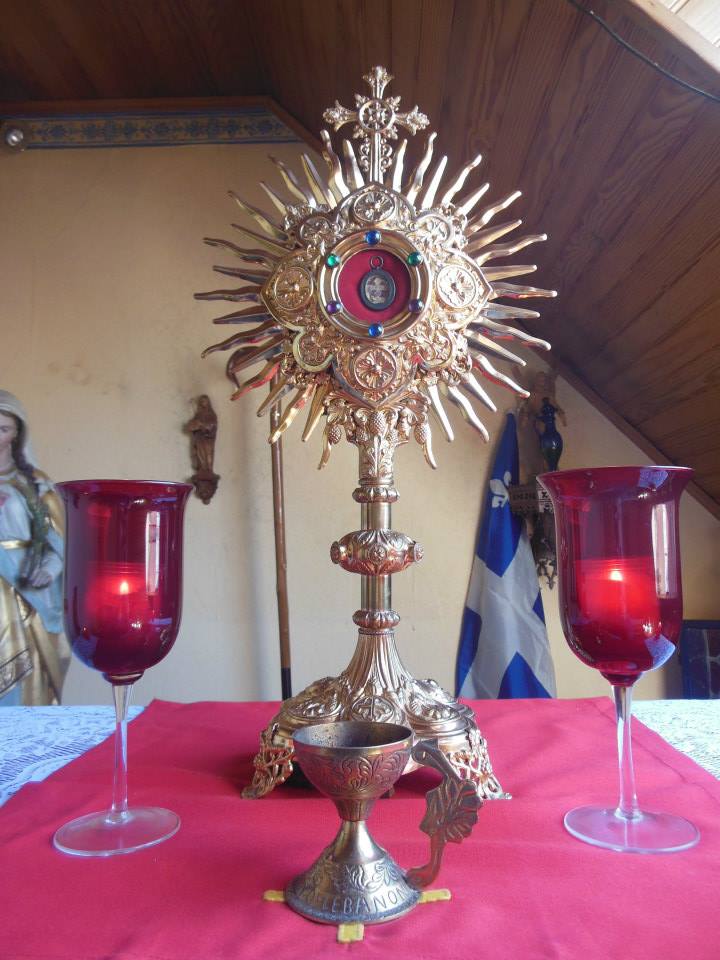
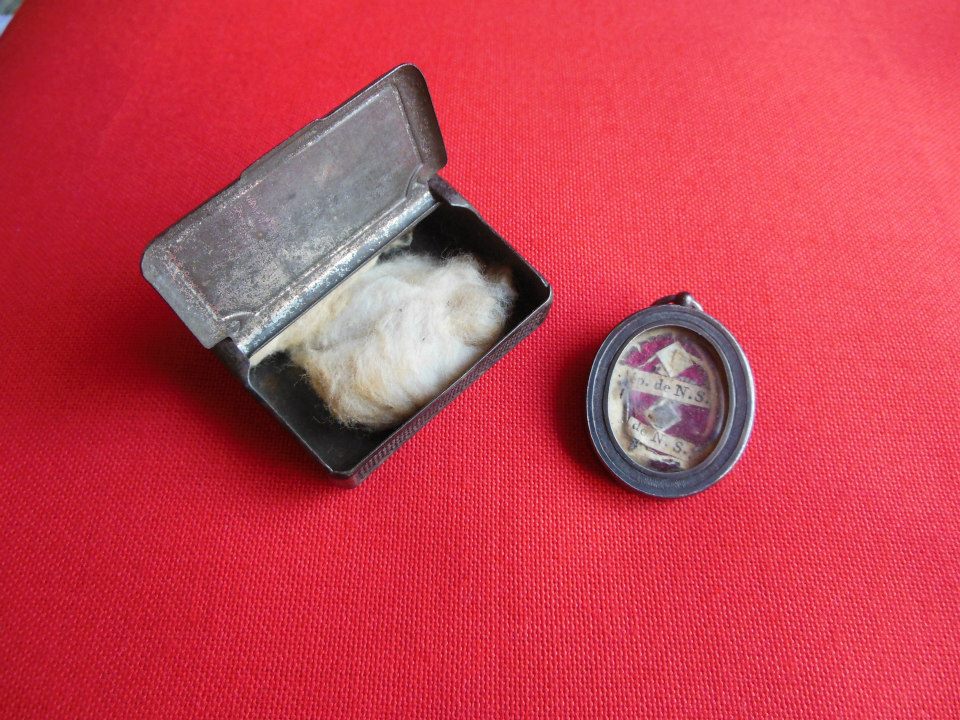
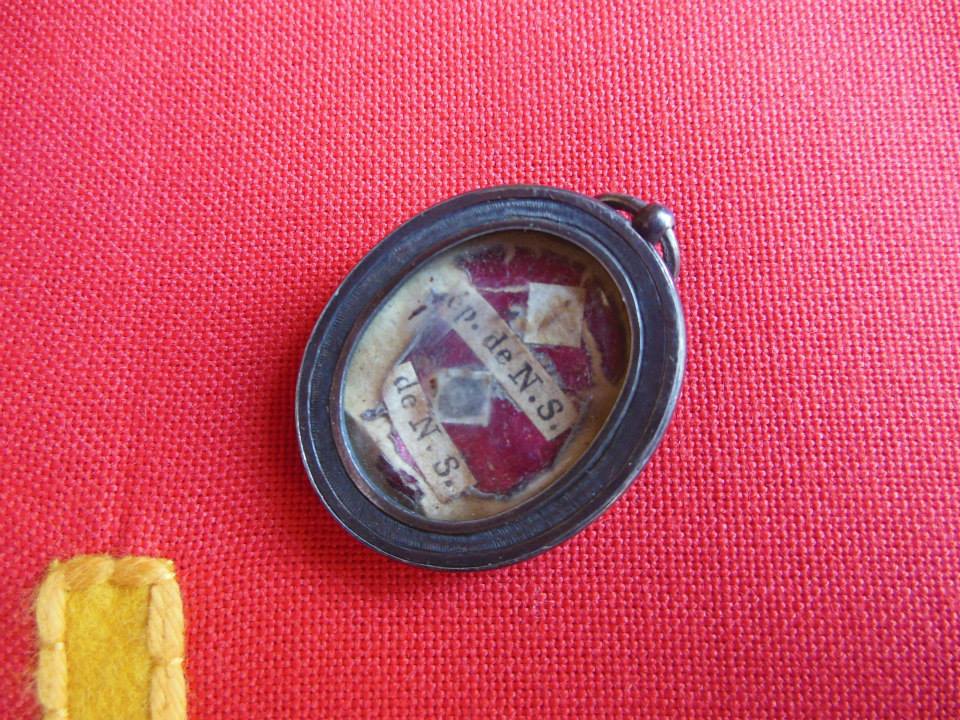
The community of Mgr. Raphaël-Magnoald Steck, OA, KOCT, bishop of the Order of Antioch and Bishop Moderator of the Union Apostolique Gallicane, has received the gift of a relic of the Crown of Thorns from a community in Hauts de Seine.
The holy relic will be solemnly venerated on Good Friday, on each 24 March to commemorate the anniversary of the miracle of the Crown of Thorns at Port Royal, and on the Sunday preceding 25 August to mark the reception of the Crown of Thorns by Saint Louis. The relic will also preside at synods of the Union Apostolique Gallicane.
We give thanks to God for this blessing. Holy Thorn which let the blood of our Saviour, save us.



The Abbey-Principality establishes relations with the Ordine Militare e Religioso dei Cavalieri di Cristo
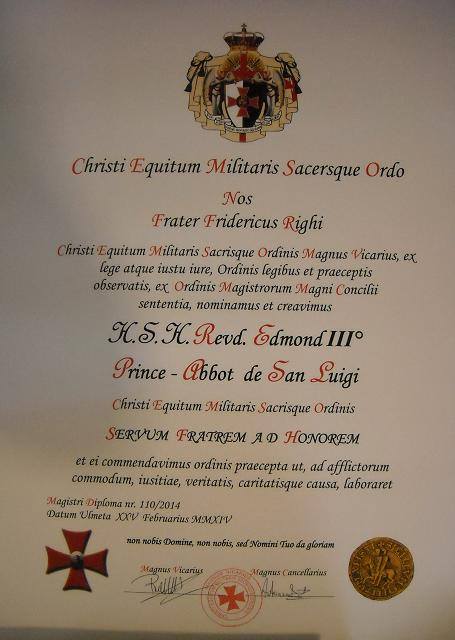
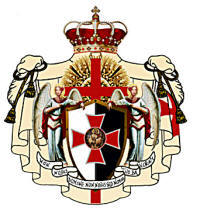 The Abbey-Principality of San Luigi has established fraternal relations with the Ordine Militare e Religioso dei Cavalieri di Cristo (Religious and Military Order of the Knights of Christ, abbreviated as OMRCC) in Italy. The OMRCC is a modern Order inspired by the historic Templar tradition, and is organized as a Public Association of the Faithful of the Roman Catholic Church. It is an active charitable body with numerous humanitarian projects worldwide and welcomes donations from those wishing to support its work.
The Grand Vicar International of the OMRCC, H.E. Frà Federico Righi, has been admitted as a Knight Officer of the Order of the Crown of Thorns by San Luigi Grand Prior for Continental Europe H.E. Dr. Norbert Wójtowicz.
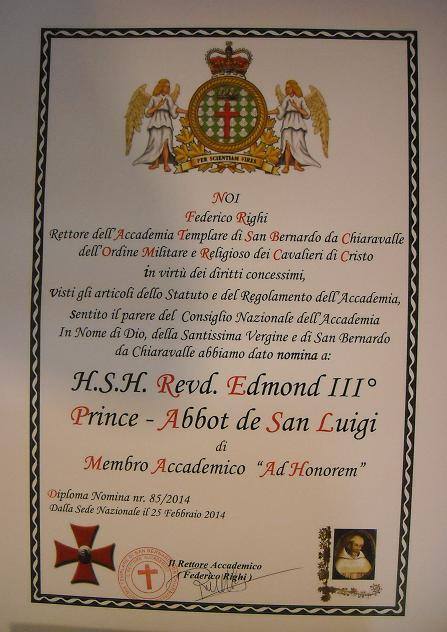
The Prince-Abbot and the Grand Prior for Continental Europe have accepted Honorary Brotherhood in the OMRCC and Academic Membership “ad honorem” in the associated Accademia Templare di San Bernardo da Chiaravalle, which has been established for the purpose of historical research into the Templar tradition and St. Bernard of Clairvaux.
The connexion of the Abbey-Principality of San Luigi with modern Templars today reflects the legendary foundation of the Order of the Crown of Thorns as a continuation of the Templar legacy, as well as the ecclesiastical succession of the Prince-Abbot from Bernard Fabré-Palaprat, founder of the Ordre du Temple in 1804, which is commemorated in the Ecclesia Apostolica Divinorum Mysteriorum within the Abbey-Principality.
 The Abbey-Principality of San Luigi
You must be logged in to post a comment.