Minas Tcheraz (1852-1929) is an important figure at the inception of modern Armenian studies. He was a Patron of the Order of the Crown of Thorns.
Tcheraz was the first Professor of Armenian at King’s College, London, and held this chair for seventeen years in all. Politically active throughout, he was an activist for the Armenian Patriarchate and edited the literary and political bimonthly journal Armenia. He was part of the Armenian delegation at the Berlin Congress of 1878, acting as secretary to the Armenian Patriarch. In 1886 the Kedronakan school of higher education was founded in Constantinople under the auspices of Patriarch Nerses Varzhabedian, and Tcheraz served as its President for its first three years. He attended the World’s Parliament for Religions at Chicago as a delegate for the Armenian Church in 1892.
He became a member of the Anglo-Armenian Association in 1893 and was also elected to the Royal Asiatic Society in the same year. Through his lectures and writings he was instrumental in drawing British attention to the persecution of Armenians by Turkey, a situation that was worsening with the Hamidian Massacres of 1894-96 and that would culminate in the Armenian Genocide immediately following World War I.
Tcheraz’s proposal for the resolution of the Armenian situation was that the British should extend colonial protection to the country and that they should settle and invest there to build up its industrial and commercial base. The might of British imperial power would thus act as an effective deterrent to Turkey.
Tcheraz was also a published poet and wrote several books on Armenian culture and history.
Archbishop Khorene Nar Bey de Lusignan (1838-92) was the Armenian Archbishop of Constantinople. In the last year of his life he became a Patron of the Order of the Crown of Thorns.
His older brother Prince Guy de Lusignan (Ambroise Calfa) was also a Patron of the Order of the Crown of Thorns.
He was born in Constantinople into an originally Jewish family that had converted to Catholicism as Djivan (John) -Khoren or Chorene Calfa, and claimed descent from the historic Lusignan dynasty that had once ruled Jerusalem, Cyprus and Lesser Armenia. He underwent primary education in his birthplace and higher education at the Mekhitarist institution at Venice. He embraced the Armenian Apostolic Church, and was consecrated bishop in 1867 at Ejmiatsin by Khrimian Hayrik (Mkrtich Krimian), Archbishop of Constantinople and later Armenian Catholicos. Appointed Archbishop of Béchiktache in 1873, he represented the Armenian Patriarchate of Constantinople and defended the interests of his people during the negotiations leading to the signing of the Treaty of San Stefano (1878) . At the Berlin Conference he accompanied Khrimian Hayrik and performed valuable service for him as a translator. He also undertook a diplomatic mission from the church to St Petersburg.
He was offered the patriarchate at Polis which he declined, and instead devoted himself to literature and linguistics, also becoming a published poet. His writings are strongly revolutionary and nationalistic; indeed so much so, as attested by the biography by Alice Stone Blackwell, that his demise is suspected to be as a result of poisoning by the Ottoman powers.
The Armenian Church enjoyed good relations with Prince-Abbot Joseph III for some years. In 1923 the Primate of the American Catholic Church, Frederick E.J. Lloyd (who had been consecrated by and worked closely with Prince-Abbot Joseph III), met with the Armenian Patriarch in Jerusalem, and the Armenian Church in Los Angeles was made available for services for Lloyd’s clergy. In London, the Armenian Church of St Sarkis was used by Lloyd’s archbishop in London, Churchill Sibley. Meanwhile in France, the Armenian archimandrite (later bishop) Uramchabank Kibarian d’Artchongetz (also a Patron of the Order of the Crown of Thorns) worked closely with the Gallican Church bishops of the Vilatte succession. The photo on the right shows Gallican bishop and OCT Prelate-Commander Pierre-Gaston Vigué with Archimandrite Kibarian at the Coronation of the Virgin (photograph: Eglise Gallicane).
This close co-operation with the Armenians was ended by the malicious intervention of the Anglicans in the 1930s, who had been incensed by the involvement of members of their clergy in the London services.
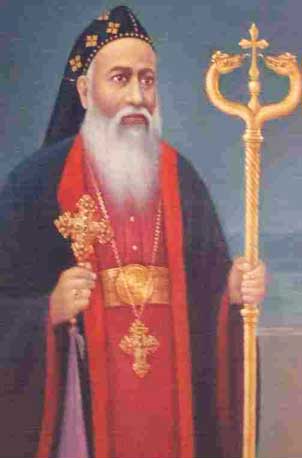
Antonio Francisco Xavier Alvares (Alvares Mar Julius, Julius Mar Alvarez) (April 29, 1836-September 23, 1923) was initially a priest in Roman Catholic Church in Goa. He voluntarily joined the Malankara Orthodox Syrian Church and in 1889 was elevated to Metropolitan of Goa, Ceylon and Greater India in the Malankara Orthodox Syrian Church.
Mar Julius I was a Patron of the Order of the Crown of Thorns and received that Order from Prince-Abbot Joseph III in a ceremony in Columbo on 30 May 1892.
Early life
Alvares was born to a Goan Catholic family in Verna, Goa, India.
Career as a priest
Alvares was appointed by the Archbishop of Goa to minister to Catholics in territories of British India. The Portuguese Crown claimed these territories by virtue of old privileges of Padroado (the Papal privilege of Royal Patronage granted by the Popes beginning in the 14th century). The more modern Popes and the Congregation of Propaganda Fide separated these areas and re-organized them as Vicariates Apostolic ruled by non-Portuguese bishops, since the English rulers wished to have non-Portuguese bishops.
Successive Portuguese governments fought against this, terming this as unjustified aggression by later Popes against the irrevocable grant of Royal Patronage to the Portuguese Crown, an agitation that spread to the Goan patriots, subjects of the Portuguese Crown.
When, under Pope Pius IX and Pope Leo XIII, the hierarchy in British India was formally re-organized independently of Portugal but with Portuguese consent, a group of pro-Padroado Goan Catholics in Bombay united under the leadership of the scholar Dr. Lisboa e Pinto and Fr. Alvares as the Society for the Defense of the Royal Patronage and agitated with the Holy See, the government of British India and the Portuguese government against these changes.
Uniting with the Orthodox Church
Their agitation failed to reverse the changes. Angry with the Portuguese government, the group broke away from the Catholic Church and became Orthodox under the Malankara Orthodox Syrian Church. After joining the Orthodox Church Mar Alvares was excommunicated by the Roman Catholic Church. He was persecuted by the Catholic Church and the Portuguese Government. Though he was advised by some of his old friends to reunite with the Catholic Church, especially when he was very sick, he refused and stuck to his Orthodox faith.
Alvares was consecrated as Mar Julius I, with the permission of the Syrian Orthodox Patriarch of Antioch Ignatius Peter IV, by Mar Joseph Dionysus (Pulikkottil) (principal consecrator), Geevarghese Mar Gregorios of Parumala, Mar Paulose Evanios of Kandanadu and Mar Athanasios (Kadavil) at Kottayam Old Seminary on 29 July 1889. He was elevated to the position of Metropolitan (Archbishop) with jurisdiction over Goa, India (excluding Malabar) and Ceylon.
Missionary
Since Alvares Mar Julius was not allowed by the rulers to work freely in Goa, he was mostly based in the Canara region of Karnataka with the main base at Brahmawar. He along with Fr. Noronha worked among the people along the west coast of India from Mangalore to Bombay. About 5,000 families joined the Orthodox Church. He ordained Rev. Fr. Joseph Kanianthra, Rev. Fr. Lukose of Kannamcote and Deacon David Kunnamkulam at Brahmawar on 15 October 1911. The Brahmawar mission remains active as of 2010. He was in Ceylon for more than five years.
Consecrator of Prince-Abbot Joseph III
When Prince-Abbot Joseph III was searching for a bishop with orders recognized by the Catholic Church, in order to solicit consecration for his community in the United States, he was guided by Fr. Bernard Harding OSB, who had stayed at the Seminary of St Bernard in Ceylon, to Mar Julius I, who, jointly with Paulose Mar Athanasius, and with the permission of the Syrian Orthodox Patriarch Ignatius Peter IV, consecrated him in 1892 in Colombo.
As Mar Julius I, Alvares lived at Colombo, where his main seat was established, and Brahmavar-Calianpur (Kalyanpur), a village near the town of Udipi in the Canara Coast, and finally in the town of Ribandar in Goa, where he died of dysentery and was buried.
Dr. Lisboa e Pinto, acting in his capacity as the U.S. Consul, officially witnessed Mar Julius I’s and Prince-Abbot Joseph III’s consecrations. He was also a Patron of the Order of the Crown of Thorns.
Journalist and writer
He started a number of periodicals including A Cruz (The Cross), Verdade (The Truth), O Progress De Goa, O Brado Indiano, and Times Of Goa. As he was a critic of the Government, most of these were banned and forced to stop publications after a few years.The Universal Supremacy of the Church of Christ, and Antioch and Rome were two of his books.
Educationalist
In 1877, Mar Julius I founded a secondary school, the “Colégio dos Sagrados Corações de Jesus e Maria” with an academic staff including six priests. This closed after a short time due to an outbreak of cholera. In 1912 Mar Julius I opened an English School in Panaji.
“Apostle of Charity”
At that time Goa was frequently affected by epidemics of malaria, typhoid, smallpox, cholera and plague. Alvares published a booklet Direcoes Para O Treatment Do Cholera (Directions for Treatment for Cholera) and was noted for his efforts to treat the sick in the 1878 outbreak of cholera in Goa. He also published a booklet Mandioca about the cultivation of tapioca.
Though the Portuguese Government dubbed him a traitor and subjected him to harsh persecution including the confiscation of his episcopal robes and insignia, later on he came to be considered by them and by all the Goans as an ‘Apostle of Charity’. In 1871, he started a Charitable Association in Panaji to render help to the poor, beginning with wandering beggars. After few years he extended the Association to other cities in Goa. During the last ten years of his life he concentrated his activities in Panaji. His home for the poor had lepers, T.B patients, scavengers, beggars and all other destitutes as inmates. Since he had no income himself he was forced to beg with a bowl in his one hand and a staff in the other hand for support. A story is told of him that one day, Mar Julius I solicited a shopkeeper for a contribution. Instead of giving any money, the arrogant fellow spat in the bowl. Without getting angry His Grace told to him “All right, I shall keep this for me. Now, give something for the poor”. By seeing the dedication and determination of the Metropolitan the shopkeeper was inspired to contribute generously.
Last days and funeral
His last days were in Ribandar Hospital, a charitable institution, ill with dysentery. It was his wish to be buried by Orthodox clergy, and he was specific not to permit any Catholic priest to undertake this duty. He died on 23 September 1923.His body was kept in state in the Municipal Hall for 24 hours to enable the people to pay homage. Though Mar Julius I was considered an enemy by the government, the Governor-General sent his representative to pay tribute to him. Thousands of people especially poor and beggars paid their last respects. The funeral procession wound through all the main roads of Panaji and the body was laid to rest in the secluded corner of St. Inez Panaji cemetery on 24 September 1923 without any funeral rites.
Sepulchre of Mar Julius I
After four years (23 September 1927) his bones were collected by his friends and admirers, placed in a lead box and buried in the same place, under a marble slab with the inscription describing him as a great humanitarian and patriot, and a large cross, which is still the biggest cross in the cemetery.
For forty years the grave was neglected, until coming to attention as a result of investigations by bishops of the Malankara Orthodox Church in 1967. After this, a small Church was constructed in Ribandar and the Holy Relics were transferred to the Church by His Grace Philipose Mar Theophilose, the Diocesan Metropolitan Of Bombay on 5 October 1979. When St. Mary’s Church was reconstructed in the same place, the relics were shifted to the present sepulchre which was specially made on the side of the ‘Madbaha’, by the Catholicos of the East of the Malankara Orthodox Church H.H Moran Baselios Mar Thoma Mathews II on 6 October 2001.
Legacy
Although the congregation is small, the “Orthodox Church of Goa” has survived almost a century after the death of Mar Julius I. St. Mary’s Orthodox Syrian Church, Ribandar, Panaji celebrates his Dukrono (Memorial Feast) every year in September, during the week in which the 23rd falls, to honour this great Apostle of charity and Martyr.
Doctor Allan Roy Dafoe OBE (29 May 1883 – 2 June 1943) was a Canadian obstetrician, best known for delivering and caring for the Dionne quintuplets, the first quintuplets known to survive early infancy.
He was a member of the Order of the Lion and Black Cross and received the Grand Prix Humanitaire de France et des Colonies.
Dafoe was born in Madoc, Ontario, the son of a physician. He trained in the same profession and, in early 1909, he went into practice in Callander, Ontario, where he resided for the rest of his life.
On 28 May 1934 he assisted in the multiple births of the Dionne family, that saw the survival of the mother and all the children. This got international press notice. He continued to help care for the children for years, and became something of a celebrity in the onslaught of media attention. The government of Ontario gave Dr. Dafoe full guardianship of the quintuplets.
In response to public interest, a special nursery was built for the children where the curious members of the public viewed them. There was no charge to this, so it did not give the impression to the viewers they were exploiting the children. This was generally approved of at the time, but later generated criticism for the sideshow atmosphere it produced. Souvenir stands and other concessions surrounded the area where the quints lived.
Once the quints were born, he became one of their guardians, and he devoted little work to his medical practice, turning it over to others. Dafoe became wealthy from his pay as guardian and from multiple commercial endorsements and speaking fees.
In The Country Doctor (1936), a movie starring the quints, Jean Hersholt portrayed Dr. John Luke, a character based on Dafoe, and there were two sequels: Reunion (1936) and Five of a Kind (1938). When Dafoe blocked the idea of continuing the series, Hersholt created Dr. Christian, which had a long run on radio.
Dr. Dafoe was awarded the Order of the British Empire for his work with the Dionne quintuplets. He died on 2 June 1943 at age 53 from pneumonia and complications from cancer, and is buried at Park Lawn Cemetery in Toronto.
The Kingdom of Araucania and Patagonia was established by French lawyer Orélie-Antoine de Tounens (regnal name Antoine I) in 1860 as the result of his election as king by a group of local tribal leaders in the Mapuche region, now part of Chile. He established his capital at Perquenco, minted coins with the name Nouvelle France, devised a national flag and founded chivalric orders, all with the aim of ensuring that the Mapuche nation could assert its independence and separate identity in the face of active hostility from its neighbours.
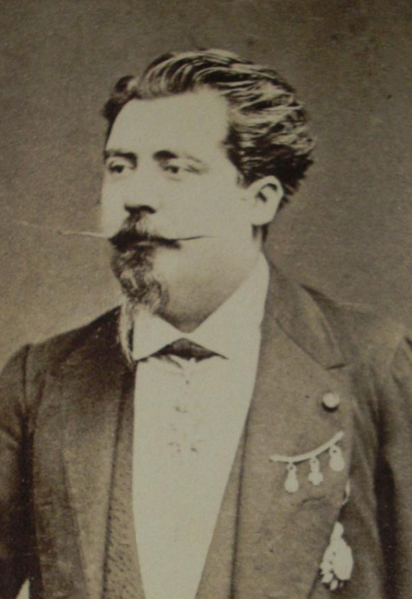
The Mapuche at that time were engaged in armed struggle against Chile and Argentina, which sought to conquer their lands. This resistance proved unsuccessful and within a year of his accession Chile had invaded and occupied the country and imprisoned King Orélie-Antoine I. Eventually released, he spent the remainder of his life in exile in France seeking to regain his kingdom. Before his death in 1878, he appointed a successor as king-in-exile, Gustave Achille Laviarde (1841-1902), who succeeded him as Aquiles I. His subsidiary titles were Prince of Aucas, Duke of Kialeou and Count of Alsena. During his reign in exile, he made strenuous efforts to have the Kingdom and the rights of its people recognised by the French government, but without success.
Laviarde was of noble descent and was born in Rheims. He travelled widely as a young man and spent time in the service of the Bey of Tunis. Returning to Rheims, he was active in the support of the imperialist candidate for mayor, Edouard Werle, and pursued professional interests as a merchant. He allied himself with the Bonapartist cause and was an official invitee at the funeral of Emperor Napoléon III. He was a member and Patron of the Order of the Crown of Thorns.
Dying on March 6 1902 without issue, his heir in the Kingdom was Antoine Hippolyte Cros (Antoine II). The Kingdom continues to exist today and maintains an official website.
Pulikkottil Joseph Mar Dionysious II (1833-1909) was the Malankara Metropolitan of the Malankara Syrian Orthodox Church. He was a Patron of the Order of the Crown of Thorns. He was the principal consecrator of Mar Julius I Alvarez.
He was born into the family of Pulikkottil (Kunnamkulam), which is an important family in the history of the Malankara church. Considered a courageous and popular spiritual leader, utterly and selflessly dedicated to the church, he guided his followers through one of the most difficult times in the history of the Malankara Church.
He was ordained deacon by Cheppad Mar Dionysius on 6 October 1846 and priest on 18 August 1853 by Metropolitan Yuyakim Mar Kurilos at Challiserry church. On 29 April 1865 at Ameed, Patriarch Yakoob III elevated him to the rank of Ramban. On 30 April he was consecrated as Metropolitan Joseph Mar Dionysios.
Because Patriarch Yakoob III was not a bishop of the Malankara church, Pulikkottil Joseph Ramban was given the episcopal title Pulikkottil Joseph Mar Dionysious. Moreover he was not seated on the Malankara throne (on which Mar Thoma I to Mar Thoma IX were seated at the time of their consecration) and so he did not receive the title Mar Thoma. He was the fifth bishop in the Malankara Church to receive the title Dionysius.
During the eventful forty-four years between 1865 and 1909 he occupied the Malankara Metropolitan’s position with extraordinary skill. It was during that period that the Mulanthuruthy Synod, the division of dioceses and the ‘Holy Mooran Koodasha’ took place. Through his unstinting efforts, spiritual organizations like the Sunday School and the Students’ movement, and Church institutions like the Parumala Seminary, the Kunnamkulam Sehiyon Bungalow, the Kottapuram Seminary and the M.D. Seminary developed.
The history of Catholicate and M.D. Schools states “In 1870, he started a Syriac printing press, Saint Thomas, at Cochin, for publishing Syriac prayer books. At around the same time he started a Church magazine ‘Kerala Pathaka’ in Malayalam, which was later merged with another news magazine, ‘Paschimathara’. Unfortunately this Church magazine was discontinued due to financial problems. But again in January 1892, another monthly, ‘Edavaka Patrika’ started publication from Kottayam Marthoma Press.During his tenure as Malankara Metropolitan, a large gathering of Roman Catholics from Goa, joined the Suryani Church. Fr. Alvarez, a member of this group, was later consecrated as Metropolitan Mor Yulius [Mar Julius I Alvares] by Mor Dionysius in 1889. Due to the influence of Metropolitan Mor Yulius, another group of Roman Catholics from Ceylon and America too joined the Suryani Church. Their leader Fr. Rene Vilatte [Prince-Abbot Joseph III] was ordained as Metropolitan Mor Timotheos in 1892.”
After the death of Mathews Mar Athanasius Metropolitan, Thomas Mar Athanasius took charge as Metropolitan. Then Joseph Mar Dionysious II made a claim that he and the fellow trustees were the lawful owners of the Church and demanded the possession of the Seminary and control of the assets of the Church. Mar Dionysius filed a case at Alappuzha civil court on March 4, 1879 (O.S.No.439 of 1054). In the final verdict announced on July 12, 1889, Thomas Mar Athanasius Metropolitan lost all claims to the church properties. It mentioned that the consecration, the authority of Thomas Mar Athanasius as Metropolitan and the properties of the individual parishes were not under the jurisdiction of the court. So litigations for individual churches began.
Kunnamkulam Pulikkottil Joseph Dionysious II died on 11 July 1909. His mortal remains were interred in the northern side of the chapel in Pazhaya Seminary. His Death Anniversary is on 12 July.
Bishop James Theodore Holly (1829-1911) was the first African-American to be consecrated bishop in the Protestant Episcopal Church of America. He was a Patron of the Order of the Crown of Thorns.
His parents were of African descent and were Roman Catholics. He was educated at public and private schools and by tutors in Washington, New York City, Buffalo, and Detroit. In 1851 he withdrew from the Roman Catholic Church and entered the Protestant Episcopal Church. From 1852 to 1853, he was associate editor of The Voice of the Fugitive, a weekly paper, published at Windsor, Ontario. In 1854, he was principal of a public school in Buffalo.
He studied theology, and was ordained deacon on 17 June 1855 and presbyter on 2 January 1856. He was rector of St. Luke’s Church, New Haven, Connecticut, from 1856 until 1861, when he was sent to Haiti as a missionary. He served as consul for Liberia at Port-au-Prince from 1864 until 1874, in which year he was made missionary bishop of Haiti by the Protestant Episcopal Church.
In 1878 Holly went to England as a delegate to the Lambeth Conference. He received the degree of D.D. from Howard University, Washington, D.C., in 1874, and that of LL.D. from Liberia College, Monrovia, in 1882. He contributed to the Church, the Church Eclectic, and the African Methodist Church reviews.
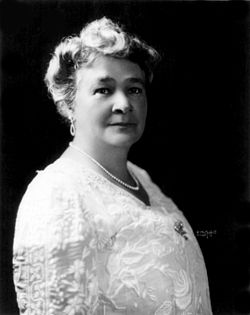
Ernestine Schumann-Heink, née Rössler (15 June 1861 – 17 November 1936), was a celebrated Austrian, later American, operatic contralto, noted for the size, beauty, tonal richness, flexibility and wide range of her voice.
She was a member of the Order of the Lion and the Black Cross and also received the Grand Prix Humanitaire de France et des Colonies. She was the first known Jewish member of the San Luigi Orders.
Listen to Schumann-Heink in Wagner’s Rienzi:
She was born as Ernestine “Tini” Rössler to a German-speaking family in the town of Libeň (German: Lieben), Bohemia, Austrian Empire, which is now part of the city of Prague, Czech Republic. Her father Hans Rössler was a shoe maker; while previously serving as an Austrian cavalry officer, he had been stationed in northern Italy (then an Austrian protectorate), where he met and married Charlotte Goldman, with whom he returned to Libeň. When Ernestine was three years old, the family moved to Verona. In 1866, at the outbreak of the Austro-Prussian War, the family moved to Prague, where she was schooled at the Ursuline Convent. At war’s end, the Roesslers moved to Podgórze, now part of Kraków. The family moved again to Graz when Tini was thirteen. Here she met Marietta von LeClair, a retired opera singer, who agreed to give her voice lessons.
Early career
In 1877, Rössler made her first professional performance, in Beethoven’s Ninth Symphony in Graz, appearing with soprano Maria Wilt, and her operatic debut at Dresden’s Royal Opera House on October 15, 1878 as Azucena in Il trovatore.
In 1882, she married Ernest Heink, secretary of the Semperoper, the Saxon State Opera Dresden; this violated the terms of their contracts, and both had their employment abruptly terminated. Heink took a job at the local customs house and was soon transferred to Hamburg. Ernestine remained in Dresden to pursue her career, and eventually rejoined her husband when she secured a position at the Hamburg Opera. She went on to have four children with Heink. One of their children, Ferdinand Schumann-Heink (1893–1958) was a prolific, though mostly unbilled, Hollywood character actor.
Ernest Heink was again thrown out of work when Saxons were banned from government positions, and departed to Saxony to find work. Ernestine, pregnant, did not follow him; they were divorced in 1893. That same year she married actor Paul Schumann, with whom she had three more children. Her second marriage lasted until Paul Schumann’s death in 1904. She made a brief foray into the Broadway theater, playing in Julian Edwards’ operetta Love’s Lottery, in which her performance was noted for the fact that she often broke off to ask the audience whether her English was good enough. She returned to opera shortly afterwards.
Her breakthrough into leading roles was provided when prima donna Marie Goetze argued with the director of the Hamburg opera. He asked Ernestine to sing the title role of Carmen, without rehearsal, which she did to great acclaim. Goetze, in a fit of pique, cancelled out of the role of Fidès in Le prophète, to be performed the following night, and was again replaced by Ernestine. Schumann-Heink replaced Goetze as Ortrud in Lohengrin the following evening, one more time without rehearsal, and was offered a ten-year contract.
International career
She performed with Gustav Mahler at the Royal Opera House, Covent Garden, London, and became well known for her performances of the works of Richard Wagner at Bayreuth, singing at the Bayreuth Festivals from 1896 to 1914.
She first sang at the Metropolitan Opera in New York City in 1898, and performed with the Met regularly thereafter for decades.
Schumann-Heink made the first of her many phonograph (gramophone) recordings in 1900. Many of them have been reissued on CD and continue to impress due to the quality of her rich voice and the excellence of her technique.
In 1905, she married William Rapp, Jr., her manager. They divorced in 1915.
In the midst of a legal battle in Germany over her late husband’s estate, she filed U.S. naturalization papers on February 10, 1905, which became final on March 3, 1908. She and her new husband lived on Grandview Avenue, North Caldwell, Essex County, New Jersey in her “Villa Fides” from April 1906 to December 1911; she then moved to 500 acres (2 km²) of farm land located just outside of San Diego, California (in an area known as Helix Hill in Grossmont), purchased by her in January 1910, where she would live for most of her life. Her residence there still stands.
In 1909, she created the role of Klytaemnestra in the debut of Richard Strauss’s Elektra, of which she said she had no high opinion, calling it ‘a fearful din’. Strauss, for his part, was not entirely taken by Schumann-Heink; according to one story, during rehearsals he told the orchestra “Louder! I can still hear Mme. Schumann-Heink!”.
In 1915, she appeared as herself in the early documentary film Mabel and Fatty Viewing the World’s Fair at San Francisco, which was directed and starred by Fatty Arbuckle.
Charitable work and community support
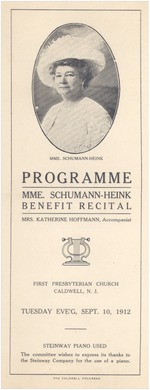
While living at North Caldwell, Schumann-Heink became interested in efforts to honor President Grover Cleveland by acquiring his birthplace and creating a museum in his honor. Friends, family and supporters of President Grover Cleveland asked her to perform at the First Presbyterian Church at Caldwell, New Jersey to raise money for the purchase of Cleveland’s Birthplace in the Presbyterian Manse. Cleveland’s father, Rev. Richard Cleveland had been the minister of the church when the future president was born in 1837. On September 10, 1912 Mme. Schumann-Heink performed a benefit concert at the First Presbyterian Church at Caldwell. The following year the Grover Cleveland Birthplace Memorial Association (GCBMA) purchased the Manse and opened it to the public and Mme. Schumann-Heink became the first lifetime member of the GCBMA.
During World War I, Schumann-Heink supported the United States and military forces. She entertained the troops and raised money to help wounded veterans. She toured the United States raising money for the war effort, although she had relatives fighting on both sides of the war – including her sons August Heink, a merchant marine who had been impressed into the German submarine service, son Walter Schumann, Henry Heink and George Washington Schumann, all in the United States Navy. August Heink died during the war. After the war she continued to support American veterans and her 1936 funeral was held with full military honors and conducted by the American Legion, Post 43, of Hollywood and the Disabled Veterans of the World War, San Diego Chapter.
Later years
In 1926, she first sang Silent Night (in both German and English) over the radio for Christmas. This became a Christmas tradition with US radio listeners through Christmas of 1935. She lost nearly all her assets in the Wall Street Crash of 1929 and was forced to sing again even though she was 69 years old.
Her last performance at the Met was in 1931 performing Erda in Der Ring des Nibelungen, aged 71. In her later years, she had a weekly radio program. In the movies of the 1930s, many a buxom opera singer/instructor/matron was modeled on her; see for instance 1937’s Stage Door.
Death
Schumann-Heink died on 17 November 1936 of leukemia in Hollywood, California.

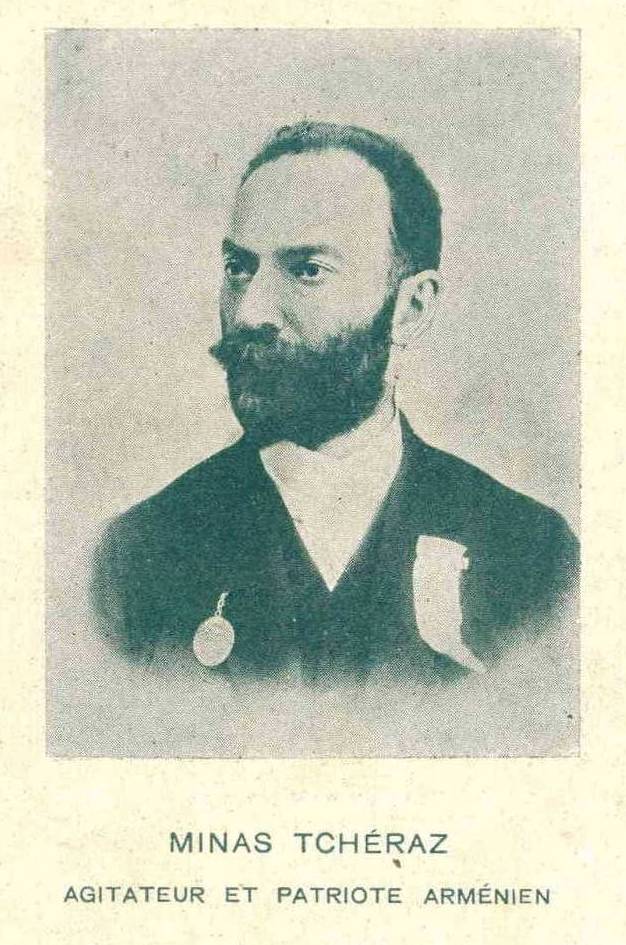 Minas Tcheraz (1852-1929) is an important figure at the inception of modern Armenian studies. He was a Patron of the Order of the Crown of Thorns.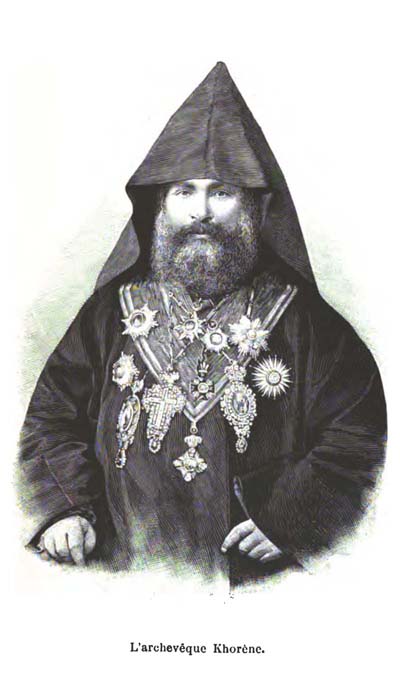
 The Armenian Church enjoyed good relations with Prince-Abbot Joseph III for some years. In 1923 the Primate of the American Catholic Church, Frederick E.J. Lloyd (who had been consecrated by and worked closely with Prince-Abbot Joseph III), met with the Armenian Patriarch in Jerusalem, and the Armenian Church in Los Angeles was made available for services for Lloyd’s clergy. In London, the Armenian Church of St Sarkis was used by Lloyd’s archbishop in London, Churchill Sibley. Meanwhile in France, the Armenian archimandrite (later bishop) Uramchabank Kibarian d’Artchongetz (also a Patron of the Order of the Crown of Thorns) worked closely with the Gallican Church bishops of the Vilatte succession. The photo on the right shows Gallican bishop and OCT Prelate-Commander Pierre-Gaston Vigué with Archimandrite Kibarian at the Coronation of the Virgin (photograph: Eglise Gallicane).



 The Abbey-Principality of San Luigi
You must be logged in to post a comment.