Members of the San Luigi Orders: The Revd. James Yorke Batley

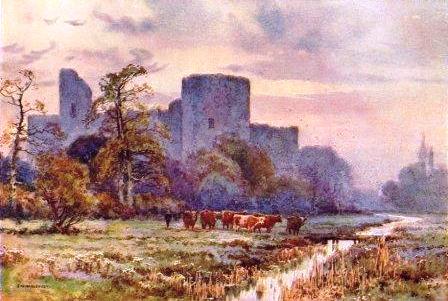
The Revd. James Yorke Batley (1880-1971) was a Chevalier of the Order of the Lion and the Black Cross, receiving the accolade from Grand Prieur Mgr. George Tull in a ceremony at Pevensey Castle, Sussex (pictured left), in 1961.

Born in Tonbridge and educated at Tame Grammar School, he won a place at Trinity College, Cambridge. Here, he proceeded to the degree of Master of Arts of the University of Cambridge and was appointed Lecturer in the Faculty of English there. Subsequently, he felt the call to ordination in the Church of England, and served as assistant curate of St Paul’s Church, Cambridge, between 1911 and 1913. After this, he became an assistant master at St John’s School, Leatherhead. In 1916, Cambridge University Press published his “The Problem of Suffering in the Old Testament,” a thorough exposition of the subject that was reprinted by the University of Michigan Library in 2009. He would follow this with “On a Reformer’s Latin Bible: being an essay on the Adversaria in the Vulgate of Thomas Bilney” (1940).
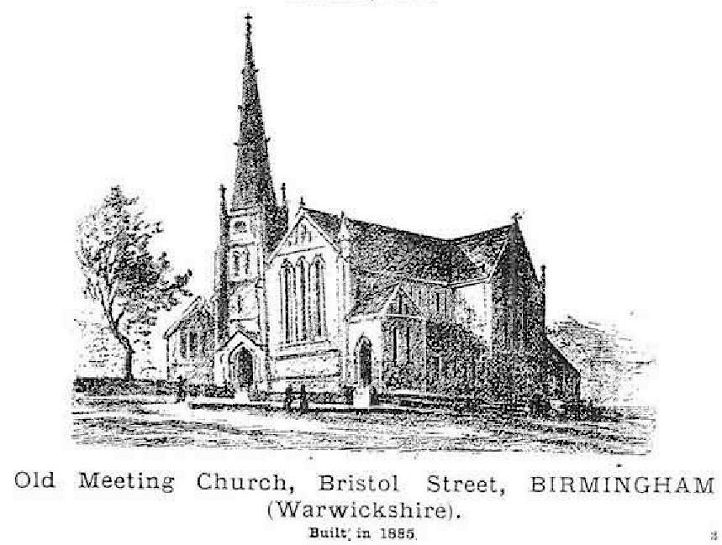
Batley became a member of the Society of Free Catholics under the Revd. Joseph Morgan Lloyd-Thomas. This body, which combined elements of Unitarianism, Catholicism, and Socialism, had been founded in 1914 and sought to unite a ritualistic approach to liturgy with free thought in theological matters, forming the bedrock of a Free Christian Church. It met for its annual conference at Lloyd Thomas’s Old Meeting Church in Birmingham (pictured right), where the Revd. Conrad Noel, Anglican Vicar of Thaxted, celebrated; it also gained the support of Fr. Vincent McNabb, O.P., and Dr. W.E. Orchard, sometime minister at the King’s Weigh House in Mayfair, London (he was ordained priest by Vernon Herford (see below), and would eventually become a Roman Catholic). All three men contributed to its monthly journal “The Free Catholic”. In 1929 the Society dissolved, Lloyd Thomas believing it had done all that it could achieve.
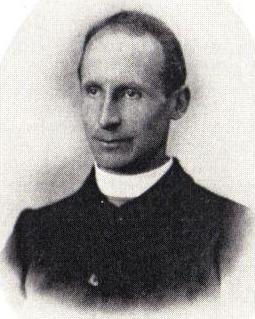
In 1926, the course of Batley’s vocation was to change with his first meeting with Bishop Vernon Herford (pictured left), who was closely involved with the Society of Free Catholics. Ulric Vernon Herford (1866-1938) was a scion of a distinguished Manchester Unitarian family, being the son of educationalist William Henry Herford. Educated at the Victoria University of Manchester (B.A., 1889) and at Manchester College, Oxford, where he prepared for the Unitarian ministry, he also spent a year studying at the Anglican St Stephen’s House, Oxford. Ordained a Presbyterian minister in 1892, he pastored Unitarian missions at King’s Lynn, Whitchurch and latterly the Church of the Divine Love at Percy Street, Magdalen Bridge, Oxford. This congregation had begun as an outgrowth of Manchester College but was developing towards a Catholic style of worship. The congregation wished Herford to seek valid Apostolic Holy Orders, and Herford believed that this could best be achieved by approaching what he saw as “the purest and most primitive Branch of the Holy Catholic and Apostolic Church,” the Syro-Chaldean (Nestorian) Church of the East in India. Their Metropolitan agreed to consecrate Herford to the Episcopate, and so Herford travelled to India in 1902 for that purpose. On his return to Oxford he formed the Evangelical Catholic Church as a unifying body to which he hoped all Christians could subscribe. The following year, the Metropolitan passed away and Herford inherited pastoral responsibility for his Indian mission. He became known for his charity to others, his strong social conscience and support for the peace movement, and his work for animal welfare.

Batley relates the story of their meeting in his own words,

“I first met Bishop Herford in 1926, when I approached him with a view to receiving ordination to the Priesthood. He kindly invited me to stay to lunch, where I was introduced to Mrs Herford, who informed me that she belonged to the Church of England. She also told me that there was much coming and going on the part of men who were presumably also seeking Orders. The Bishop had much to say about Unitarianism, Anglicanism and intercommunion between the Churches. He also mentioned possible alternative spheres of work for me. Later on he spoke of Lloyd Thomas and the Society of Free Catholics (I was a member of that body). The Bishop impressed me as having an unhappy ‘flair’ for destroying his own work. The breach with Bishop [William Stanley McBean] Knight [B.Litt. Oxon., barrister and Tutor of New College, Oxford, he was the only bishop consecrated by Herford – Herford expelled him from the E.C.C. two years after the consecration] is an unhappy example of this trait. Bishop Herford’s activities on behalf of the E.C.C. were, I would say, threefold in character – there were negotiations with various Free Churches, with a view to undertaking spiritual oversight; various Christian workers were ordained to the Priesthood or Diaconate, to enable them to exercise a wider and more effective ministry; he wrote many booklets and pamphlets. Some of these were designed to expound the E.C.C. principles.

The Bishop was anxious to provide one or more cottages for use as Retreat Houses. I think that one of these materialised for a time. He was of a kindly disposition and liked to be surrounded by young people and also by animals, especially cats.

I ought to mention Bishop Herford’s conversational powers. He was a fluent talker on many subjects, but such an untidy thinker that it was almost impossible to follow him for any length of time! Let it be remembered that Bishop Herford spent his life devoted to three great causes – Christian Unity, World Peace, Kindness to Animals.”

Batley was to become one of the first Trustees of the E.C.C. and after his priestly ordination was appointed by Herford as its Vicar-General. In 1929, Herford became concerned at the lack of news and confused reports from his Indian mission, and therefore despatched Batley to South India to investigate. Batley arrived there in the autumn, and remained there for nearly two years. The conclusion was that most of the missions had declined irretrievably under the burdens of persecution by the Jesuits and poverty, but that there was some remnant of the congregations still extant and the possibility of further fruitful work at Maraman.

Returning to England, Batley became closely associated with one of Herford’s lay-ministers, Ernest O’Dell Cope, who was based at St John’s Church, Stapenhill, Burton-on-Trent, until the wooden building was blown down in a storm. A disagreement with Herford led to Cope’s resignation from his jurisdiction in 1937, and in 1945, Cope controversially claimed that he had been secretly consecrated in 1940 by Ralph Whitman, allegedly a bishop who had been consecrated by Archbishop Arnold Harris Mathew in 1910. This claim was given some degree of credence by Mar Georgius of Glastonbury (q.v.) as well as the late Fr. Alban Cockerham of the Liberal Catholic Church, and Batley received consecration secretly from Cope on 2 August 1942.
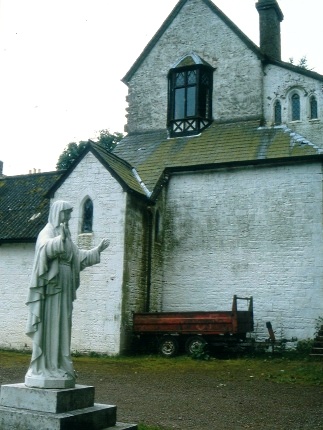
From 1939 onwards, Cope developed a plan to revive the Benedictine community of Fr. Ignatius at Llanthony Abbey in Wales. Fr. Ignatius (Joseph Leycester Lyne) (1837-1908) had been ordained priest by Prince-Abbot Joseph III after the Church of England refused him ordination on the grounds that it was then opposed to monks also being priests. The monastic life at Llanthony endured for over forty years, but ended around 1908 under Fr. Ignatius’s successor Dom Asaph Harris.) In 1924 the former monastery was sold by Dom Asaph to the artist Eric Gill, and after his death in 1940 his widow continued to live there while the abbey church partially erected by Fr. Ignatius (and where he is buried) had fallen into some disrepair (the building is pictured right). Here, in 1880, visions of Our Lady had been seen. At Christmas, 1947, Cope, Batley and two further clergy moved to Llanthony, where they were given the use of a bungalow (“St David’s”) at Capel-y-Ffin that was owned by two elderly nieces of Fr. Ignatius, Hilda and Irene Ewens.

The objects of the new Order of Llanthony Brothers were stated as being:

“(1) To re-establish the Monastic Vocation, with the spirit of the former Llanthony Abbey, a Community of Men under the late Abbot Ignatius, OSB;

(2) To provide possibilities of study, prayer and evangelistic priests and ordinands to the Ministry of the Church of Jesus Christ, with the Anglican and Catholic system.”

There was a special call to men who had served in the Armed Forces. Along with the Order, Cope founded a new church, the Free Anglo-Catholic Church. However, this activity was to be short-lived. The new Abbot-elect of the community, Br. William, who was something of an unstable character, proved to be unaware of the extent of the control of the law of the land by the Church of England, and charges were brought against him that he had solemnized marriages at a place other than a church or licensed chapel, and had performed an irregular burial service. The Abbot was convicted on these charges at the Old Bailey in April 1948 and bound over to keep the peace for two years. Although he was eventually installed in his office by Batley on 26 September 1948, the community did not survive the scandal, which was catnip to Anglican and Roman polemicists, and the remaining members disbanded shortly afterwards.

After this episode, Batley established the Evangelical Catholic Mission in East Sussex, based at his home in Guestling, and this mission was announced for the first time in the winter of 1953. During the 1950s he came into contact with Mgr. George Tull, then a priest of the E.C.C., who would subsequently become Grand Prior and Vice President of the San Luigi Orders. Mgr. Tull edited the newsletter of the Evangelical Catholic Communion, “The Light-Bringer”, and Batley contributed a number of articles to that organ on theological and pastoral subjects. In December 1955, Mgr. Tull took on responsibility for the E.C.C.’s revised East Sussex mission dedicated to St Philip in Blackboys with Batley as his assistant. which continued until the autumn of 1958. During these years, Mgr. Tull was also researching his biography of Herford, “Vernon Herford: Apostle of Unity” (1958). This work, long out of print, remains the only objective survey of Herford’s ministry. Upon Mgr. Tull’s appointment as a Grand Prior of the San Luigi Orders. Batley was one of his first nominations for knighthood in the OLBC.

Members of the San Luigi Orders: Alvin F. Germeshausen

The photograph above depicts a ceremony of the San Luigi Orders on 15 August 1971 at “Ivory Towers”, Woodhaven Drive, Hollywood, California. Admitted as a Commandeur to the Order of the Lion and the Black Cross is the resident of that address, Alvin F. Germeshausen (1906-82), former Director of Industrial Relations for the State of California, arts administrator and literary critic. Chevalier Germeshausen is seated, having received the accolade, while to the left, San Luigi Vice-Chancellor Archbishop Frederick C. King proposes the toast to him. To the right stands the Grand Master, Prince-Abbot Edmond II, while a group of knights and dames of the San Luigi Orders look on.

Chevalier Germeshausen – or Sir Alvin, as he was known to his friends – furthered interest in some fascinating literary figures. He was active in the “Praed Street Irregulars”, the society devoted to August Derleth’s ingenious detective Solar Pons (founded by Luther Norris at Germeshausen’s home in 1966), and wrote for its journal “The Pontine Dossier”. He contributed an introductory essay to the 1979 reprint of “The Spirit of Bambatse” by H. Rider Haggard, and was noted as an authority on the work of Edgar Rice Burroughes. He was also a member of the Count Dracula Society, whose founder Dr. Donald Reed was admitted to the Order of Antioch on the same occasion as depicted above.

(From left: Terri Pinckard (of the Pinckard Science Fiction Writers’ Salon), Alvin F. Germeshausen, August Derleth. Photo credit: The Solar Pons Gazette)

Members of the San Luigi Orders: Archbishop Emile Rodriguez y Fairfield

Archbishop Emile Federico Rodriguez y Fairfield (1912-2005) was the last Archbishop-Primate of the Iglesia Ortodoxa Católica Apostólica Méxicana (Mexican National Catholic Church). He was admitted to the Order of the Crown of Thorns as a Grande Officier in July 1961 by Prince-Abbot Edmond I and served as a Vice Chancellor of the San Luigi Orders.

Emile Federico Rodriguez was born in Michoacan, Mexico, on 22 July 1912. In 1932, he represented Mexico in the 1,500 metres at the Olympic Games at Los Angeles, being eliminated at the heats stage. He was ordained priest on 21 June 1938 by his elder brother, Alberto Luis Rodriguez y Durand (1901-55), who was Bishop of Los Angeles in the Mexican National Catholic Church. The MNCC had been formed in 1926 by fiat of Archbishop Carmel Henry Carfora, Primate of the North American Old Roman Catholic Church, and was closely associated with that denomination. It was a national body intended to provide a valid Catholic alternative to the Roman Catholic Church, and initially attracted a numerous following. Rodriguez y Fairfield became an American citizen in 1944, and pastored the Church of St Augustine of the Mystical Body of Christ in East Los Angeles. He spent a year in India as a physical education instructor in 1953 and added the surname “Fairfield” in recollection of his athletic ability since his sponsors wanted him to have a more English-sounding name.

On 12 March 1955, in one his last acts, Bishop Rodriguez y Durand consecrated his brother as bishop. However, Rodriguez y Fairfield and the other MNCC bishops were unable to halt a decline in the MNCC that was caused by improving relations between Mexico and the Roman Catholic Church; against this background the appeal of a national independent Catholic church inevitably decreased. The work became increasingly concentrated upon serving the Mexican immigrant population in California. After the death of Archbishop Carfora in 1958, Rodriguez y Fairfield made the decision to affiliate his church with the Old Roman Catholic Church of Great Britain under Archbishop Gerard George Shelley, which union was effected in 1962, and also worked closely with Archbishop Aneed (q.v.) and Prince-Abbot Edmond I, both of whom bestowed additional commissioning upon him by means of subconditional consecration. Prince-Abbot Edmond I described him in 1961 as “a real spiritual man..a real asset to the Order.” In 1963 Rodriguez y Fairfield was accepted additionally into the Old Roman Catholic jurisdiction of Archbishop Richard A. Marchenna, another successor of Carfora, and served as his bishop for the Western States.

Rodriguez y Fairfield consecration of Edmond IIArchbishop Rodriguez y Fairfield at the private oratory of Prince-Abbot Edmond II on the occasion of the latter’s consecration in 1963

When Archbishop Shelley died in 1980, he was succeeded by Fr. Michael J. Farrell, who was consecrated bishop in June 1981 by Rodriguez y Fairfield assisted by John Joseph Humphreys. However, Farrell resigned as Primate within a few months of his consecration, and as a result Rodriguez y Fairfield became Primate of the Old Roman Catholic Church and Archbishop of Caer-Glow. In 1983, with the death of Primate José Cortez y Olmos, Rodriguez y Fairfield became the only surviving bishop of the MNCC and was installed as Primate of that church on 13 September 1983. In 1984, Rodriguez y Fairfield resigned the Primacy of the Old Roman Catholic Church in favour of the present incumbent, Archbishop John J. Humphries.

During this period, Rodriguez y Fairfield signed an agreement of intercommunion between the MNCC and the Apostolic Episcopal Church under its primate Bertil Persson, and participated in a number of ecumenical initiatives as part of the work of that church, also working closely with AEC Archbishop Paul G.W. Schultz who was a senior member of the San Luigi Orders. As a result of this, his succession passes to the present Prince-Abbot as well as to the Universal Primate of the Order of Corporate Reunion, Archbishop Peter Paul Brennan (San Luigi Grand Prior of the USA), who was consecrated by Rodriguez y Fairfield and Schultz. In 1988, the MNCC entered into intercommunion with the Iglesia Filipina Independiente (Philippine Independent Catholic Church) as did the AEC.

He passed away on 2 January 2005 leaving a son and daughter, several grandchildren and great-grandchildren. An In Memoriam page for him is maintained by the American Catholic Union here. We close with the words of one of his prayers:

May the light of His star
illumine your path
and the wings of His love
enfold you forever

Que la luz de Su estrella
ilumine tu camino
y las alas de Su amor
te envuelvan para siempre

Members of the San Luigi Orders: Canon Charles Edmund Johnson

Canon Charles Edmund Johnson (1925-2012) was an Officier Compagnon of the Order of the Crown of Thorns, being admitted under Prince-Abbot Edmond I. He was Headmaster of Seaford College (pictured left) for forty-six years.

According to his obituary in the “Church Times”, Johnson attended Seaford College and then read History at Emmanuel College, Cambridge. He was captain of the University hockey team and continued to play the game for many years thereafter as a member of the Hounslow and Ealing Hockey Club. He trained for the ministry of the Church of England at Ridley Hall, Cambridge, and served his title at Woking. Whilst there, the governors of Seaford College invited him to be the school’s next headmaster, charged with re-establishing the school on a new site more suitable for expansion after the evacuation of the war years.

His tenure as Headmaster, which was to continue until 1990, won high praise. He was commended for his work as a fundraiser, as a countryman preserving the school’s estate, and for his pastoral gifts in “taking a personal interest in every boy and bringing out the best in him”. He made the Chapel the centre of school life, and through a traditional, direct and carefully-prepared approach to religious matters ensured that the fundamentals of the Christian faith would be well-understood.

At his death, aged nearly eighty-seven, he left a widow and four daughters.

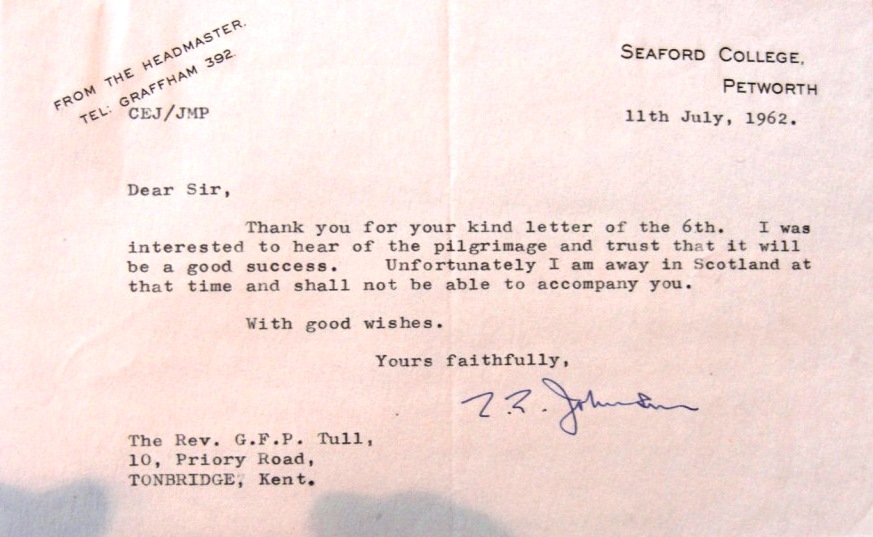
We reproduce several letters from Canon Johnson from the San Luigi Archives below. The first letter was in response to the late Grand Prieure Mgr. Tull’s re-establishment of contact with the members of the San Luigi Orders after a period of relative inactivity in England. The second was in response to the announcement of a pilgrimage to Stanbrook Abbey in September 1962 for the purpose of the veneration of a relic of the Holy Thorn.

Members of the San Luigi Orders: Patriarch Anthony Aneed

Archbishop Anthony Joseph Aneed (1879-1970) was Patriarch of the Byzantine Universal (Catholic) and Orthodox Church of the Americas, a church in which Prince-Abbot Edmond I held office. He was a member of the Order of the Crown of Thorns. In 1946 he was responsible for the re-establishment of the ecclesial jurisdiction of San Luigi in enthroning Prince-Abbot Edmond I as Archbishop.

Aneed was born in Beirut, Lebanon, on 27 February 1879. As a young man without material advantages, he obtained employment at the railway station there. However, he was also active as a layman in the Melkite Greek Catholic Church, one of the Eastern Catholic Churches in communion with the Holy See, and became a member of the Eastern Patriarchal Delegation to the Great Centennial in honour of the 1,500th anniversary of the death of St John Chrysostom. In 1908, he was a participant in a ceremony of the Delegation at the Sistine Chapel in Rome, presided over by Pope Pius X and with the participation of Patriarch Cyril VIII of the Melkite Greek Catholic Church and Metropolitan Archbishop Athanasius Sawoya of Beirut and Gebeil (Byblos). In this same year, Aneed was appointed as secretary to Archbishop Sawoya.

On 11 June 1909, at the Monastery of St. George, Makeen, Mt. Lebanon, Aneed was ordained priest by Archbishop Sawoya in the presence of Bishop Agapios Maloof of Baalbeck and a group of monks of the Order of St. Basil. At this time, his gifts as a singer were considered to be of particular value to the Church. However, he was soon advanced, on 29 October 1910, to the position of Exarch of the Archdiocese of Beirut and Gebeil, and in 1911 moved to the United States to begin this phase of his work.

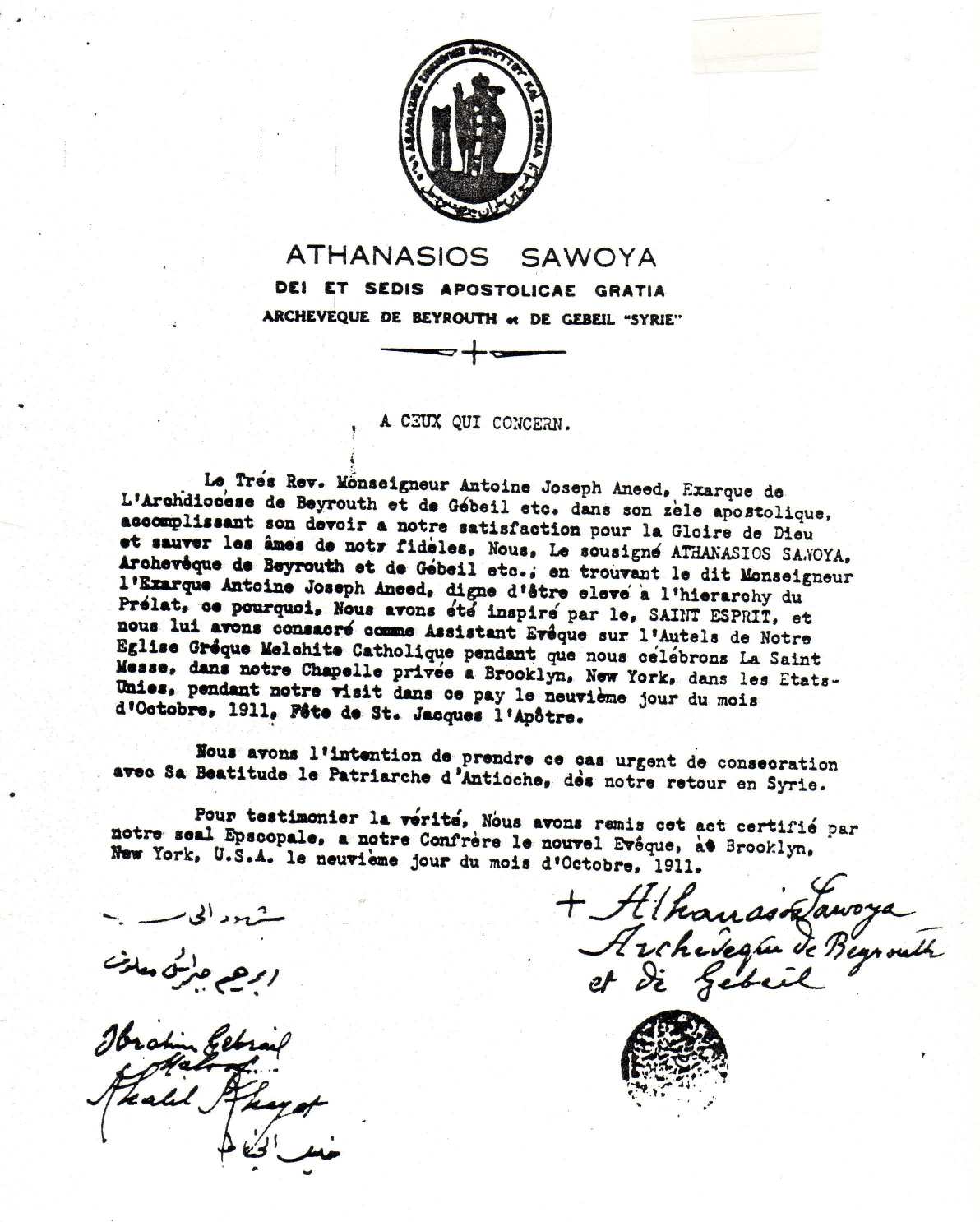
Aneed settled in New York, and began missionary work in Brooklyn where Melkite parishes had started to form. Soon after his arrival, Archbishop Sawoya visited the United States (against the wishes of the Pope) and stayed with Aneed for some time. On 9 October, Archbishop Sawoya consecrated Aneed as Assistant Bishop in his private chapel at Brooklyn (see certificate of consecration, right). While Patriarch Cyril IX Mogabgab, Melkite Patriarch 1925-47, later recognized this consecration, the Holy See did not.

From March 1915, Aneed served the Syrian parish of St George’s Church, W. State Street, Milwaukee, as a priest. On 14 June 1918 he received formal permission to use the title Exarch from Archbishop Sebastian Messmer of Milwaukee. In the following year, Aneed visited Archbishop Sawoya in France, and published “Syrian Christians. A Brief History of the Catholic Church of St. George in Milwaukee, Wisc. and a Sketch of The Eastern Church” (St. George Church, Milwaukee 1919) with a preface by Messmer. In 1921, Aneed left Milwaukee to establish and pastor a new parish at St Ann’s, New London, Connecticut, where he would remain until 1934. Here, a new church was built and continues to exist today.

Returning to New York in that latter year, Aneed underwent subconditional consecration for ecumenical reasons from Archbishop Sophronios Bishara of The Holy Eastern  Orthodox Catholic and Apostolic Church in North America (The American Orthodox Catholic Church).

He was active as a priest in New York until 1942, when he moved to San Francisco and built up a ministry to expatriate Syrian-Lebanese Christians. Convinced that his flock was not adequately served by the extant denominations, and also that the Melkite Church must break from the subjugation of Rome, he sought a path to independence.

In those days, California was a lively gathering-place for clergy of the smaller denominations, and Aneed established co-operation with Archbishop Lowell Paul Wadle of the American Catholic Church of Laguna Beach and Archbishop Edgar Ramon Verostek of the North American Old Roman Catholic Church, as well as with Prince-Abbot Edmond I. The aforementioned prelates were to become members of the Order of the Crown of Thorns, as also several members of their flocks, although Archbishop Wadle led his particular so-called “American Chapter” of the OCT into a short-lived schism (he and his followers having been regarded as heretical by Prince-Abbot Edmond I, and therefore expelled in 1950-51). Further co-operation was secured with Archbishop Henry Kleefisch, an attorney who had received consecration from the Russian Orthodox Church and became a bishop under Aneed, Archbishop Wallace de Ortega Maxey of the Ancient Christian Fellowship and Apostolic Episcopal Church, and Bishop Charles Hampton, formerly of the Liberal Catholic Church. All of these bishops participated in subconditional consecration for ecumenical reasons, in order to secure acceptance of their ministry from the widest range of members of the mainstream denominations.

On September 10 1944, Aneed, Wadle and Verostek established the American Concordat Exarchate, with Aneed as its Exarch (a Codicil to this document was added in 1945 when Kleefisch and Hampton joined the organization). On the aforementioned date, the three bishops united their successions, and established The Byzantine Universal (Catholic) and Orthodox Church of the Americas from the foundation of Aneed’s work in California. It was stated that the object of this body was “to free the Melkite Church, if possible, from foreign domination, and to give it Freedom under the authority of Jesus Christ to go into all the world and preach the Gospel of the Love of God.” The intention was to restore the Melkite tradition to its position before union with Rome.

At a Synod on 1 April 1945, at St Francis’ Church, Laguna Beach, California (pictured left), Aneed was elected Primate of the Byzantine Universal (Catholic) and Orthodox Church of the Americas. He was enthroned as Patriarch Antionius Joseph I on 1 January 1946. On the same occasion, Aneed assisted by Wadle and Kleefisch conditionally consecrated Prince-Abbot Edmond I, appointing him Titular Bishop of Caesarea in Cappadocia in the Byzantine Catholic Church,  and enthroned him then and there as Grand Master of the Order of the Crown of Thorns and Archbishop of San Luigi. This was a formal re-establishment of the ecclesial jurisdiction of San Luigi after the repudiation of the Syrian Orthodox Church published in 1938.

On 29 August 1948, Aneed opened the Seminary of St Anthony, The Star of the Desert, at Sunnymead, California. By this time, the Concordat had expanded into the Federation of Independent Catholic and Orthodox Bishops (FICOB), a body into which bishops of other churches professing the Nicene Creed and practising the sacramental life were accepted and granted additional commissioning in the successions embodied therein. During the later 1950s, Herman Adrian Spruit became extremely active within this group. Just as with Wadle, Prince-Abbots Edmond I was concerned by, and Prince-Abbot Edmond II strongly opposed to, the liberal nature of Spruit’s profession of faith, and their correspondence reveals their reservations in some detail. It was for this reason that relations between the Federation and the Abbey-Principality did not prosper during the 1960s.

On 5 June 1960, Aneed celebrated the fiftieth anniversary of his priesting at the Cathedral of the Merciful Savior, San Diego, California, at a service that was attended by many of the clergy who had become associated with him, including Prince-Abbot Edmond I. By the following year he was reported by Prince-Abbot Edmond I to be in very poor health, and Deacon James B. Gillespie, (Officier OCT), then wrote of him, “Bp. Anthony is quite old but not always so inactive. He has been called a “true son of the desert”…When he does get a chance, he will celebrate in public, but he is rather far from an altar at the present time – except that in his home. Rome has courted him for years, but he will not relinquish his wife. It seems they made their last big attempt in 1955 through Bp. Buddy of San Diego.”

In September 1961, it was announced that Aneed would come out of retirement and take over the Church of the Merciful Savior in San Diego, but this appears to have been short-lived. At his death on 24 August 1970, he was survived by his wife, Helen, whose biography of him remains unpublished, and his jurisdictional successor was Herman Spruit. He continues to be memorialized by the Melkite Greek Catholic Church.

Members of the San Luigi Orders: Dr. Donald A. Reed

Dr Donald A. Reed (1935-2001) was admitted an Officier of the Order of Antioch by Prince-Abbot Edmond II at a ceremony in Hollywood on 15 August 1971. This admission was during the period when the Order had assumed a chivalric structure; it has since reverted to its original structure as a religious order.

Donald Reed was founder of the Count Dracula Society in 1962, which attracted the support of such names as Ray Bradbury and Rock Hudson, and was well known for its gatherings at which members would dress in the manner of the Count. A decade later, he established the Academy of Science Fiction, Fantasy and Horror Films, realizing that these genres were neglected by the mainstream of Hollywood’s film establishment. The Academy initiated the Saturn Awards for film, expanding in the 1980s to cover television and later to video and DVD releases. After the worldwide success of George Lucas’ “Star Wars” in 1977, the awards ceremony became a major event in Hollywood life and was covered on network television for several years, bringing us, amongst other gems, William Shatner’s melodramatic recitation of Elton John and Bernie Taupin’s “Rocket Man” (1978). The 38th Saturn Awards ceremony took place in 2012. The President’s Memorial Award is presented in honour of Dr. Reed and past recipients have included Woody Allen, Carrie Fisher, Steven Spielberg and Billy Bob Thornton.

A Los Angeles native, Reed earned his bachelor’s degree from Loyola University and then a masters in library science and Juris Doctor from the University of Southern California. His career was as a law clerk, law librarian and latterly educator, at Woodbury University, CalArts, Valley College and Columbia College. During the Vietnam War, he used his legal expertise to assist those who resisted being drafted into the army, and at one time considered a future in politics (he was a lifelong Democrat).

Film and television were his passions. In 1980, he founded the Academy of Family Films and Television and in 1982 the Council of Film Organizations. As well as work as a film reviewer, he was regarded as an expert on Count Dracula and knew personally many leading personalities within the science fiction, fantasy and horror worlds. His collection of Robert Redford materials was one of the largest assembled, and in 1975 he authored “Robert Redford: A Photographic Portrayal of the Man and his Films”. Away from the screen, he was President of the Calvin Coolidge Society.

He never fully recovered from a car accident in 1982 and passed away in 2001, being buried a few hundred yards from the original screen Dracula, Bela Lugosi. A documentary on him, entitled “My Life with Count Dracula” was released in 2003.

A Roman Catholic whose life was profoundly influenced by a meeting with Dorothy Day, Dr Reed received the title of Count. He was admitted to the San Luigi Orders alongside a fellow scholar of literary fantasy, Alvin F. Germeshausen.

>>Academy of Science Fiction Fantasy and Horror Films

>>Dr Reed at IMDb

>>Saturn Awards on Wikipedia

Members of the San Luigi Orders: Primus Dr Charles Boltwood

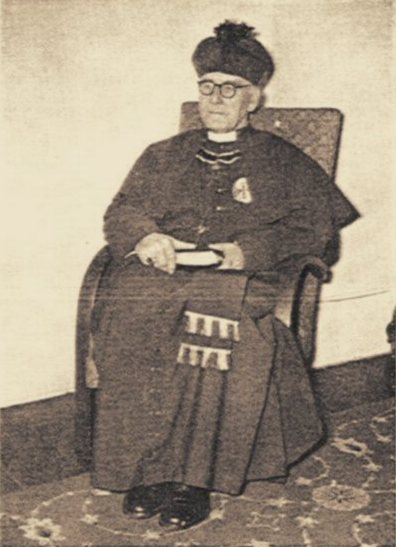
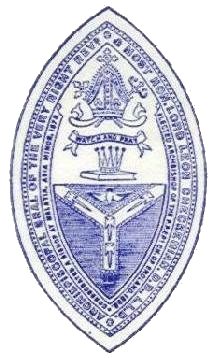
Dr Charles Boltwood (1889-1985) was Primus of the Free Protestant Episcopal Church and Rector of St Andrew’s Ecumenical Church Foundation Intercollegiate.

Boltwood’s spiritual path was complex. Outwardly, he was a conservative evangelical Anglican. However, he was also active as a Spiritualist, embraced Theosophy, and was for a time a bishop of Mar Georgius’s Catholicate of the West (q.v.)

Boltwood was born in Chelmsford. Little is known of his early years, except that he wrote fifty years later of having seen action in the First World War, and that “on the eve of the declaration of war, [my fiancee and I] sat together in the gardens at St Edmundsbury and read together the ninety-first psalm – truly every promise therein was fulfilled for us.” Although their wedding plans were postponed by his war service, he and his wife Frances (known as Mary Angela), who was an Archdeaconess of the FPEC, would later celebrate their golden wedding anniversary.

Between 1937 and 1941, under the pseudonym “Crusader”, he published six books through a small press in Thorpe-le-Soken that he claimed to consist of spiritual revelations transmitted to him by the late writer and social reformer Charles Kingsley, who had died in 1875.

In 1942, Boltwood began his educational work by founding the College of Spiritual Science, an alternative body that trained spiritual healers, psychotherapists and thalamopathists (a therapy involving the use of coloured lenses). At some point between 1946 and 1949, his work brought him into contact with Mar Georgius, and he was ordained and consecrated bishop within the Catholicate of the West, though by whom and exactly when is not known.

In 1950, Boltwood came into contact with the Free Protestant Episcopal Church of England when he took a Bachelor of Divinity course at its Nazarene College under the then-Primus William Hall. The FPEC had been founded in 1897 as the fusion of three small churches; the Nazarene Episcopal Ecclesia, founded in 1873 and based in a church on Kent House Road, Sydenham (its founder, James Martin (1843-1919), had also established the Nazarene College in 1890 from his home in Flaxman Road, Brixton), the Free Protestant Church of England (established in 1889 by the expatriate Armenian chorbishop Leon Checkemian (1848-1920)), and the Ancient British Church, which was the continuation of the 1866 Syrian-authorized mission of Mar Julius of Iona (Ferrette) under his eventual successor Charles Isaac Stevens (Mar Theophilus) (1835-1917). The latter two bodies were already in a concordat relationship dating from 1890.

The mission of the FPEC was to act as a reunion church among the various Protestant bodies, possessing valid Catholic sacraments and thus avoiding the objections raised by the Holy See to the Holy Orders of the Church of England. The 1662 Book of Common Prayer was the normative liturgy, while the 1878 Constitution and Canons of the Reformed Episcopal Church in Great Britain were adopted. Checkemian was elected the first Primus as Mar Leon, and the Pro-Cathedral of the church was St Stephen’s Church, East Ham. In 1900, Checkemian retired from the Primacy in favour of Stevens, also passing to him the headship of the United Armenian Catholic Church of the British Isles, a body for Armenian expatriates that he had founded in 1889. In 1917 the FPEC was legally recognized by the English courts when one of its clergymen was declared exempt from military service by virtue of his ordination.

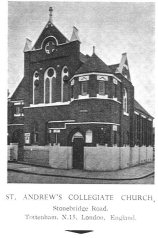
Between 1909, when St Stephen’s was sold to a Spiritualist group, and 1919, the FPEC reverted to the church in Kent House Road as its place of worship. In the latter year, the mission church of St Andrew, at 26 Speldhurst Road, Hackney (known as the Church of Martin Luther), was acquired and was pastored by Stevens’ eventual successor, Andries Caarel Albertus McLaglen (1851-1928) until his death. The church then passed to the Rev. William Hall (1890-1959) of the FPEC, who had been ordained priest by Martin in 1915, and was also chaplain to Abney Park cemetery. In 1936, St Andrew’s Hackney was demolished as part of a housing development, and Hall purchased the former Primitive Methodist church in Stonebridge Road, Tottenham, which was renamed St Andrew’s Church in turn (pictured above). Meanwhile, McLaglen’s successor as Primus, Herbert James Monzani Heard (Mar Jacobus) (1866-1947), who was unsympathetic to Protestantism, had separated the FPEC from his other jurisdictions when in 1939 he had consecrated Hall and appointed him Primus in his stead. Hall, perhaps surprisingly for a clergyman of the FPEC, was an Anglo-Catholic in his churchmanship. The FPEC did not prosper, and by the late 1940s its continued existence appeared precarious.

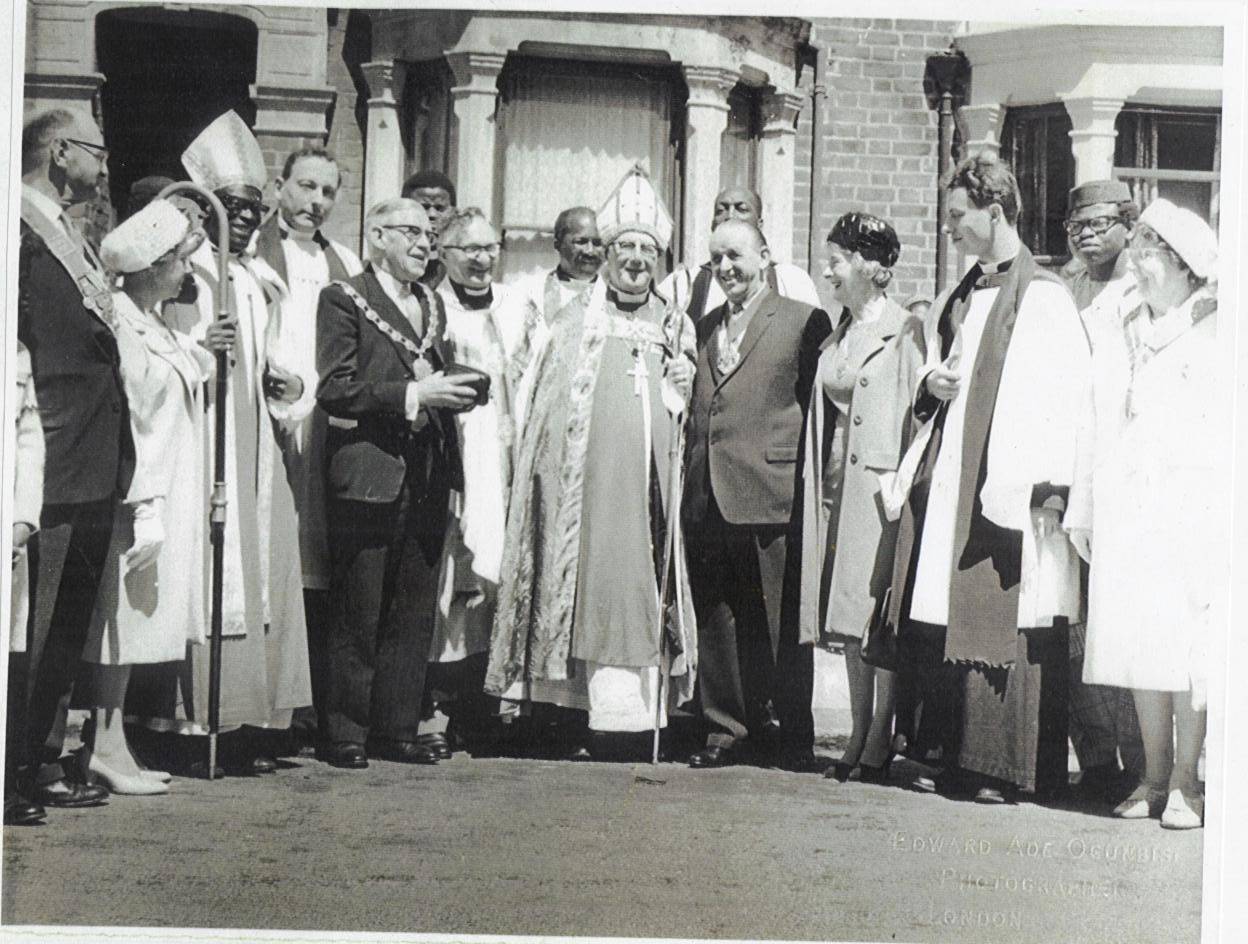
Hall persuaded Boltwood to join the FPEC as well as maintaining his status within the Catholicate of the West, and on 3 May 1951 he was formally admitted to the FPEC, also being ordained and consecrated conditionally by Hall. On 25 March 1954, he was appointed Hall’s successor as Primus, since Hall was then undergoing surgery for cancer, and St Andrew’s Church, Tottenham, together with the Nazarene College, was transferred to his charge. Boltwood renamed the church St Andrew’s Collegiate Church. He succeeded Hall on his death in 1959. Between 1956 and 1960, the FPEC was formally affiliated with the work of Mar Georgius in the United Orthodox Catholic Church, and Mar Georgius had free use of St Andrew’s during that period, with one of his priests celebrating the Glastonbury Rite there on a Sunday morning while Boltwood took the evening service. The formal links were abandoned in October 1960, although there continued to be some interchange between the jurisdictions.

Boltwood was much involved with educational work. In addition to the Nazarene College, he inherited the (International) Free Protestant Episcopal University (which was stated to have been founded in 1898 by the three founders of the FPEC) and the James Martin Bible College. In 1953, he applied to trade under the name St Andrew’s College, but the name was refused by the Registrar of Business Names. The name St Andrew’s Correspondence College was allowed instead, but a year later, Boltwood was successfully prosecuted and fined for using the originally-proposed name of St Andrew’s College. This prompted him to establish his educational work on a firmer footing, and on 5 July 1955 he incorporated St Andrew’s Correspondence College (Tottenham) Ltd. as a nonprofit company, with which the Nazarene College was merged. This became a busy degree-granting entity, training many who could not at that time afford a conventional university education, as well as those who wished to study non-traditional disciplines that were not taught in the university sector.

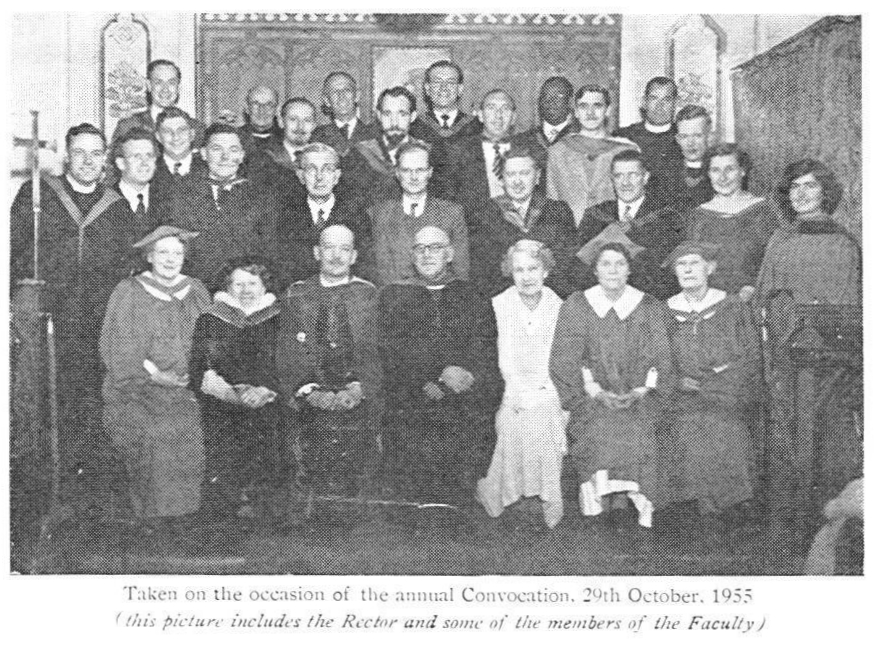
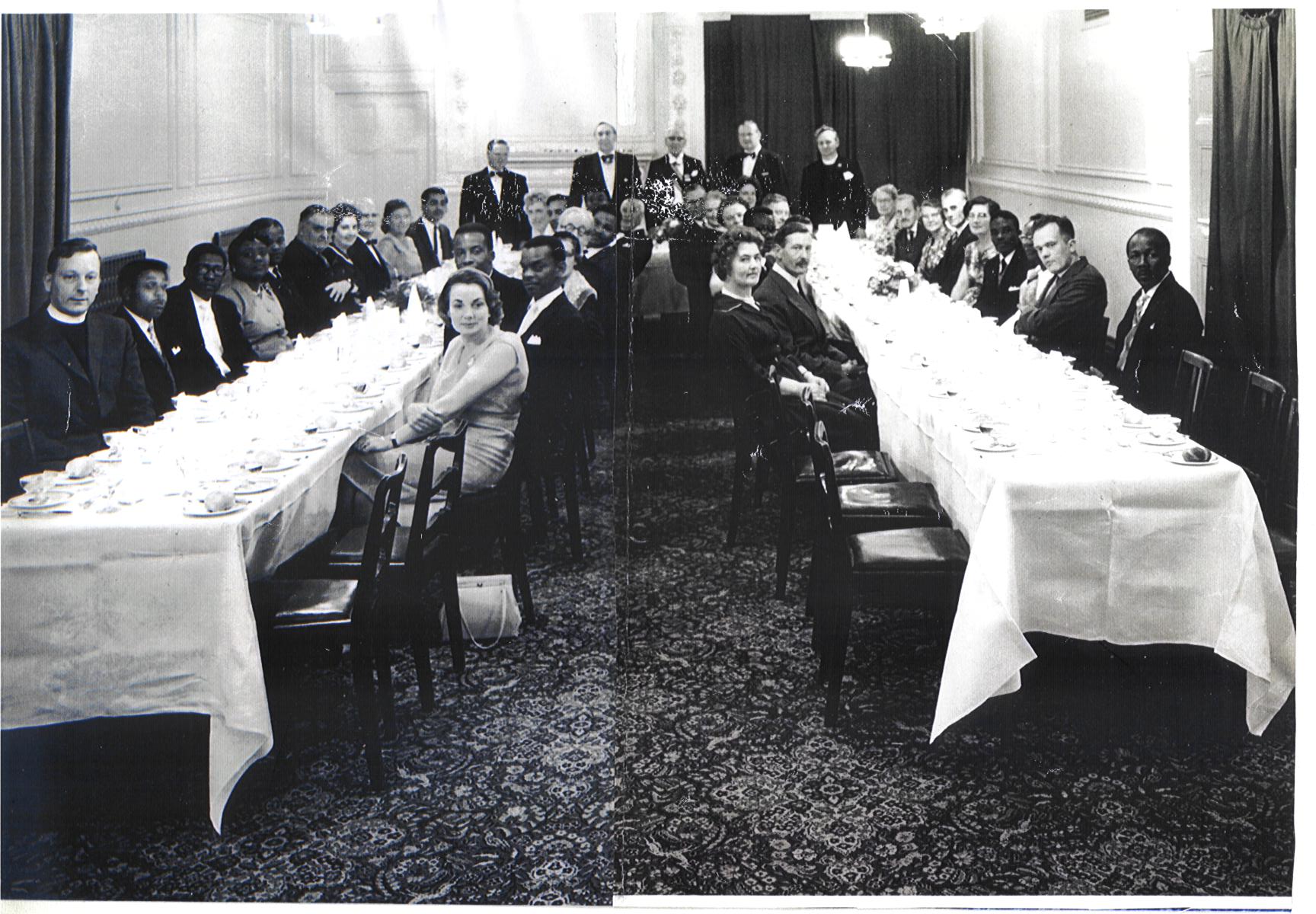
In time, the Correspondence College became part of the St Andrew’s Foundation, an active body which held an annual Convocation at the church, followed by a dinner at the Bonnington Hotel, Bloomsbury (pictured left), and which maintained a Research Extension Fellowship (later St Andrew’s Ecumenical Intercollegiate Research Fellowship) of scholars, with lectures of various kinds being given at the church and offices maintained there for administration. The Research Fellowship and Associateship held an annual thesis competition for which medals and certificates of honour were awarded and described its objects as “to extend such knowledge as we have into deeper fields by research. In most subjects, man has yet to learn the hidden mysteries of life, but these researches should penetrate the laws of life in order to understand the divine purpose that they should fulfil. We do not want theses which advance the benefits, so-called, of drugs, or any form of distorted conceptions proclaimed as benefits to mankind. The subjects in which we are interested are: science; biochemistry; homoeopathy; naturopathy; biology; radiotherapy; psychiatry; psychology; chromotherapy; psycho-analysis; divine healing; metaphysics; psychotherapy; theology; philosophy; literature; arts and sciences; music.”

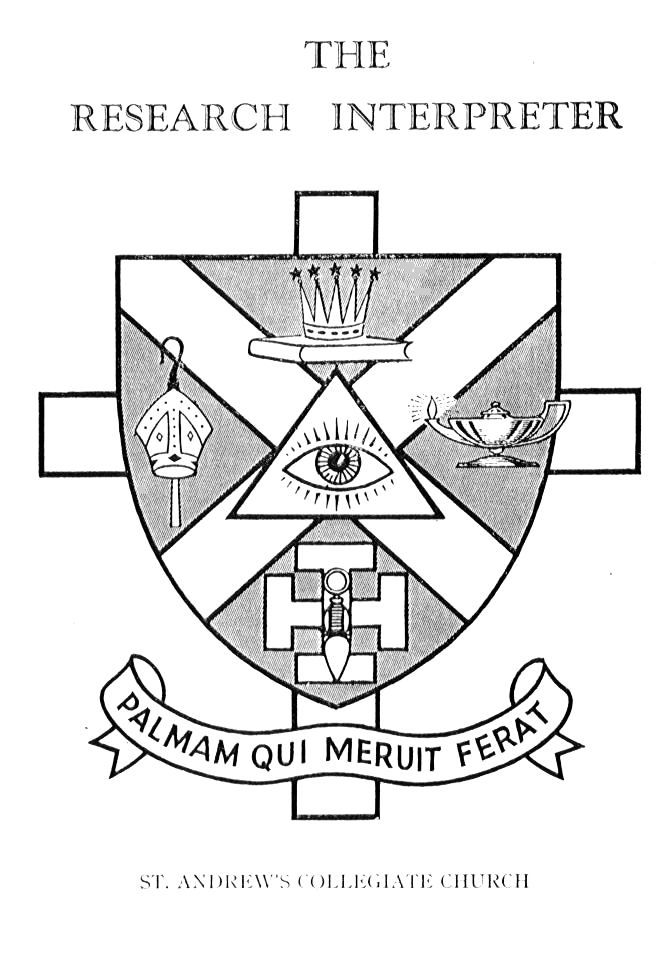
Boltwood would write of the College in 1964 that it had “embodied in its studies the light of divine intelligence, thus has provided more than the aspects of physiology, psychology, sociology, philosophy, theology, etc., because these sciences alone are incapable of solving even the simplest of our human problems.” The “Research Interpreter” served as the journal of record of these bodies and Miss Connie Godden served as treasurer and registrar for them. She would, in due course, become the second Mrs Boltwood. Involved from the 1950s were the late Bishop Frederick Charles King, who served as Vice-Chancellor of the San Luigi Orders until his death in 1985, and his wife Karla.

From 1958 onwards, when he first toured the United States, Boltwood began to expand the FPEC (also known by then as the Ecumenical Church Foundation) overseas, undertaking frequent travel abroad and consecrating a number of bishops for service in Europe, Africa and the Americas. His wife also travelled independently as part of the overseas missions. Although this work was prolific in building up what on paper was a substantial organization, in practice the affiliation of ministers who were already serving in other denominations did not result in substantial adherance and growth for the FPEC itself. The Tottenham church building had for some years established a fund for its repair and upkeep, but this failed to achieve its aims. Moreover, Boltwood’s health was failing, and he was compelled to lay aside some of his responsibilities on medical advice.

In 1966, the final Convocation at the Bonnington Hotel was held, and the Research Foundation closed down, their records being lodged at Somerset House. St Andrew’s was for a time placed under the charge of Fr. Michael Gifford, who established St Bernard’s Church of Divine Healing there in 1963, but this failed to prosper.

In 1967. St Andrew’s was sold to the Church of God, a Pentecostal group, but it was eventually demolished in 1985 as part of a housing redevelopment. Boltwood retired to St Leonard’s-on-Sea, eventually resigning as Primus in favour of his American bishop Albert J. Fuge, Sr., on 17 October 1978. The FPEC continued a very limited operation in London under Bishop Dr. Francis Thomas until the 1980s, and the International Free Protestant Episcopal University continued to confer some degrees during the 1970s.

Boltwood was extremely active in chivalric affairs, and received many honorary awards through his long career. He was admitted to the Order of the Crown of Thorns under Prince-Abbot Edmond I, though his relationship with the Grand Priory of England and Wales did not continue beyond the appointment of Mgr. Tull as Grand Prior in 1960. He was also responsible for some Orders of his own; the Order of Ursus, which was reported to be based at St Andrew’s Collegiate Church in 1952, was “preparing against the possibility of Atomic War and also against other world calamities.”

>>Free Protestant Episcopal Church website