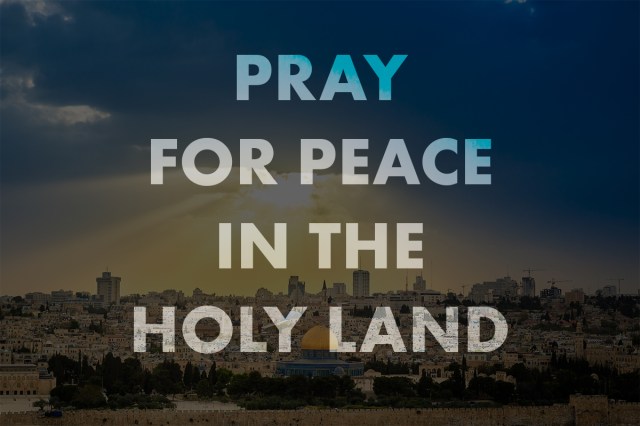
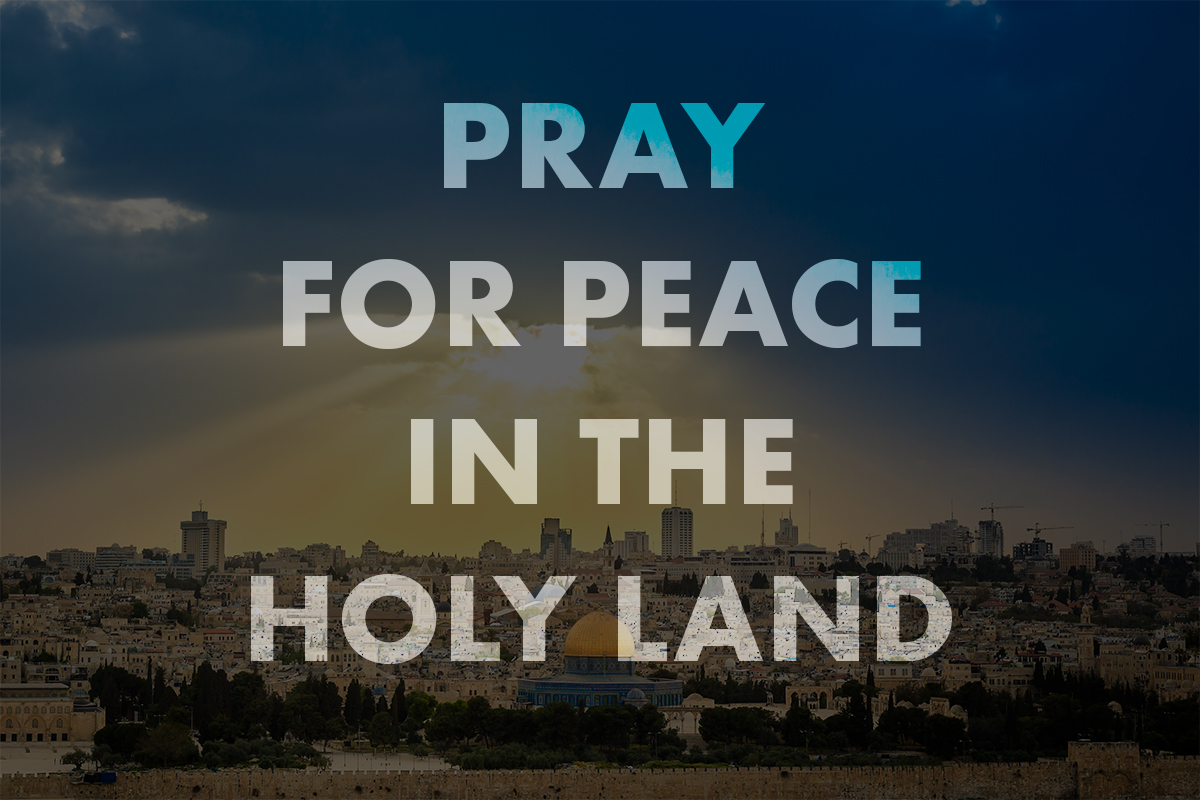
The Abbey-Principality of San Luigi affirms its commitment to peace and its rejection of armed conflict. It notes the recent letter of Cardinal Pierbattista Pizzaballa OFM, Latin Patriarch of Jerusalem, and reproduces its text below, commending it to all who adhere to the Abbey-Principality and its dependent institutions.
Letter of the Patriarch
Dear Brothers and Sisters,
May the Lord give you peace!
We are going through one of the most difficult and painful periods in our recent times and history. For over two weeks now, we have been inundated with images of horrors, which have reawakened ancient traumas, opened new wounds, and made pain, frustration, and anger explode within all of us. Much seems to speak of death and endless hatred. So many “whys” overlap in our minds, adding to our sense of bewilderment.
The whole world views this Holy Land of ours as a place that is a constant cause of wars and divisions. That is precisely why it was good that a few days ago, the whole world joined us with a day of prayer and fasting for peace. It was a beautiful view of the Holy Land and an important moment of unity with our Church. And that view is still there. Next Oct. 27, the pope has called for a second day of prayer and fasting, so that our intercession may continue. It will be a day that we will celebrate with conviction. It is perhaps the main thing we Christians can do at this time: pray, do penance, intercede. For this, we thank the Holy Father from the bottom of our hearts.
In all this uproar where the deafening noise of the bombs is mixed with the many voices of sorrow and the many conflicting feelings, I feel the need to share with you a word that has its origin in the Gospel of Jesus. That is the starting point which we set out from, and return to, time and time again: a word from the Gospel to help us live this tragic moment by uniting our feelings with those of Jesus.
Looking to Jesus, of course, does not mean feeling exempt from the duty to speak, to denounce, to call out, as well as to console and encourage. As we heard in last Sunday’s Gospel, it is necessary to render “to Caesar what belongs to Caesar and to God what belongs to God” (Mt 22:21). Looking to God, we therefore want, first of all, to render to Caesar what is his.
My conscience and moral duty require me to state clearly that what happened on Oct. 7 in southern Israel is in no way permissible and we cannot but condemn it. There is no reason for such an atrocity. Yes, we have a duty to state this and to denounce it. The use of violence is not compatible with the Gospel, and it does not lead to peace. The life of every human person has equal dignity before God, who created us all in his image.
The same conscience, however, with a great burden on my heart, leads me to state with equal clarity today that this new cycle of violence has brought to Gaza over 5,000 deaths, including many women and children, tens of thousands of wounded, neighborhoods razed to the ground, lack of medicine, lack of water and of basic necessities for over 2 million people. These are tragedies that cannot be understood and which we have a duty to denounce and condemn unreservedly. The continuous heavy bombardment that has been pounding Gaza for days will only cause more death and destruction and will only increase hatred and resentment. It will not solve any problem but rather create new ones. It is time to stop this war, this senseless violence.
It is only by ending decades of occupation and its tragic consequences, as well as giving a clear and secure national perspective to the Palestinian people that a serious peace process can begin. Unless this problem is solved at its root, there will never be the stability we all hope for. The tragedy of these days must lead us all, religious, political, civil society, international community, to a more serious commitment in this regard than what has been done so far. This is the only way to avoid other tragedies like the one we are experiencing now. We owe it to the many victims of these days and to those of years past. We do not have the right to leave this task to others.
Yet, I cannot live this extremely painful time without looking upward, without looking to Christ, without the faith that enlightens my view and yours on what we are experiencing, without turning our thoughts to God. We need a Word to accompany us, to comfort and encourage us. We need it like the air we breathe.
“I have told you this so that you might have peace in me. In the world you will have tribulations, but take courage, I have conquered the world” (Jn 16:33).
We find ourselves on the eve of Jesus’ passion. He addresses these words to his disciples, who will shortly be tossed about, as if in a storm, before his death. They will panic, scatter, and flee, like sheep without a shepherd.
Yet, this last word of Jesus is an encouragement. He does not say that he shall win, but that he has already won. Even in the turmoil to come, the disciples will be able to have peace. This is not a matter of theoretical irenic peace, nor of resignation to the fact that the world is evil, and we can do nothing to change it. Instead it is about having the assurance that precisely within all this evil, Jesus has already won. Despite the evil ravaging the world, Jesus has achieved a victory and established a new reality, a new order, which after the resurrection will be assumed by the disciples who were reborn in the Spirit.
It was on the cross that Jesus won: not with weapons, not with political power, not by great means, nor by imposing himself. The peace he speaks of has nothing to do with victory over others. He won the world by loving it. It is true that a new reality and a new order begin on the cross. The order and the reality of the one who gives his life out of love. With the Resurrection and the gift of the Spirit, that reality and that order belong to his disciples. To us. God’s answer to the question of why the righteous suffer is not an explanation but a Presence. It is Christ on the cross.
It is on this that we stake our faith today. Jesus in that verse rightly speaks of courage. Such peace, such love, require great courage.
To have the courage of love and peace here, today, means not allowing hatred, revenge, anger, and pain to occupy all the space of our hearts, of our speech, of our thinking. It means making a personal commitment to justice, being able to affirm and denounce the painful truth of injustice and evil that surrounds us, without letting it pollute our relationships. It means being committed, being convinced that it is still worthwhile to do all we can for peace, justice, equality, and reconciliation. Our speech must not be about death and closed doors. On the contrary, our words must be creative, life-giving; they must give perspective and open horizons.
It takes courage to be able to demand justice without spreading hatred. It takes courage to ask for mercy, to reject oppression, to promote equality without demanding uniformity, while remaining free. It takes courage today, even in our diocese and our communities, to maintain unity, to feel united to one another, even in the diversity of our opinions, sensitivities, and visions.
I want, and we want, to be part of this new order inaugurated by Christ. We want to ask God for that courage. We want to be victorious over the world, taking upon ourselves that same cross, which is also ours, made of pain and love, of truth and fear, of injustice and gift, of cries and forgiveness.
I pray for us all, and in particular for the small community of Gaza, which is suffering most of all. In particular, our thoughts go out to the 18 brothers and sisters who perished recently and to their families whom we know personally. Their pain is great, and yet with every passing day, I realize that they are at peace. They are scared, shaken, upset, but with peace in their hearts. We are all with them, in prayer and concrete solidarity, thanking them for their beautiful witness.
Finally, let us pray for all innocent victims. The suffering of the innocent before God has a precious and redemptive value because it is united with the redemptive suffering of Christ. May their suffering bring peace ever closer!
We are approaching the solemnity of the Queen of Palestine, the patroness of our diocese. The shrine was erected during another time of war, and was chosen as a special place to pray for peace. In these days we will once again reconsecrate our Church and our land to the Queen of Palestine! I ask all churches around the world to join the Holy Father and to join us in prayer, and in the search for justice and peace.
We will not be able to gather all together this year, because the situation does not allow it. But I am sure that the whole diocese will be united on that day in prayer and in solidarity for peace, not worldly peace, but the peace which Christ gives us.
With sincere prayers for all,
+Pierbattista Card. Pizzaballa
Latin Patriarch of Jerusalem
Source: https://www.lpj.org/cached_uploads/download/2023/10/24/1-1318-2023-en-1-1698133294.pdf

The Abbey-Principality condemns this behaviour in the strongest terms, believing that it constitutes fraud, theft and the deliberate deception of the public. It made an official complaint to the free webhost Jimdo, seeking to have its copyrighted material removed, to which Jimdo responded by removing Rovello's fraudulent website. The Abbey-Principality advises any member of the public who may have had dealings with Rovello in these matters to report the matter to the police as a case of fraud. However, since the original publication of this notice, Rovello has repeated his fraudulent and illegal behaviour with a second website on the free webhost Jimdo at https://abbaziaprincipatoecclesia.jimdofree.com using the title "Abbazia-Principato Patriarcato Religioso e Militare Chiesa Cristiana Universale Anglo Cattolica Apostolica Antica Episcopale Ecumenica Di Cristo Misericordioso di Santo Stefano" but again copying text and images verbatim from this website in order to support this blatant and unsophisticated fraud. This has again been the subject of a complaint to Jimdo, who have again removed the fraudulent website, and we have also requested of them that they should now ban Rovello from abusing their services. The only official website of the Abbey-Principality is and remains https://www.san-luigi.org and no other website has ever been authorized to promulgate information on our behalf save the websites of our dependent churches and related organizations, all of which are linked from this site.






 The Abbey-Principality of San Luigi
You must be logged in to post a comment.