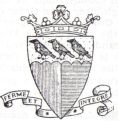
Members of the San Luigi Orders: Comte Charles Otzenberger-Detaille

Comte Charles Otzenberger-Detaille (1881-1944) was a member of the Order of the Crown of Thorns. He is best-known for his Grand Mastership of the Order of St Lazarus of Jerusalem.

Charles Otzenberger rose from humble origins in Alsace to become a wine merchant, and then head of a vintners’ co-operative, based in Colmar. In 1911, he was received into the Order of St Lazarus of Jerusalem, which was under the protection of the Melkite Greek Patriarch. He spent the war years in Barcelona. He joined the Société archéologique de France, an association which shared most of its members with the Order, in 1921. At the time, both the Order and the Society were under the direction of Paul Watrin, an advocate at the Paris Appeal Court. The character of the Order at this time was markedly Royalist, Legitimist, and Traditionalist.

In 1920, Otzenberger moved to Paris, where five years later he would marry Germaine Detaille, niece of the famous painter Edouard Detaille. As a result, he adopted her name and became Otzenberger-Detaille. In Paris, Otzenberger built up a business exporting machinery to Eastern Europe and Latin America. In June 1926 he was appointed as Greffier (registrar) of the Order of St Lazarus, and the following month with the other officers attended a Mass celebrated by the new Melkite Patriarch, Cyril IX Mogabgab, on the occasion of his visit to Paris. By 1929 he had been advanced to Superintendant-General following Watrin’s resignation, and was now in effective charge of the Order. He set about expanding the membership and creating a more elaborate chivalric structure. In protest at this, and following the resignation of the Patriarch as the Order’s Protector in 1930 for which Watrin blamed Otzenberger-Detaille, some of the traditionalist elements placed themselves under Watrin and created a schismatic counter-order, which pursued a lengthy feud with Otzenberger-Detaille’s organization through its journal.
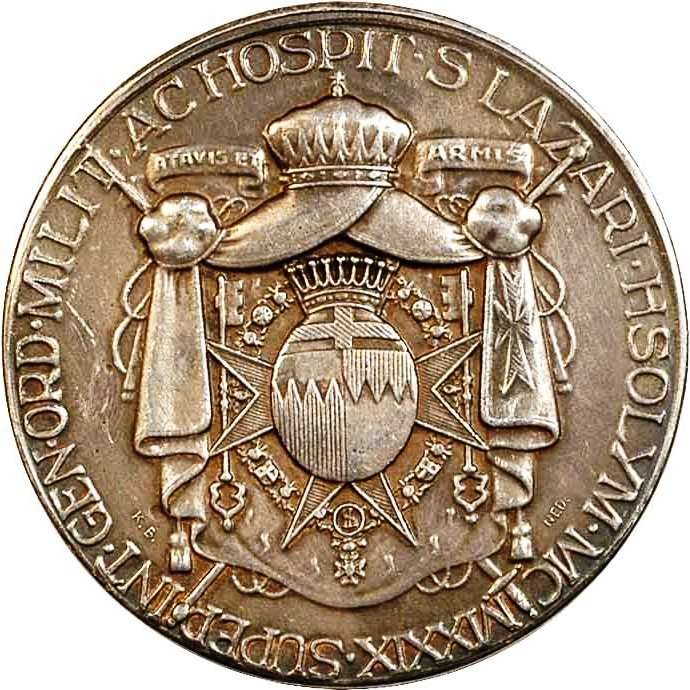
Shortly after the resignation of the Patriarch, and in a major step forward for the Order, the Duke of Seville accepted the invitation to become its Lieutenant-General, being elected Grand Master in 1935. During the 1930s, Otzenberger-Detaille was appointed consul of the Dominican Republic in Mulhouse (the President of that nation being a member of the Order), and received the title of count, apparently from the Royal House of Montenegro. Despite opposition from the Vatican and others, who denounced the Order, it continued to gain influential support.

After 1940, Otzenberger-Detaille and his deputy Paul Bertrand were appointed Administrators-General and jointly managed the Order in the absence of the Duke of Seville. During the Second World War, the Order in France provided first aid to victims of the bombing raids. The Germans had recognized the Order as a hospitaller organization and permitted it to hold services in in the Church of Saint Louis des Invalides. This led its former head and now sworn enemy, Watrin, to level charges of collaboration with the enemy in his journal. When Paris was liberated in 1944, Otzenberger-Detaille was arrested on suspicion of collaboration, released, and then arrested again. He died within weeks, of gangrene of the foot. Watrin himself passed away soon afterwards, and his schism dissolved.
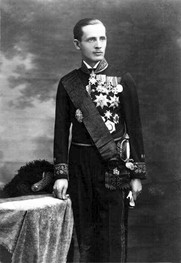
Members of the San Luigi Orders: Dr Adrian Hartog

Dr. Adrian (originally Adrien) Hartog (1893-1968) was a member of the Order of the Crown of Thorns.

He was born in Rotterdam and, moving to the United States, established an import business. He was appointed Vice-Consul and then Consul General for the Netherlands in Los Angeles, California, retiring in 1961 and being knighted by Queen Juliana. He married, as her second husband, the former Claude Telmera Brooks, who survived him.

In 1957, Hartog composed the music to a Centennial Hymn for the Christian Reformed Church, a Dutch Reformed body that was a focus for the Dutch-American community. He received an honorary doctorate from the University of Southern California in 1932.

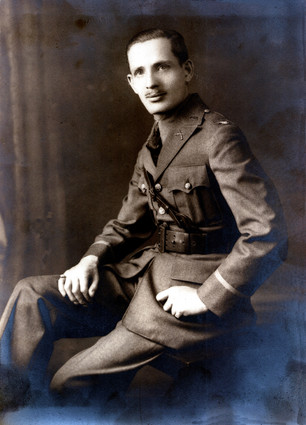
Members of the San Luigi Orders: Colonel Count Marcellus D.A. Ritter von Redlich

Colonel Count Marcellus Donald Alexander Ritter von Redlich (1893-1946) was a member of the Order of the Crown of Thorns. In the photograph, he wears the insignia of the Order, second from right in the group of full-size medals.

von Redlich held several doctoral degrees and was a Professor of Diplomatic History and International Law at the US Foreign Service College. Born in Hungary, the only son and heir of Baron Harold I.S.R. von Redlich, he became resident in the United States, and was based in Chicago in his later years. He served in World War I with the United States Army and as Assistant Registrar and legal advisor of the US Draft Boards from 1917. He was additionally Privy Councillor of Justice to Prince William of Albania, legal adviser to King Nikolai of Montenegro, consul of Monaco and Latvia, and consul-general of Iran and Albania.

He emerges as a prolific author on diplomatic and genealogical topics, and was editor of the International Courier. His books include “Pedigrees of some of the Emperor Charlemagne’s Descendants” (1941), “International law as a substitute for diplomacy” (1928), “The law of nations” (1937), “Mohammedan law”, “Persian language and literature”, “Justice for Hungary” (1935), “The last strong-hold of Old-world tradition” (1935) and “Resume of the movement for world peace” (1937). He was also a contributor to diplomatic and genealogical journals. In 1942, he was elected a Fellow of the American Society of Genealogists. He was also a member of the Society of Genealogists (London), the College Heraldique de France, the Royal Society of Literature, the Grotius Society, the International Law Association and the American Society of International Law.

von Redlich was active in chivalric affairs. He was Grand Officer of the Order of Danilo I, Knight First Class of the Order of Ernest of Saxe-Coburg-Gotha, Grand Cross of the Order of the Holy Sepulchre, Grand Cross of the Albanian Order of the Black Eagle, Grand Cross of Justice of the Order of St Lazarus of Jerusalem, a knight of the Orders of the Lys and Saint Agatha and so on. He founded the Order of the Crown of Charlemagne on 1 January 1939. This body still exists today and both commemorates the life and achievements of the Emperor and seeks to gather together his descendants, to whom membership is restricted. von Redlich’s “Pedigrees” remains a standard and much-cited work on Charlemagne’s descent, and two more volumes were issued in due course under the editorship of other authors.

Another interest was in Albania. He addressed the position of the House of Wied and Albania’s history in books, and with Brigadier-General William Edward Horton and a group of young Albanians organised the Society of the American Friends of Albania with headquarters in Washington, DC. This was a club with the aims of fostering links between the two nations, supporting exiled Albanians and promoting information about Albania.

von Redlich received the title of Count de Policastro from King Nikolai of Montenegro and was granted arms as such in January 1932 under the aegis of Sir Nevile Wilkinson, Ulster King of Arms. A further grant was made by the same authority in 1935 recording his title of Baron.

He was twice married, secondly to Frederica Adelaide Marie Jeter Doll, and had issue by both marriages.

>>1939 review of “The Law of Nations”

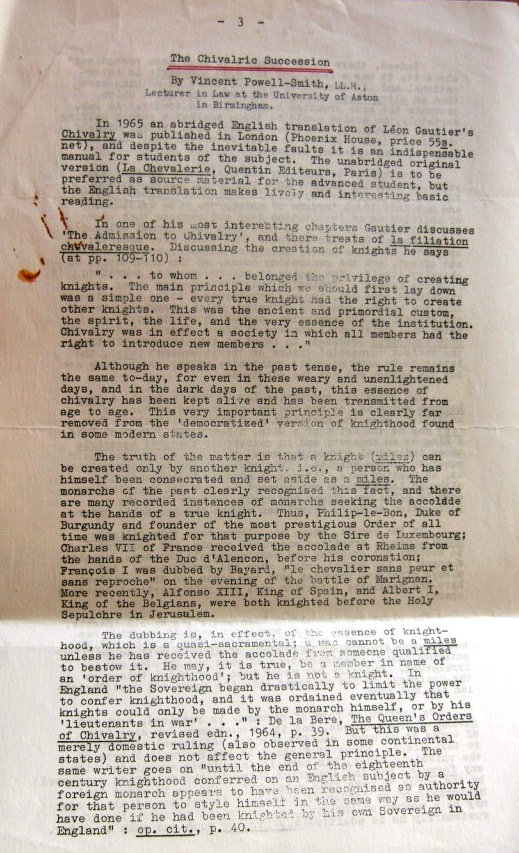
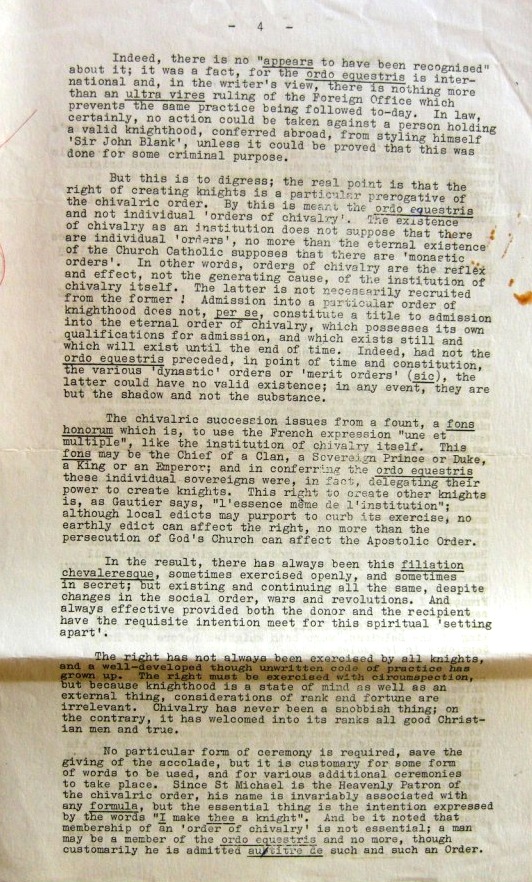
‘The Chivalric Succession’ by Vincent Powell-Smith

The archives of the Abbey-Principality contain this interesting paper on how knights are created, and indeed how they may style themselves, by the late Professor Vincent Powell-Smith (1934-97).

Powell-Smith, a barrister who held numerous academic positions in law, came under the mentorship of the Most Revd. J.E. Bazille-Corbin (q.v.) while exploring his religious vocation, and through his influence became a member of a number of chivalric bodies. He was appointed an Officier in the Order of the Crown of Thorns, but withdrew from the Order in June 1962.

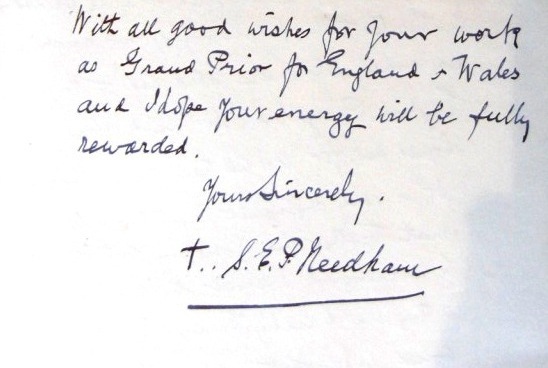
Members of the San Luigi Orders: Bishop Sidney E.P. Needham

Bishop Sidney Ernest Page Needham (1879-1962) was a Prelat Commandeur of the Order of the Crown of Thorns. He combined his office as an Anglican priest with that of a bishop in the Catholicate of the West.

Needham’s early career was in the Army. He was gazetted Second Lieutenant in the 1st Volunteer Battalion, the Warwickshire Regiment in July 1902, transferring to the 5th Battalion as Lieutenant in 1908. He then served with his regiment in the First World War as a Captain, ending the war as second in command of the 5th Battalion. Having trained for the Anglican ministry, he was appointed Rector of Farthinghoe in Northamptonshire in 1925, also becoming responsible for nearby Thenford in 1931. He was married to Constance Evelyn, née Yates, who would predecease him in 1952.

He came into contact with the American Catholic Church, which had been founded by Prince-Abbot Joseph III (Vilatte). In 1928, he was conditionally ordained priest by that body’s Primate, Archbishop Frederick E.J. Lloyd, and named by him Bishop-Designate of a body to be called the English Catholic Church. Under the  Primacy of Archbishop Daniel Cassel Hinton, Lloyd’s successor, Needham served as a priest of the A.C.C. in England alongside his Anglican duties. On 28 May 1940, pursuant to Letters Dimissory issued by Hinton, who was fulfilling Lloyd’s earlier election of Needham to the episcopate, he was consecrated bishop by James Bartholomew Banks, Lord Patriarch of the Old Catholic Orthodox Church, assisted by Mar Jacobus Dominic O’Gavigan. Since he held the benefice of Farthinghoe throughout these events, it was not possible for the Church of England to take any effective action against him despite his acceptance of Holy Orders from other churches. Needham entitled his mission The Old English Catholic Church, but this body undertook little activity in its homeland. Its principal pastoral responsibility proved in fact to be for an Old Catholic mission in Sardinia.

He was appointed by Hinton as the head of the University of Sulgrave, a short-lived and controversial Delaware-based institution that quickly incited the opposition of the educational and political establishments. This had taken its name from a village near Farthinghoe. On 4 January 1945, in his private chapel at Farthinghoe Rectory, he exchanged mutual subconditional consecrations with Mar Georgius of Glastonbury (q.v.) and was appointed by him as Mar Theodorus, Bishop of Mercia in the Catholicate of the West. On 1 August 1945, Mar Georgius founded the Western Orthodox Academy (later University) as a means of continuing the work of the erstwhile University of Sulgrave, and appointed Needham as its Chancellor.

Needham combined his offices in the Church of England and the Catholicate of the West for a year or so, but in 1946 retired from his ministry in the former body and moved to Newbury.

The Needham succession

Needham consecrated Percival Sydney Raby (1901-82), who was also an Anglican priest and between 1944 and 1962 served as Rector of Erpingham with Calthorpe, Norfolk. Of the two other priests who had served under Needham, H.D. Ricketts served under Mar Georgius until his death in 1966, and George Draisey served variously under the Lord Patriarch Banks and Bishop Francis E. Glenn. Draisey received consecration from Raby and was acquainted with our Grand Prior for the United Kingdom, Mgr. Howard Weston-Smart.

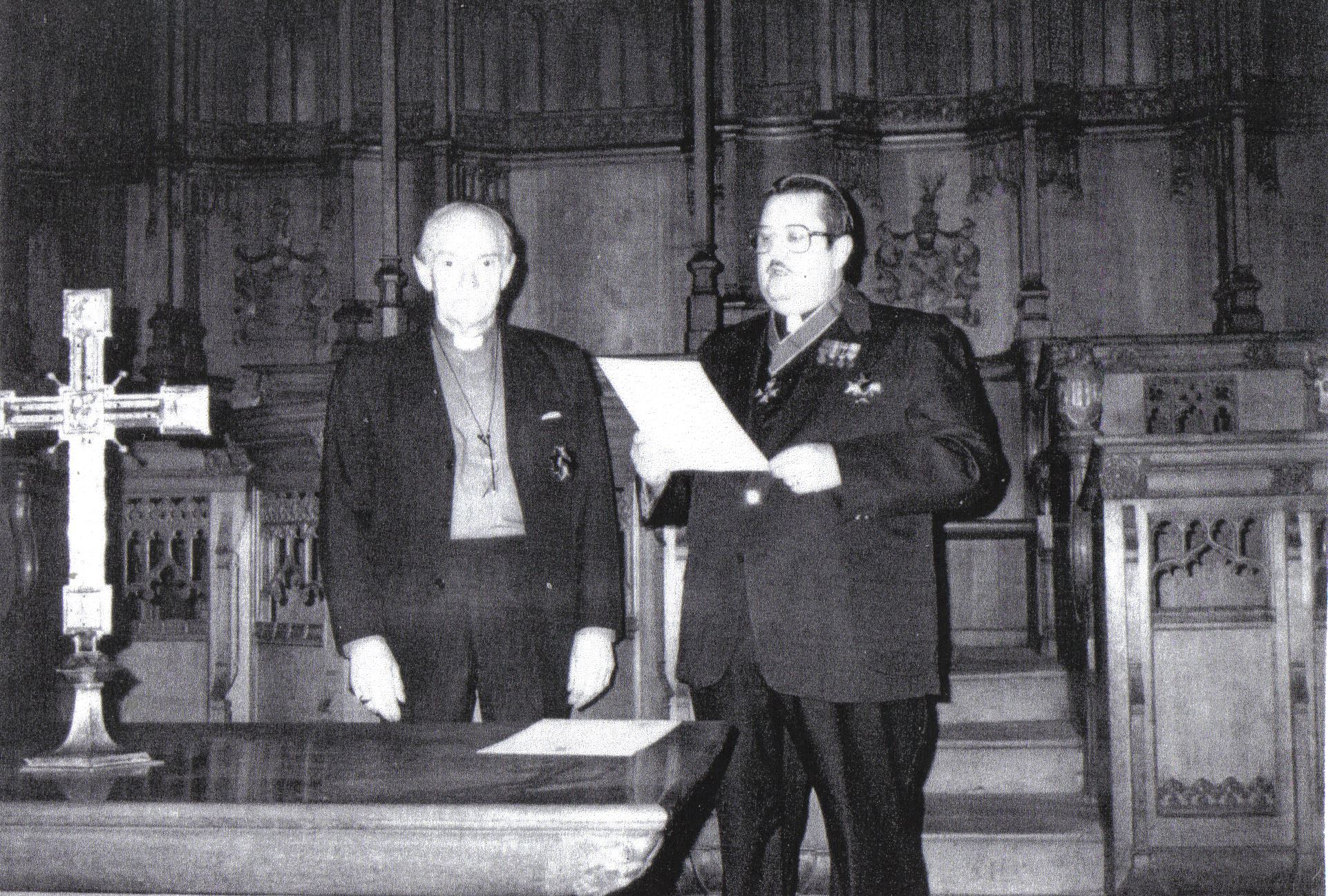
William James Mathias (1919-90) was also consecrated by Needham on 6 January 1953, albeit in conditions of some secrecy, since he was also a priest of the Church of England. Mathias was Vicar of St Marks, Victoria Park, at that time, and subsequently served the Anglican Church in posts in London, Australia and lastly as Vicar of Abertillery (1965-77). In 1986, in the chapel of Mansfield College, Oxford, he imparted conditional episcopal consecration to Prince Kermit Poling de Gniezno, later Royal Patron of San Luigi, and a photograph from that occasion is below.

William James Mathias and Prince Kermit

Members of the San Luigi Orders: Archbishop John van Ryswyck

Archbishop James John van Ryswyck (also Ryswyk) (1898-1963) of the Apostolic Church of St Peter served as Grande Prieur of the San Luigi Orders for England under Prince-Abbot Edmond I, until his retirement in 1960.

John van Ryswyck was born in Holland, and as a boy travelled with his family to the Dutch East Indies, which led to a lifelong interest in Eastern culture. He served in the Dutch navy and undertook intelligence duties. He subsequently became a naturalized British citizen. He was a noted spiritual teacher and lecturer, and in 1935 founded the Apostolic Church of St Peter. His home, and that of his church and related organizations, was Eldon Lodge in Victoria Road, Kensington, London W8.

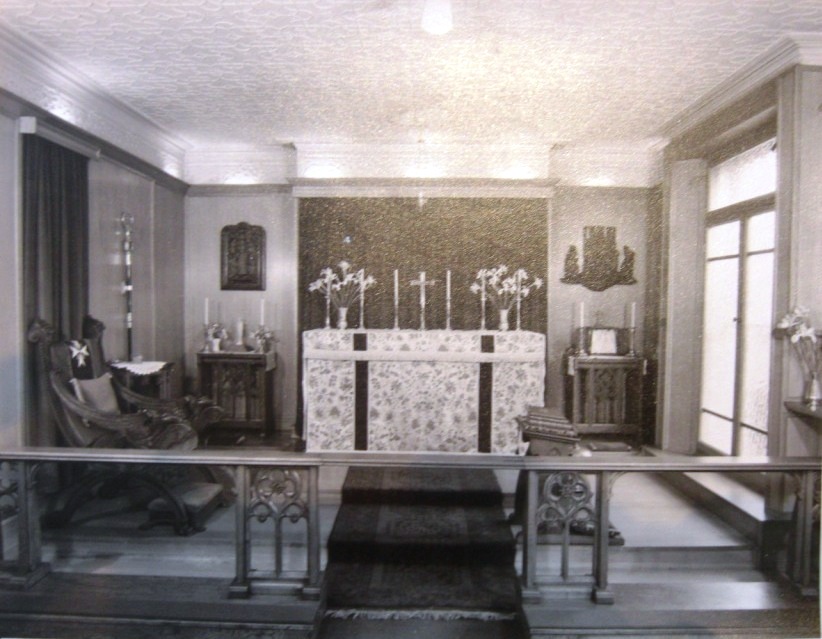
Eldon Lodge had been built for the painter Alfred Corbauld, and is an extremely substantial house with Tudor, baronial and Gothic elements. van Ryswyck converted Corbauld’s first floor studio into a chapel, the Sanctuary of the Vigil, and since his church and other organizations were open solely to initiates, this served as their place of worship. The basement, meanwhile, contained a large hall which served as the home for a number of chivalric orders. During the 1970s, Eldon Lodge would become the London centre of the Liberal Catholic Church before the purchase of the current pro-cathedral at Putney.

The work of the Apostolic Church of St Peter was a combination of elaborate Catholic worship with a process of inner teaching that was derived from Freemasonry. van Ryswyck was a staunch opponent of Communism in all its forms, and there were even (unsubstantiated) rumours at one point that he had received consecration from a Roman Catholic bishop in order to assist the Vatican in its fight against that ideology. He saw his mission and that of his followers in terms of the spiritual defence of global civilization.

In 1947, van Ryswyck was heavily involved in the F.U.D.O.S.I. (Federatio Universalis Dirigens Ordines Societatesque Initiationis) Congress at Paris that brought together many esoteric groups of the day. This was no small affair; there were 2,200 US groups represented and 300 French delegates in addition to representatives of other countries. Raymond Duncan was among the attendees. One objective was to establish a Supreme Martinist Council to bring together the various groups in that tradition; another was to establish a World Spiritual Parliament.

Aside from the Apostolic Church of St Peter, there were two main initiatic organizations that van Ryswyck headed, in addition to the many in which he held office and membership. These were the Temple of Service and the Avatar Defenders of Civilization (also known as the Order of Avatar and Avatar Imperium Internum), of which latter group he was Founder-President. Avatar was “an organization of people of all races, believing in the fundamental spiritual basis of life, as opposed to present-day materialism – in this sense a ‘Spiritual Kingdom’…the primary object of the Avatar Plans are decentralization of political power and the independence of all peoples and nations in Autonomous States, which may be federated into cultural and ethical groups, provided this is done with the consent of the peoples concerned,” and “a Universal Order working for a new way of life based on the sacredness of The Individual and the Spiritual Foundations of human existence.” Belief in past lives and in reincarnation appears to have been common. Avatar was finally dissolved in 1997 following a court case.

van Ryswyck held a large number of nobiliary and chivalric titles from various sources, including the Paterno Castello house and various of the Italo-Byzantine pretenders.

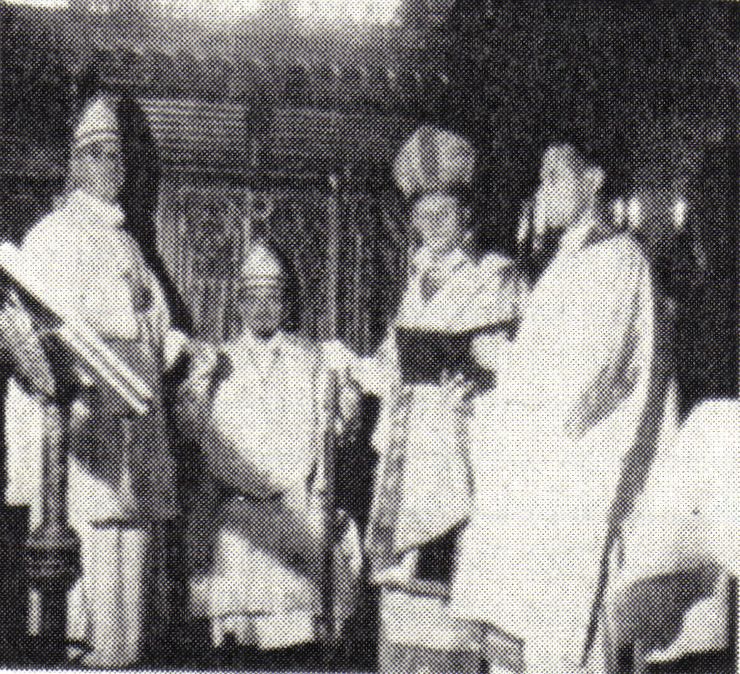
On 6 November 1949, at the mansion chapel of the Lord Patriarch Banks in East Molesey, van Ryswyck received conditional ordination up to the priesthood from Mar Georgius of Glastonbury (q.v.), who was a senior member of the San Luigi Orders. On 20 November, at Eldon Lodge, van Ryswyck was conditionally consecrated by Mar Georgius in an elaborate ceremony. This was described in Christocracy, the journal of the Apostolic Church of St Peter, as follows, “After the opening voluntary, Ave Verum, the procession entered to the music of the Creed, rendered by the choir of the Russian Orthodox Church of Paris. The Lord Patriarch [Mar Georgius] was attired in robes of cloth of gold. Bishop Langhelt and Fr. Sandys-Pemberton in white dalmatic and tunicle respectively, and Mgr. van Ryswyck in white and gold, in sharp contrast to which stood out the black and white bands of the Solicitor (Mr E.F. Power-Green). It is interesting to note that the epigonation worn by Mgr. van Ryswyck was presented to him by Bey Sulik Acarli, President of the Turkish Social Democratic Party, and Sacretary of the Red Crescent…After the long function Mgr. van Ryswyck was solemnly enthroned by the Patriarch by the name, style and jurisdiction of Mar Joannes, Lord Bishop of Ryswyck, and Imperator of the Ordo Equestris Militaris Avatar…Before the recessional, His Beatitude conferred upon Brigadier L.M. Poole, D.S.O., the Knighthood of the Order of St Gregory and Sarkis, and upon the Bishop of Ryswyck, the grade of Knight Grand Cross with the title of Duke de Richelieu-Ryswyck in the Order of the Spiritual Christian Nation [a body founded by the late Patriarch Frederic C.A. Harrington of the Ecclesiae Rosicrucianae Catholicae], these honours having been awarded for the services which the gentlemen concerned had rendered to religion.” The photograph taken after the ceremony above shows van Ryswyck seated, with, from left, Mar Francis (Langhelt), Mar Georgius  and Fr. Sandys-Pemberton.

At van Ryswyck’s funeral in 1963, the San Luigi Orders were represented by Fr. Brougham Yates Claxton, who acted as Mgr. Tull’s deputy during his time as Grande Prieur.

van Ryswyck consecrated a successor, (Rupert) John Luker (1906-84), who was a Grande Officier in the Order of the Crown of Thorns. During the 1950s, it was Luker who undertook most of the administration of the San Luigi Orders in England. Under his direction, fundraising took place among the members in aid of two London hospitals. He continued in membership under Mgr. Tull, being advanced to Grande Croix, until his resignation from the San Luigi Orders on 5 May 1970.

>>John van Ryswyck lectures

Members of the San Luigi Orders: Vida Hambro

Vida Agnes Hambro (1914-2002) was a Dame Grand Officier d’Honneur et Devotion of the Order of the Crown of Thorns, being appointed on 25 July 1955. She was the daughter of Captain William Lancefield and her first marriage was to Lieutenant-Commander Thomas Henry Morrough Chillingworth, RN. On 25 March 1957 she married, as his second wife, Richard Everard Hambro (d. 1967), son of Sir Eric Hambro, KBE. By her first husband, she had three children, and also became stepmother to her second husband’s children.

Her husband, Richard Everard Hambro, was a Officier and Compagnon of the Order of the Crown of Thorns. They had been introduced to the Order when they were both members of the esoteric Avatar spiritual organisation under the direction of Archbishop John van Ryswyck, which was based in the capacious Eldon Lodge in Kensington. Vida Hambro was also a member of van Ryswyk’s Apostolic Church of St Peter.  However, differences of opinion emerged between the Hambros, van Ryswyck and his Chancellor Bishop R. John Luker (who was a Grand Officier of the Order of the Crown of Thorns) concerning the financial administration of the organisations (to which the Hambros had for many years been generous donors), and they resigned from Avatar in consequence.

Although van Ryswyck had at that time exercised a representative role for England in respect of the San Luigi Orders, he had in practice left their administration to Mgr. Luker and taken little active part in their development. Vida Hambro was happy to see the growth of activity that occurred under Mgr. Tull as Grande Prieur from 1961 onwards. In a letter of 1963, she wrote, “We both feel that it is a great honour to belong to such an ancient Order and that it is a really worthwhile thing that can be an instrument for good, and we support the Order wholeheartedly.”

Members of the San Luigi Orders: The Most Revd. J.E. Bazille-Corbin

John Edward Bazille-Corbin (1887-1964) was a member of the Order of the Crown of Thorns. He was the founder and first Warden of the Monarchist League and combined his office as a bishop in the Catholic Apostolic Church (Catholicate of the West) with that of an Anglican priest.

Bazille-Corbin was educated at Oxford (M.A.) and qualified as a barrister at Lincoln’s Inn. He did not practice, however, and served in the Royal Artillery during the First World War. After this, he pursued a teaching career, being a member of the Royal Society of Teachers, and taught classics at a Guernsey college. He entered Cuddesdon Theological College to train for the Anglican ministry, and was ordained priest in 1921. In 1923 he became Rector of Runwell St Mary, near Wickford in Essex, and was to hold this benefice until his retirement on 30 September 1961.

Some idea of the nature of Bazille-Corbin’s interests can be gained from the knowledge that he was a fervent Jacobite, High Tory and devotee of the Sarum Rite, belonging to the High Church party and espousing Ritualism to the full. He was no pastoral priest, and the introduction of the Sarum Rite to his parish (with the knowledge but not the approval of his Ordinary) resulted in a much-diminished flock. It is clear that this approach also made him significant enemies within the Church of England hierarchy, which contained many who were Protestant in their views. In 1951, he would publish Toward a Uniate Rite, being the text of the Sarum Ordinary and Canon, closely rendered into English, which was favourably reviewed in the Catholic Herald. He was also a dedicated local antiquary, and around the same time appeared his Runwell S. Mary: A farrago of History, Archaeology, Legend and Folk-lore, collected and pieced together during an incumbency of many years.

Bazille-Corbin developed contacts within the Free Catholic movement in England during the 1940s, and as many Anglicans had done before him under Archbishop Arnold Harris Mathew, sought conditional revalidation of his Holy Orders so that they would be acceptable to Rome. During August 1946, he received conditional re-ordination to all orders up to the priesthood from James Bartholomew Banks, Lord Patriarch of the Old Catholic Orthodox Church. Subsequently, he became concerned with the Catholic Apostolic Church (Catholicate of the West) under Mar Georgius (Hugh George de Willmott Newman), who was also a member of the San Luigi Orders. The Catholicate of the West had formed in 1944 as the merger of several small British sacramental churches with succession from the major denominations, and aspired to create a Western Orthodox bridge between Rome and Canterbury in continuation from the mission of the Catholic Apostolic Church (“Irvingites”) into which body Mar Georgius had been born and raised. During the 1940s it established an international hierarchy and attracted a diverse following as a result of energetic public outreach, but was marred by a failure to gain lay support and by recurrent internal dissent which weakened its ranks.

Bazille-Corbin was consecrated to the Episcopate by Mar Georgius on 3 April 1948 with the title of Mar Marcus Valerius, Titular Bishop of Selsey. He was appointed Chancellor of the Glastonbury Patriarchate and Catholicate of the West and also appointed to office in the Order of Corporate Reunion. In 1950 the degree of Doctor of Divinity was conferred on him by the Western Orthodox University, which Mar Georgius headed and which was incorporated at the time in India. In 1958 Mar Georgius advanced him to Archbishop ad personam in the United Orthodox Catholicate. Bazille-Corbin’s choice of episcopal title was modelled after Marcus Valerius Corvinus, the friend of Horace, whose cognomen suggested a connexion with his own surname. Every attempt was made to preserve his secular identity as secret after his consecration, and this strategy was successful for some six years. From 1943 to 1953, Bazille-Corbin served as Chairman of the Chelmsford Branch of the National Clergy Association.

In 1954, the Anglican polemicist the Revd. F.H. Amphlett Micklewright, who was well-known for his malicious and frequently unfounded attacks on Free Catholics in the religious press, publicly named Bazille-Corbin in an article in The Pilot. This was intended to cause difficulties for Bazille-Corbin with his Ordinary, the Bishop of Chelmsford (Falkner Allison) who had already on several occasions shown extreme antipathy to the Free Catholic movement. Bazille-Corbin willingly gave to Allison an undertaking that he would not perform episcopal functions outside the Church of England, conditional upon the proviso that he would also not be required to perform such actions within that body. At this time, the Church of England was particularly fearful that there would be a repeat of the situation of the 1910s whereby its clergy, mindful of the invalidity of their Holy Orders in the sight of Rome, would seek conditional validation from Free Catholic prelates such as Bazille-Corbin, or that those holding the benefice of their parishes would find in Bazille-Corbin and Mar Georgius an alternative means of episcopal oversight that would lead to their removal from the Church of England’s effective control.

Certainly, Runwell St Mary was removed from such control under Bazille-Corbin. He regarded his vocation as being within the Catholicate of the West, and discharged the Anglican ministry as a mere “day job”. His letters were signed in purple ink, with the episcopal cross before his name. During the 1950s, Bazille-Corbin became a mentor to Vincent Powell-Smith, who would join him in a number of chivalric associations (including, for a time, the Order of the Crown of Thorns) and would eventually be ordained deacon by Mar Georgius. Both Bazille-Corbin and Powell-Smith served as officers in the Order of the Crown of Stuart, which has been separately described, with Bazille-Corbin as the Order’s Chancellor from 1955 onwards.

Bazille-Corbin came from an armigerous family in Guernsey and he asserted that his ancestor, a physician, had received the title of Marquis de Beuvel from the King of the Two Sicilies. In the post-war years, a number of claimants to long extinct thrones of the Byzantine and other empires obtained legal confirmation of their dynastic rights from Italian tribunals and Bazille-Corbin was further honoured by several of these pretenders, some of whom were also at the time members of the San Luigi Orders, with titles of nobility and membership of chivalric bodies under their headship. It is evident that Bazille-Corbin was possessed both of a sharp legal mind and of the adherence to strict principle familiar to Legitimists, and his acceptance of such honours would presumably thus have been subject to his having been fully satisfied of their basis in law.

In 1943, Bazille-Corbin founded the organization that would provide his most tangible legacy, the Monarchist League, which survives today as the International Monarchist League. This body had a quiet existence in its early years, and it was not until 1959 that, along with the Order of the Crown of Stuart and with several officers in common with that body, serious efforts were made to bring it to a wider public. A newsletter, The Monarchist Guardian, was published from 1960 onwards. After Bazille-Corbin’s death, those who were antipathetic to his outlook wasted little time in committing to print their harshly critical assessment of him, which would certainly have been actionable if published within his lifetime. This in turn seems to have given rise to the curious situation whereby Bazille-Corbin is recalled today chiefly through the words of his enemies, whereas it is clear that among his circle of close associates he was regarded with both respect and affection.