
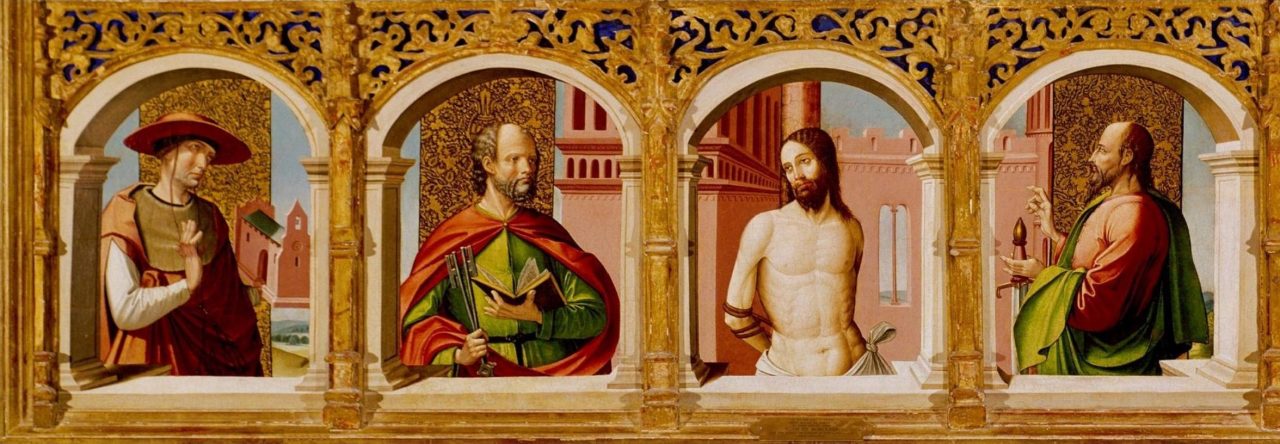
Mar Julius I Alvares of Goa, Ceylon and Greater India
 Antonio Francisco Xavier Alvares (Alvares Mar Julius, Julius Mar Alvarez) (April 29, 1836-September 23, 1923) was initially a priest in Roman Catholic Church in Goa. He voluntarily joined the Malankara Orthodox Syrian Church and in 1889 was elevated to Metropolitan of Goa, Ceylon and Greater India in the Malankara Orthodox Syrian Church.
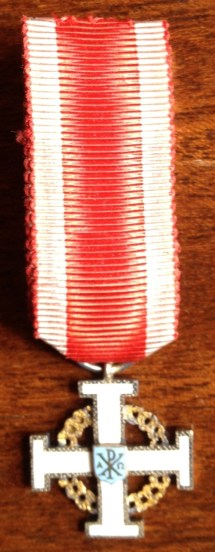
Mar Julius I was a Patron of the Order of the Crown of Thorns and received that Order from Prince-Abbot Joseph III in a ceremony in Columbo on 30 May 1892.
Early life
Alvares was born to a Goan Catholic family in Verna, Goa, India.
Career as a priest
Alvares was appointed by the Archbishop of Goa to minister to Catholics in territories of British India. The Portuguese Crown claimed these territories by virtue of old privileges of Padroado (the Papal privilege of Royal Patronage granted by the Popes beginning in the 14th century). The more modern Popes and the Congregation of Propaganda Fide separated these areas and re-organized them as Vicariates Apostolic ruled by non-Portuguese bishops, since the English rulers wished to have non-Portuguese bishops.
Successive Portuguese governments fought against this, terming this as unjustified aggression by later Popes against the irrevocable grant of Royal Patronage to the Portuguese Crown, an agitation that spread to the Goan patriots, subjects of the Portuguese Crown.
When, under Pope Pius IX and Pope Leo XIII, the hierarchy in British India was formally re-organized independently of Portugal but with Portuguese consent, a group of pro-Padroado Goan Catholics in Bombay united under the leadership of the scholar Dr. Lisboa e Pinto and Fr. Alvares as the Society for the Defense of the Royal Patronage and agitated with the Holy See, the government of British India and the Portuguese government against these changes.
Uniting with the Orthodox Church
Their agitation failed to reverse the changes. Angry with the Portuguese government, the group broke away from the Catholic Church and became Orthodox under the Malankara Orthodox Syrian Church. After joining the Orthodox Church Mar Alvares was excommunicated by the Roman Catholic Church. He was persecuted by the Catholic Church and the Portuguese Government. Though he was advised by some of his old friends to reunite with the Catholic Church, especially when he was very sick, he refused and stuck to his Orthodox faith.
Alvares was consecrated as Mar Julius I, with the permission of the Syrian Orthodox Patriarch of Antioch Ignatius Peter IV, by Mar Joseph Dionysus (Pulikkottil) (principal consecrator), Geevarghese Mar Gregorios of Parumala, Mar Paulose Evanios of Kandanadu and Mar Athanasios (Kadavil) at Kottayam Old Seminary on 29 July 1889. He was elevated to the position of Metropolitan (Archbishop) with jurisdiction over Goa, India (excluding Malabar) and Ceylon.
Missionary
Since Alvares Mar Julius was not allowed by the rulers to work freely in Goa, he was mostly based in the Canara region of Karnataka with the main base at Brahmawar. He along with Fr. Noronha worked among the people along the west coast of India from Mangalore to Bombay. About 5,000 families joined the Orthodox Church. He ordained Rev. Fr. Joseph Kanianthra, Rev. Fr. Lukose of Kannamcote and Deacon David Kunnamkulam at Brahmawar on 15 October 1911. The Brahmawar mission remains active as of 2010. He was in Ceylon for more than five years.
Consecrator of Prince-Abbot Joseph III
When Prince-Abbot Joseph III was searching for a bishop with orders recognized by the Catholic Church, in order to solicit consecration for his community in the United States, he was guided by Fr. Bernard Harding OSB, who had stayed at the Seminary of St Bernard in Ceylon, to Mar Julius I, who, jointly with Paulose Mar Athanasius, and with the permission of the Syrian Orthodox Patriarch Ignatius Peter IV, consecrated him in 1892 in Colombo. All the subsequent Prince-Abbots of San Luigi descend from this consecration.
As Mar Julius I, Alvares lived at Colombo, where his main seat was established, and Brahmavar-Calianpur (Kalyanpur), a village near the town of Udipi in the Canara Coast, and finally in the town of Ribandar in Goa, where he died of dysentery and was buried.
Dr. Lisboa e Pinto, acting in his capacity as the U.S. Consul, officially witnessed both Mar Julius I’s and Prince-Abbot Joseph III’s consecrations. He was also a Patron of the Order of the Crown of Thorns.
Journalist and writer
He started a number of periodicals including A Cruz (The Cross), Verdade (The Truth), O Progress De Goa, O Brado Indiano, and Times Of Goa. As he was a critic of the Government, most of these were banned and forced to stop publications after a few years.The Universal Supremacy of the Church of Christ, and Antioch and Rome were two of his books.
Educationalist
In 1877, Mar Julius I founded a secondary school, the “Colégio dos Sagrados Corações de Jesus e Maria” with an academic staff including six priests. This closed after a short time due to an outbreak of cholera. In 1912 Mar Julius I opened an English School in Panaji.
“Apostle of Charity”
At that time Goa was frequently affected by epidemics of malaria, typhoid, smallpox, cholera and plague. Alvares published a booklet Direcoes Para O Treatment Do Cholera (Directions for Treatment for Cholera) and was noted for his efforts to treat the sick in the 1878 outbreak of cholera in Goa. He also published a booklet Mandioca about the cultivation of tapioca.
Though the Portuguese Government dubbed him a traitor and subjected him to harsh persecution including the confiscation of his episcopal robes and insignia, later on he came to be considered by them and by all the Goans as an ‘Apostle of Charity’. In 1871, he started a Charitable Association in Panaji to render help to the poor, beginning with wandering beggars. After few years he extended the Association to other cities in Goa. During the last ten years of his life he concentrated his activities in Panaji. His home for the poor had lepers, T.B patients, scavengers, beggars and all other destitutes as inmates. Since he had no income himself he was forced to beg with a bowl in his one hand and a staff in the other hand for support. A story is told of him that one day, Mar Julius I solicited a shopkeeper for a contribution. Instead of giving any money, the arrogant fellow spat in the bowl. Without getting angry His Grace told to him “All right, I shall keep this for me. Now, give something for the poor”. By seeing the dedication and determination of the Metropolitan the shopkeeper was inspired to contribute generously.
Last days and funeral
His last days were in Ribandar Hospital, a charitable institution, ill with dysentery. It was his wish to be buried by Orthodox clergy, and he was specific not to permit any Catholic priest to undertake this duty. He died on 23 September 1923.His body was kept in state in the Municipal Hall for 24 hours to enable the people to pay homage. Though Mar Julius I was considered an enemy by the government, the Governor-General sent his representative to pay tribute to him. Thousands of people especially poor and beggars paid their last respects. The funeral procession wound through all the main roads of Panaji and the body was laid to rest in the secluded corner of St. Inez Panaji cemetery on 24 September 1923 without any funeral rites.
Sepulchre of Mar Julius I
After four years (23 September 1927) his bones were collected by his friends and admirers, placed in a lead box and buried in the same place, under a marble slab with the inscription describing him as a great humanitarian and patriot, and a large cross, which is still the biggest cross in the cemetery.
For forty years the grave was neglected, until coming to attention as a result of investigations by bishops of the Malankara Orthodox Church in 1967. After this, a small Church was constructed in Ribandar and the Holy Relics were transferred to the Church by His Grace Philipose Mar Theophilose, the Diocesan Metropolitan Of Bombay on 5 October 1979. When St. Mary’s Church was reconstructed in the same place, the relics were shifted to the present sepulchre which was specially made on the side of the ‘Madbaha’, by the Catholicos of the East of the Malankara Orthodox Church H.H Moran Baselios Mar Thoma Mathews II on 6 October 2001.
Legacy
Although the congregation is small, the “Orthodox Church of Goa” has survived almost a century after the death of Mar Julius I. St. Mary’s Orthodox Syrian Church, Ribandar, Panaji celebrates his Dukrono (Memorial Feast) every year in September, during the week in which the 23rd falls, to honour this great Apostle of charity and Martyr.
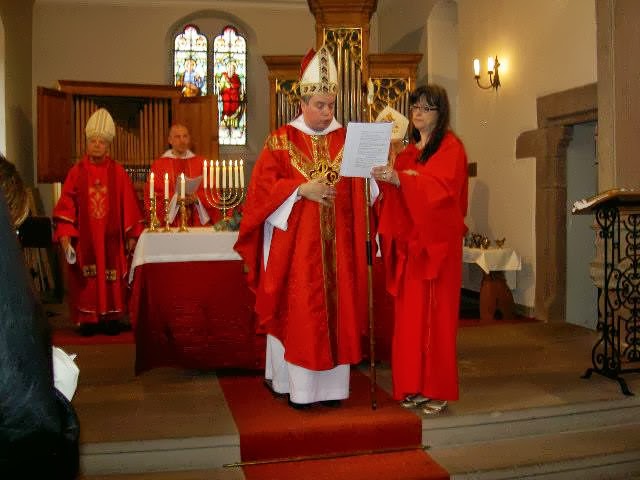
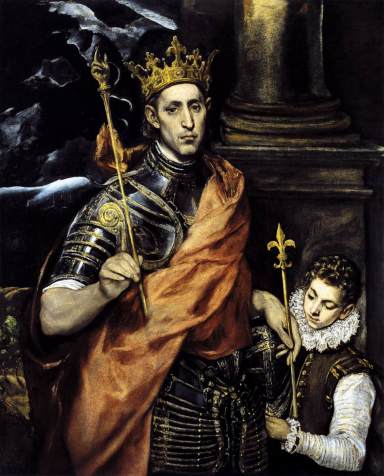 August 25, 2013 sees the 130th anniversary of the foundation of the Abbey-Principality of San Luigi, the Feast Day of our Patron St Louis, and the second anniversary of the accession of H.S.H. the Most Revd. Edmond III as Prince-Abbot.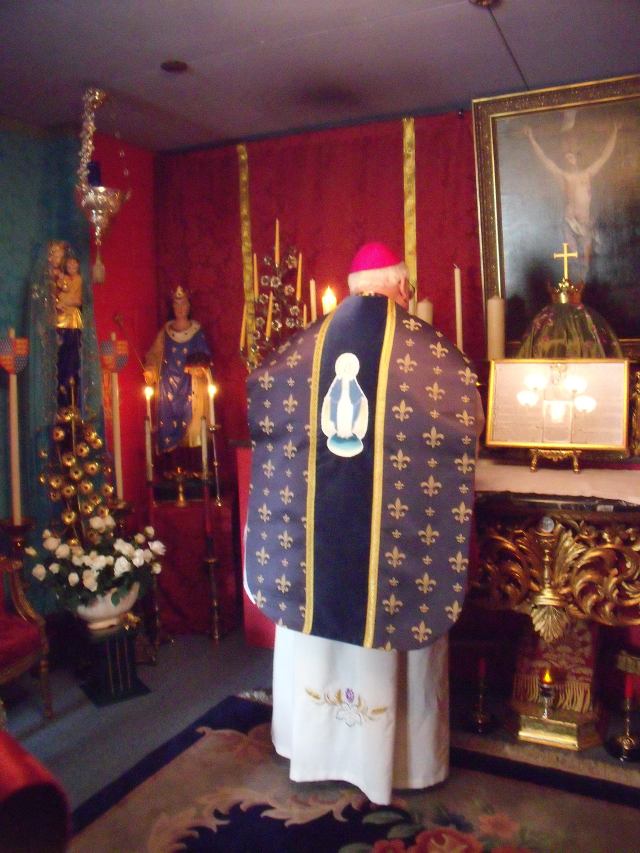


 The Abbey-Principality of San Luigi
You must be logged in to post a comment.