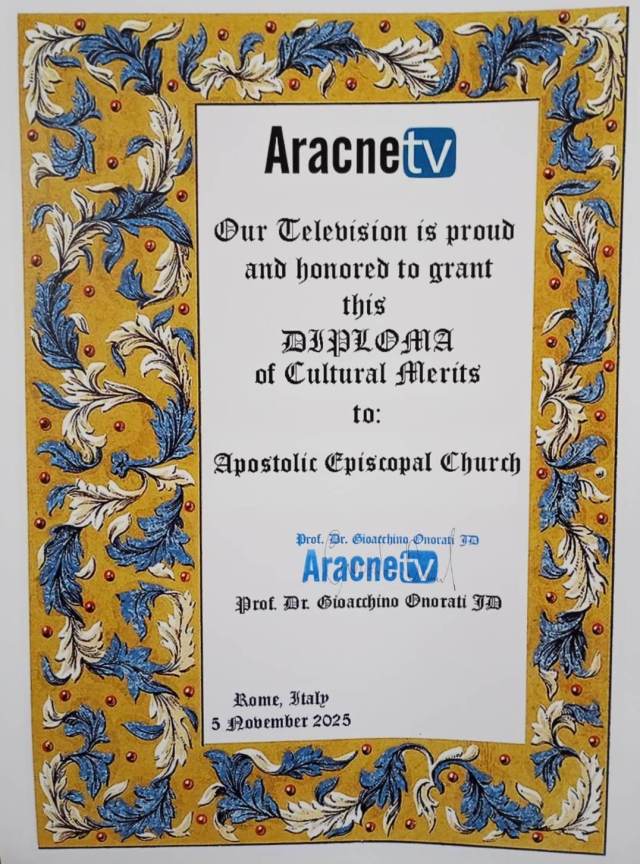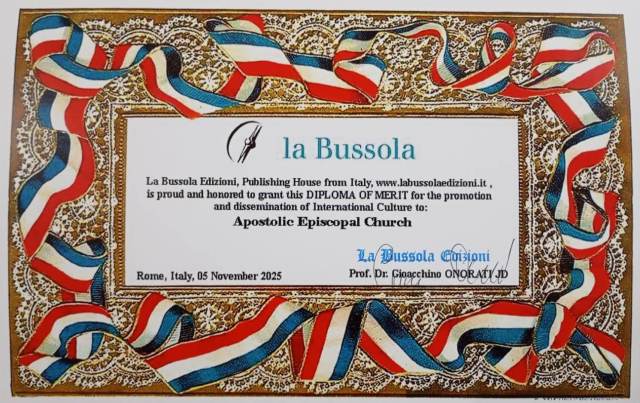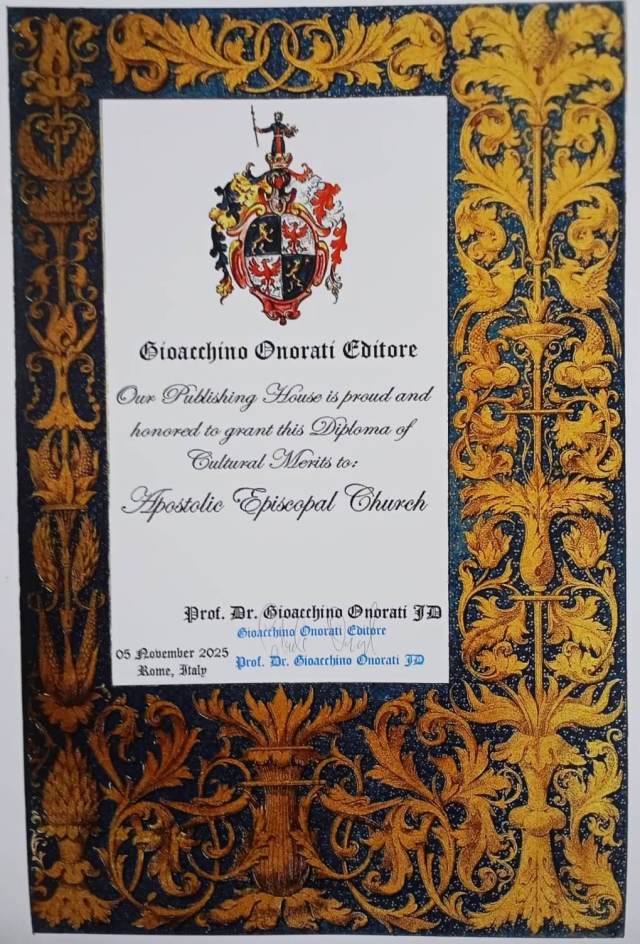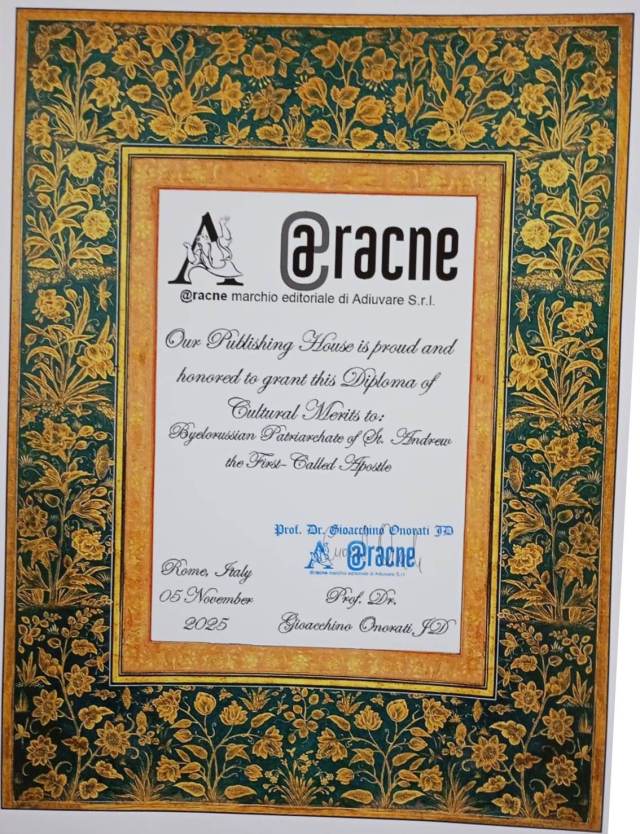
The Apostolic Episcopal Church issues a charter to the Order of Franciscans of the Eucharist

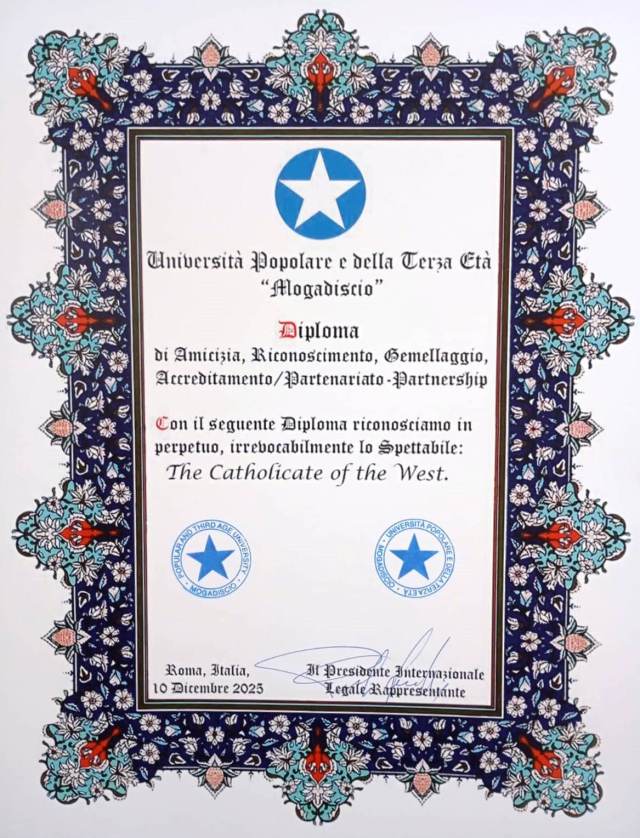
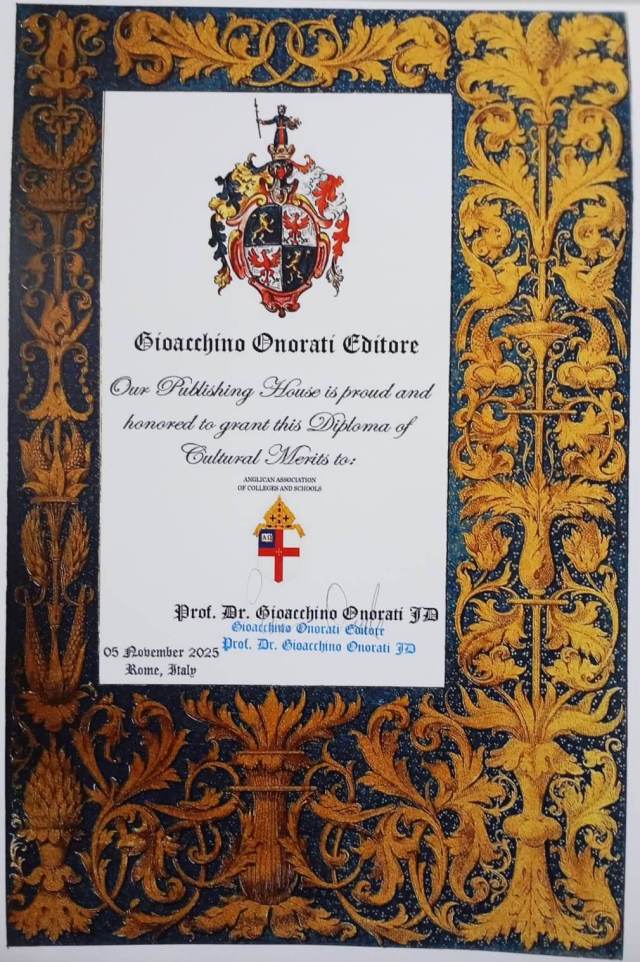
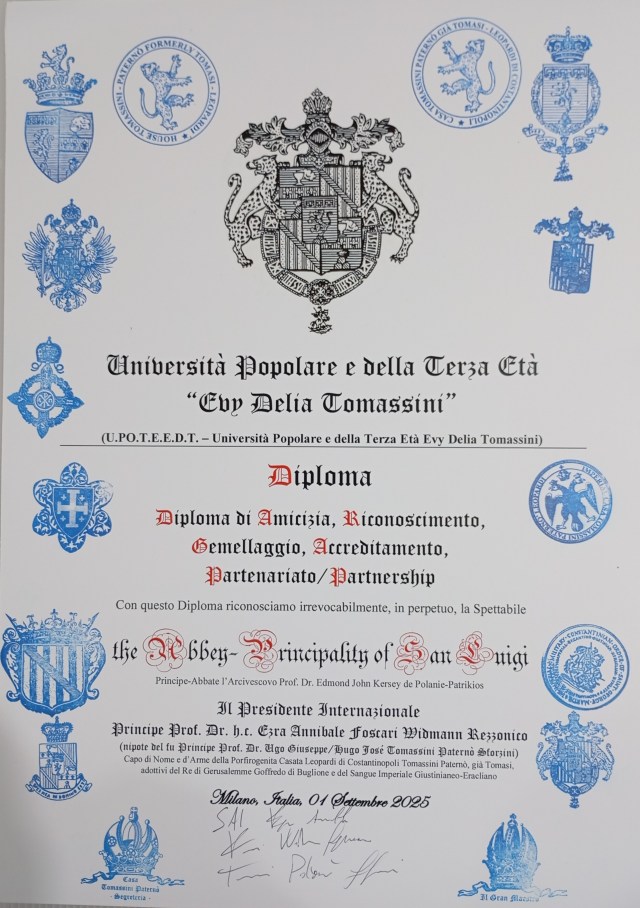
The Apostolic Episcopal Church (in union with the Catholicate of the West and the Abbey-Principality of San Luigi) has issued a Charter to the Order of Franciscans of the Eucharist.

The Order maintains a website at https://www.franciscanseucharist.org It has close fraternal connexions with the Order of Corporate Reunion and like that Order looks primarily to Rome for its example and praxis. The late Archbishop Peter Paul Brennan, OCR, was an Advisory Board and Council Member. Headquartered in California, where it is registered as a non-profit corporation, the Order has clergy and lay members in the USA as well as in Africa and Asia. The Primate and Presiding Archbishop is the Most Revd. Friar Michael Cuozzo OCR, OFE, while Bishop Thomas Gore OCR, OFE, of the AEC is a Board of Directors and Council Member.

The Charter recognizes the Order as a Religious Order of the Apostolic Episcopal Church (and the Catholicate of the West). The Apostolic Episcopal Church and the Catholicate of the West have a long history of association with Franciscan Orders, the oldest of these being the Order of Rievaulx, an order of Franciscan Tertiaries that is now merged within the AEC.

Appointment of new bishop

The Most. Revd. Thomas Orville Gore, OCR, SSC, DD, MD, has been appointed as Provincial of the South in the Apostolic Episcopal Church and will also serve as a Deputy to the Primate and Member of Metropolitan Synod. He has additionally been appointed as Exarch of the United States of America for the Catholicate of the West and as Titular Bishop of Acadia in that communion. His ecclesiastical designation will be Mar Thoma.

Mar Thoma is President of the Anglican Heritage Society, Inc., in Lubbock, Texas, which now becomes a chartered mission of the Apostolic Episcopal Church. He has close links with our church, having counted such prelates as the late Archbishops Paul Schultz and Charles White among his friends. He was ordained priest in the Episcopal Church in 1968 and was then ordained to the diaconate and priesthood sub conditione by the late Archbishop Francisco de Jesus  Pagtakhan, who was Missionary and Secretary of Foreign Affairs of the Philippine Independent Catholic Church (IFI) in 1982. He was further ordained deacon and priest sub conditione by the late Archbishop Forest Barber of the PICC and the Apostolic Episcopal Church, and then received episcopal consecration from Archbishops Barber, Pagtakhan and Bayani Mercado of the PICC in 1986. Subsequently he was further consecrated sub conditione by the Obispo Maximo of the PICC, Macario Ga. His ministry has centred on the mission of the PICC in the United States, where he and the late Bishop Murray Farrell were the first American Aglipayan (named after Supreme Bishop Gregorio Aglipay, the co-founder of the Iglesia Filipina Independiente) bishops, for the PICC Anglican Rite Diocese of Texas, led by Archbishop Pagtakhan.

He is a graduate of Indiana University (BA, 1961) and Nashotah House Theological Seminary, where he earned his Master of Divinity degree in 1967. He then trained as a medical practitioner in Mexico, where he graduated MD from the Universidad Autonoma de Guadalajara in 1973 and received the Titulo of Medico Cirujano from the Universidad Autonoma de Mexico in 1978.

He has been in the private practice of Adult and Addiction Psychiatry in Lubbock since 1989. He is married to Deaconess Sharon, who is now part of the lay ministry of the AEC. He has four grown children. His son Thomas has recently been ordained deacon and also joins the ministry of the AEC.

We send Mar Thoma our best wishes and prayers as he begins this new chapter of his ministry with us.

Partnerships with the Humanitarian Environmental Foundation, Nevada, USA

The Abbey-Principality of San Luigi has entered into mutual agreements of partnership, accreditation and recognition with the Humanitarian Environmental Foundation, which is established as a nonprofit foundation in Las Vegas, Nevada, USA, under the presidency of Professor Pasquale Sorrentino. These agreements serve to further emphasise the commitment of the Abbey-Principality towards care for the environment.

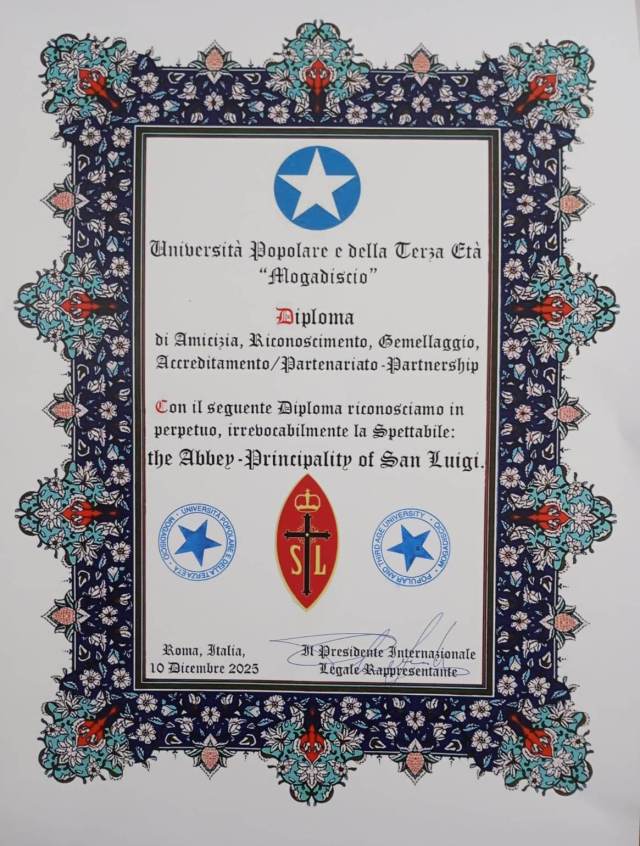
Abbey-Principality of San Luigi

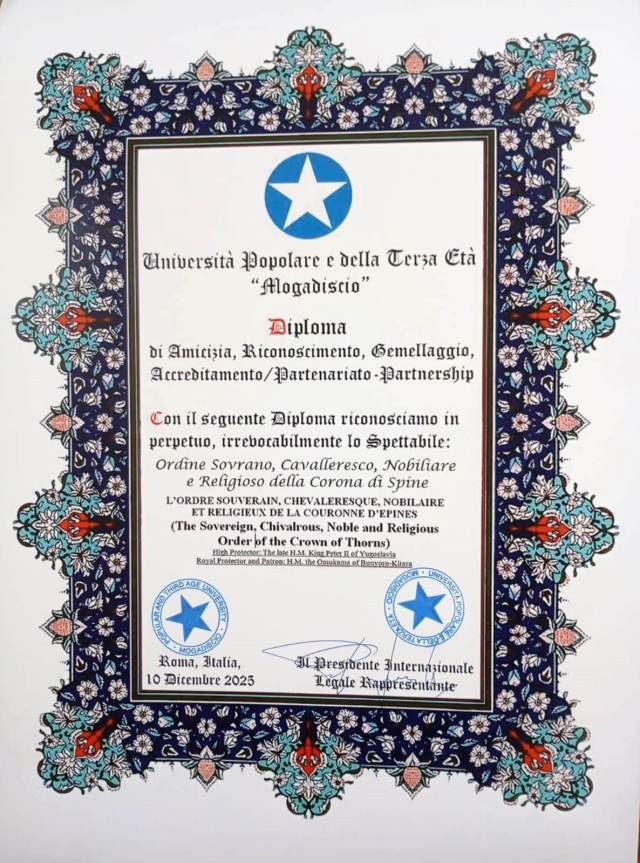
The Order of the Crown of Thorns

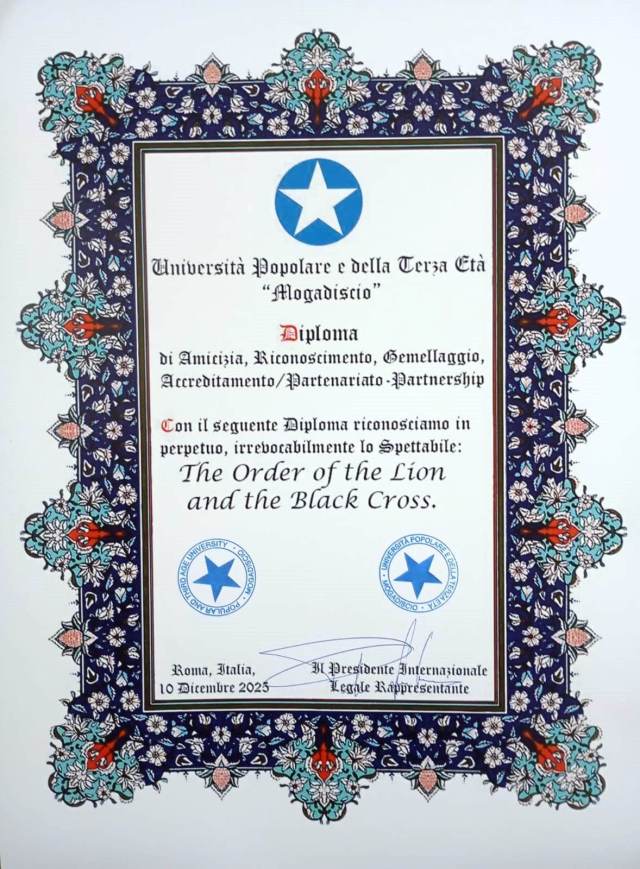
The Order of the Lion and the Black Cross

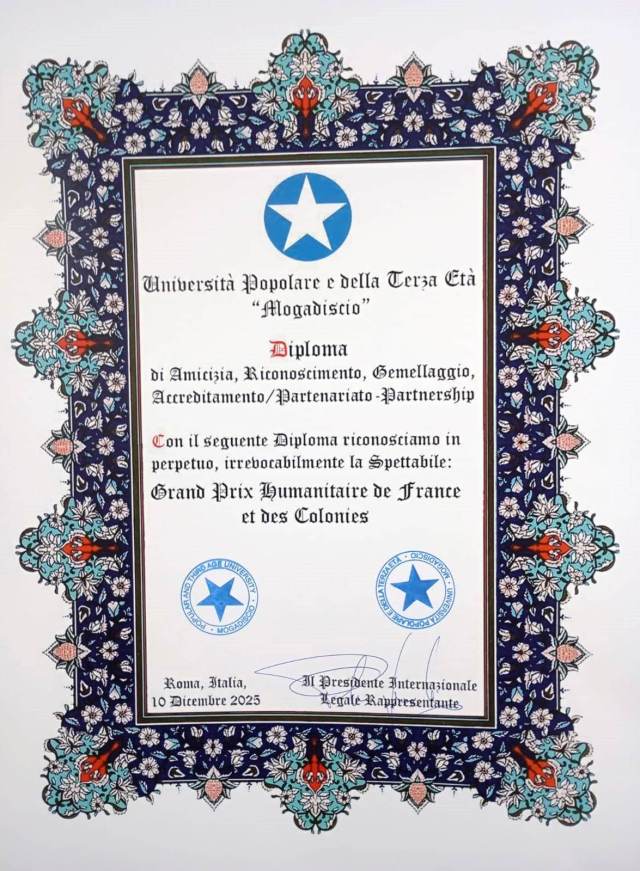
The Grand Prix Humanitaire de France et des Colonies

The Byzantine Order of Leo the Armenian

The Royal Order of the Imperial Crown of Byelorussia

The Order of the Golden Cross of Miensk

The Order of the Byzantine Cross

The Order of St Laurent

The Royal Order of Ivan the Infante

The Order of the Pedigree

The Order of Merit of Leszek II

The Royal Byelorussian Protectorate of the Orthodox Order of the Knights Hospitaller of St John of Jerusalem

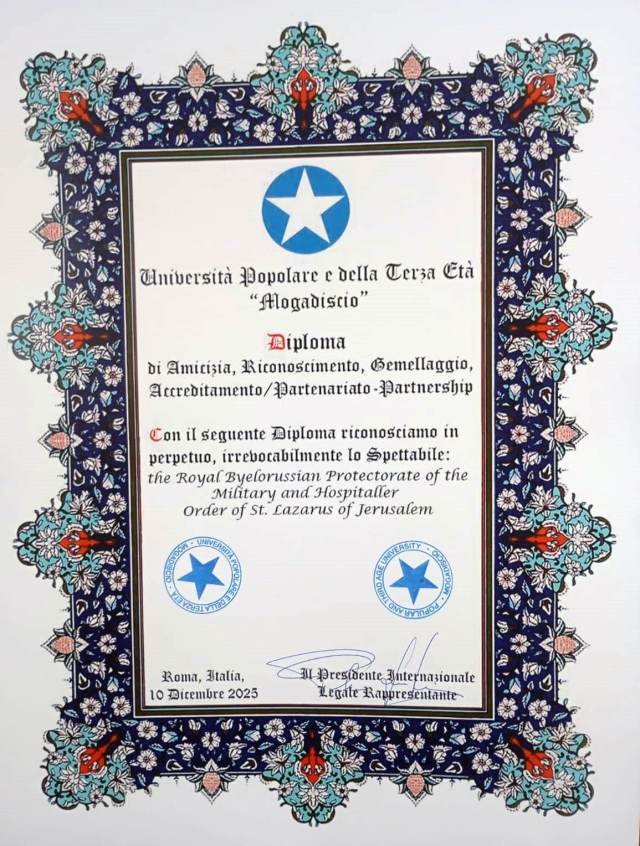
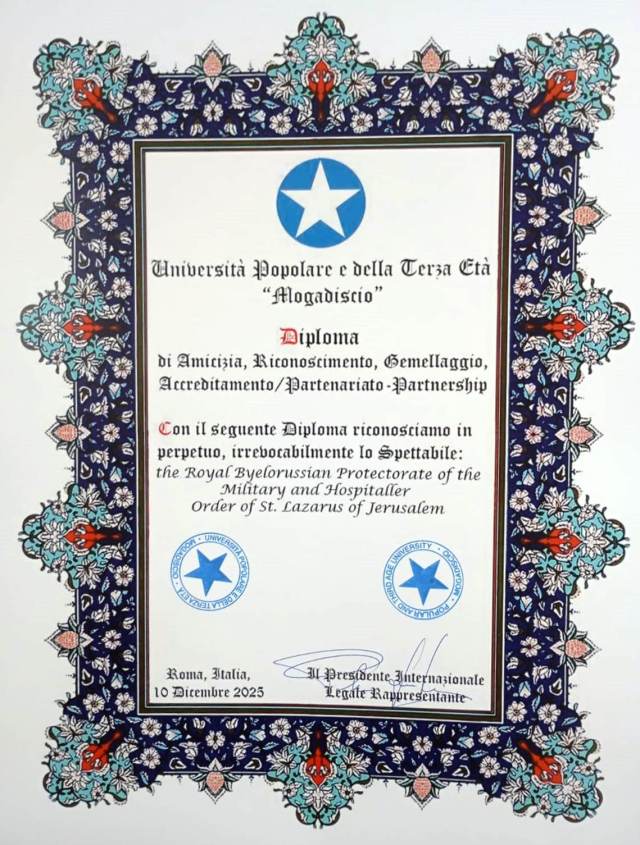
The Royal Byelorussian Protectorate of the Military and Hospitaller Order of St Lazarus of Jerusalem

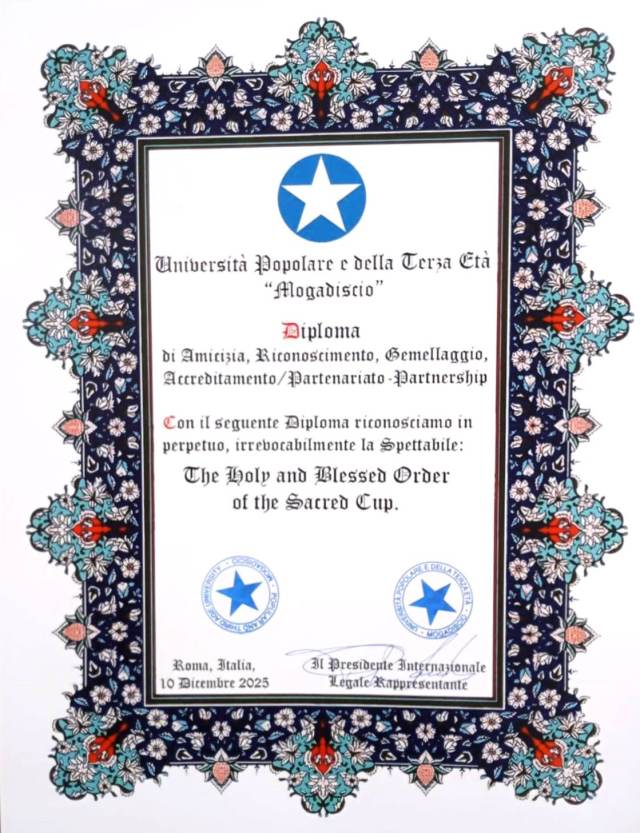
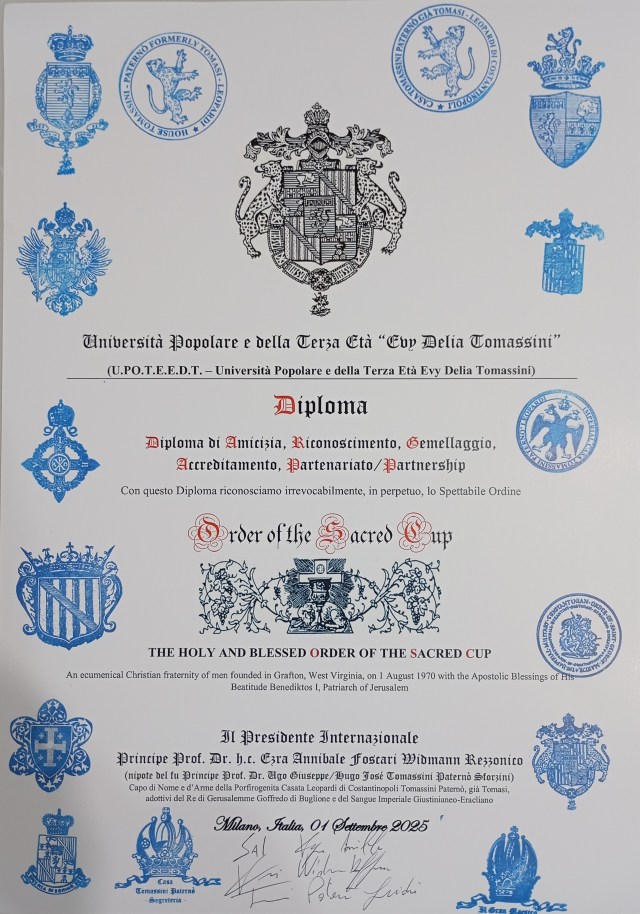
The Order of the Sacred Cup

Summary of recognition:

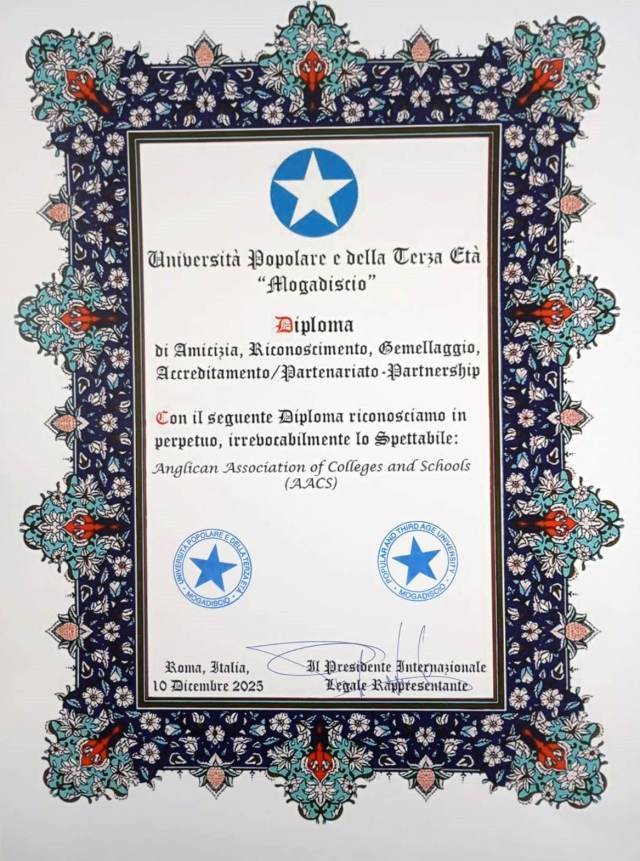
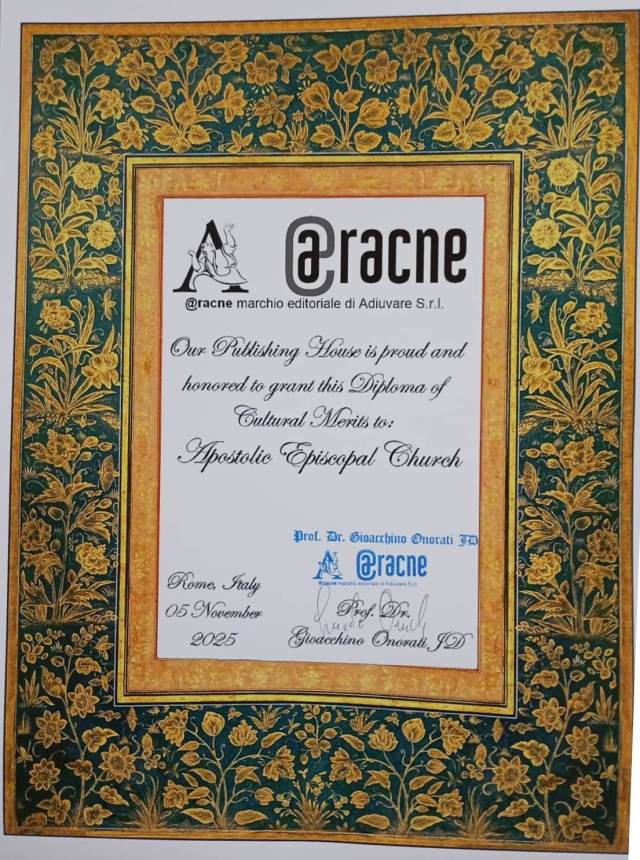
The Apostolic Episcopal Church

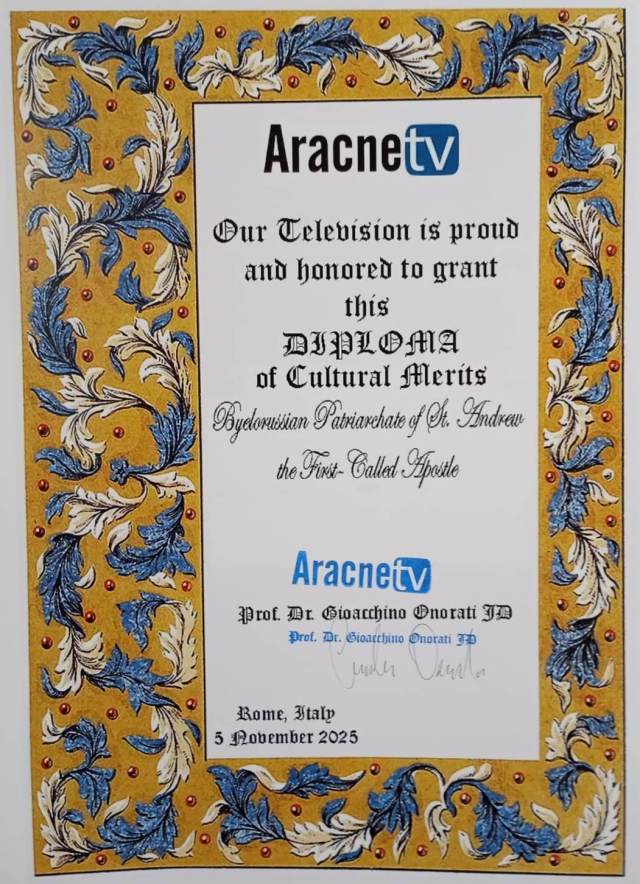
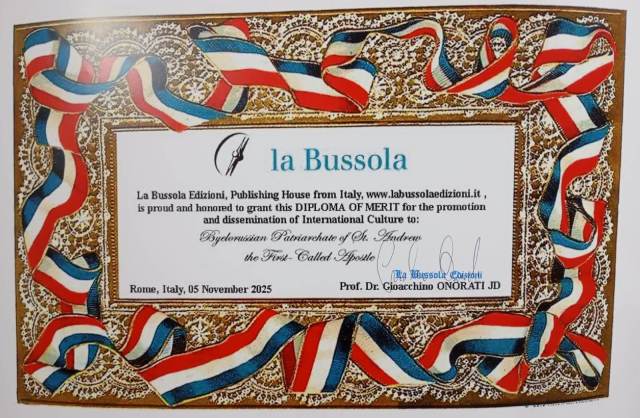
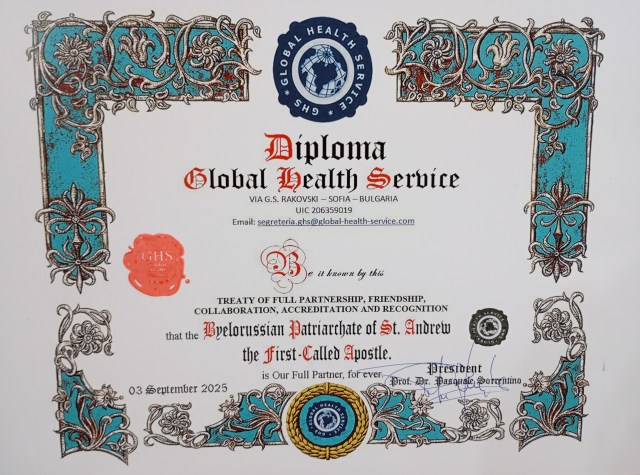
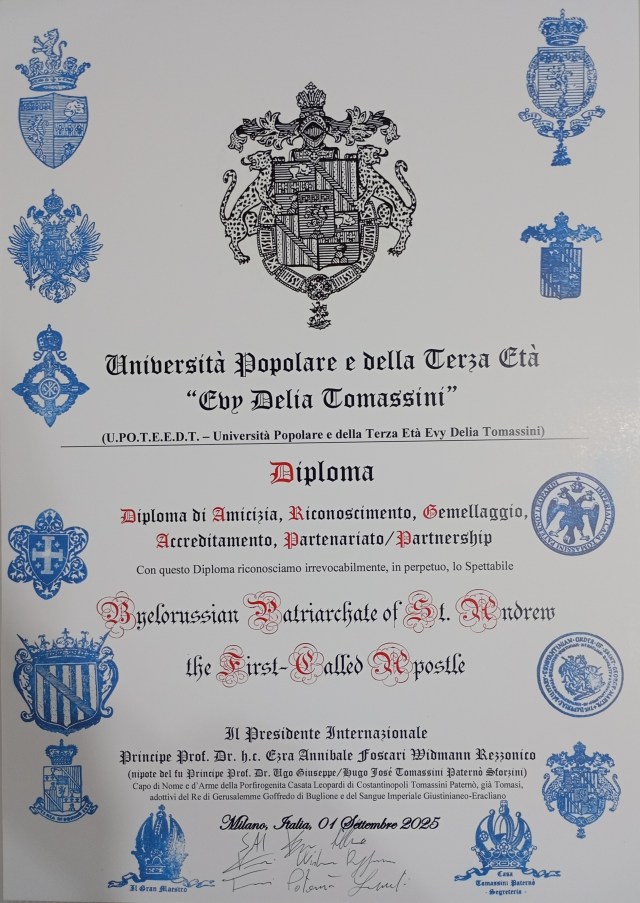
The Byelorussian Patriarchate of St Andrew the First-Called Apostle

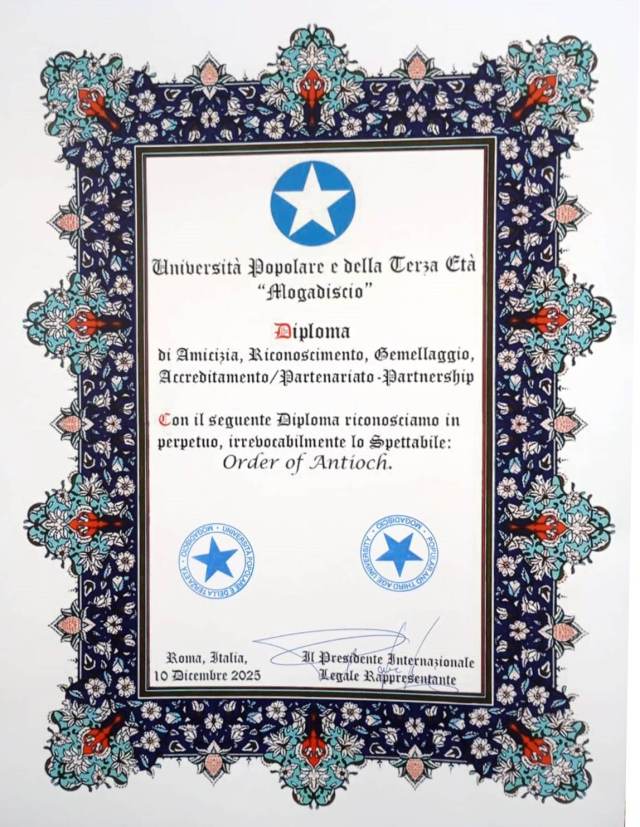
The Order of Antioch

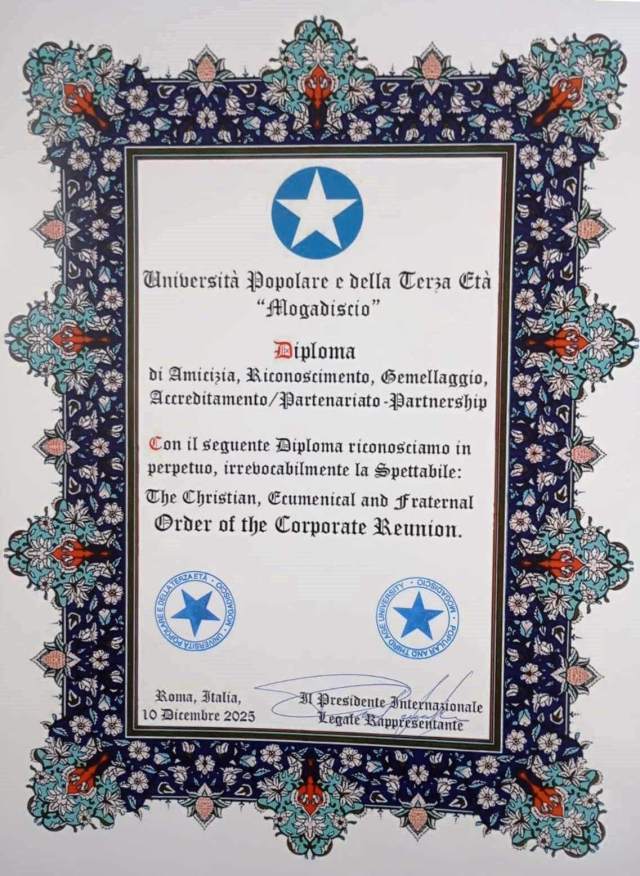
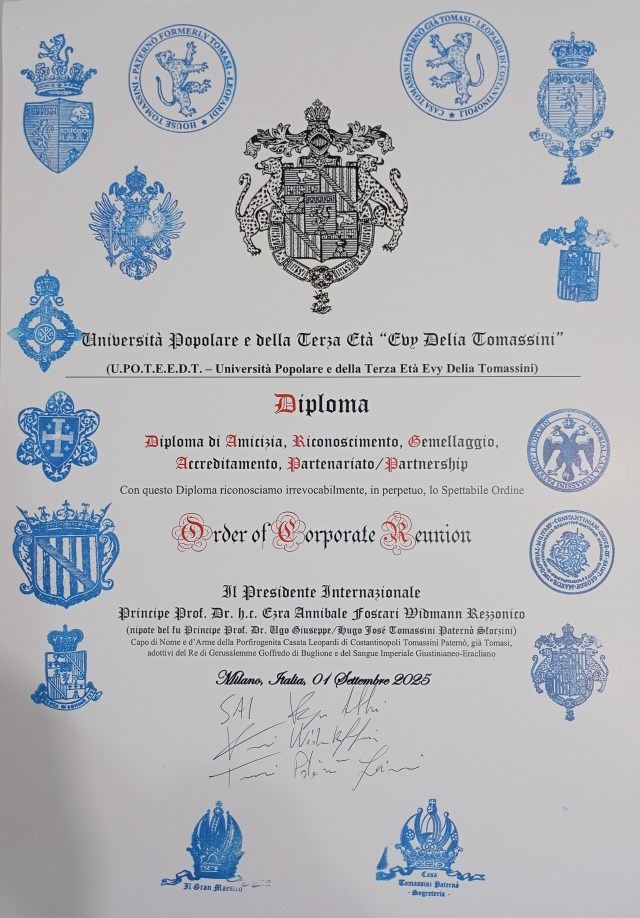
The Order of Corporate Reunion

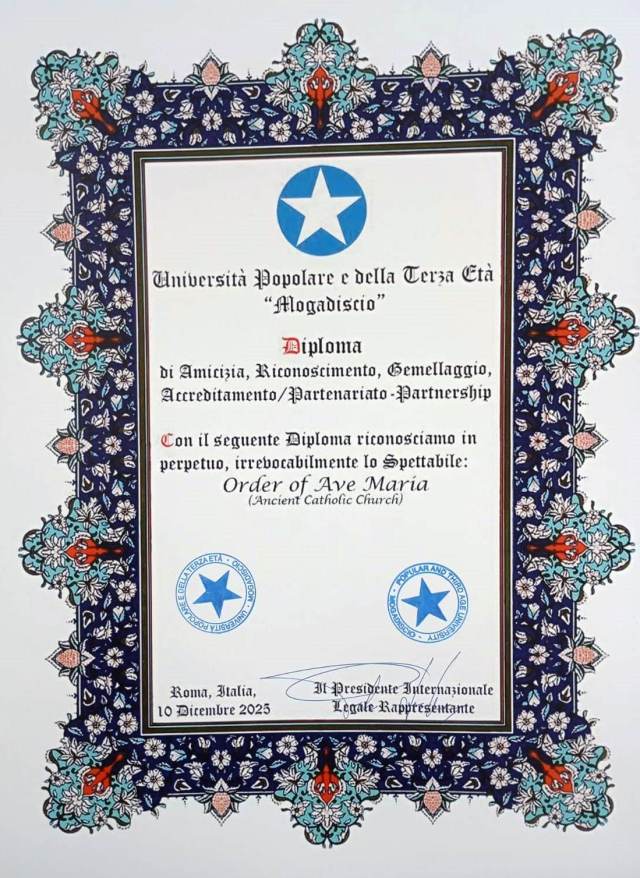
The Order of Ave Maria

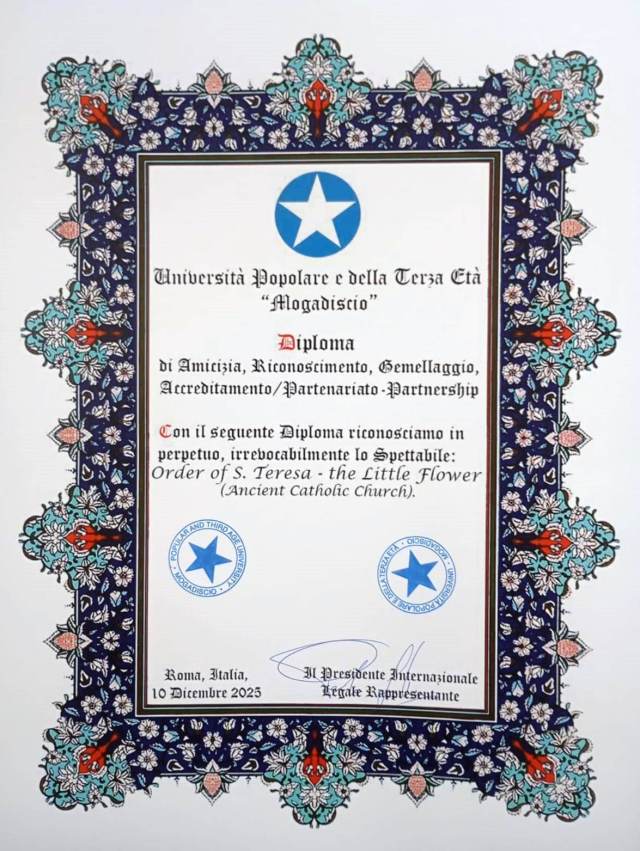
The Order of S Teresa – The Little Flower

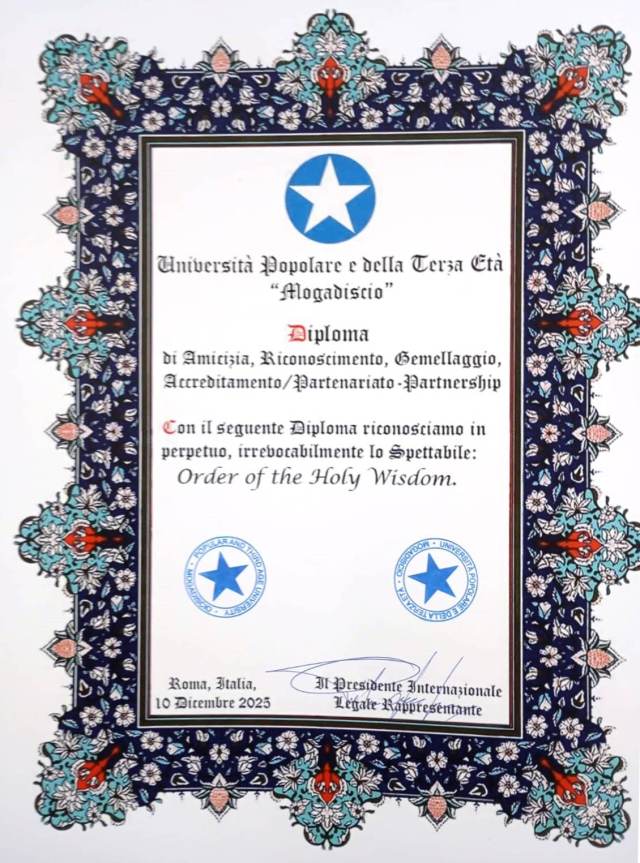
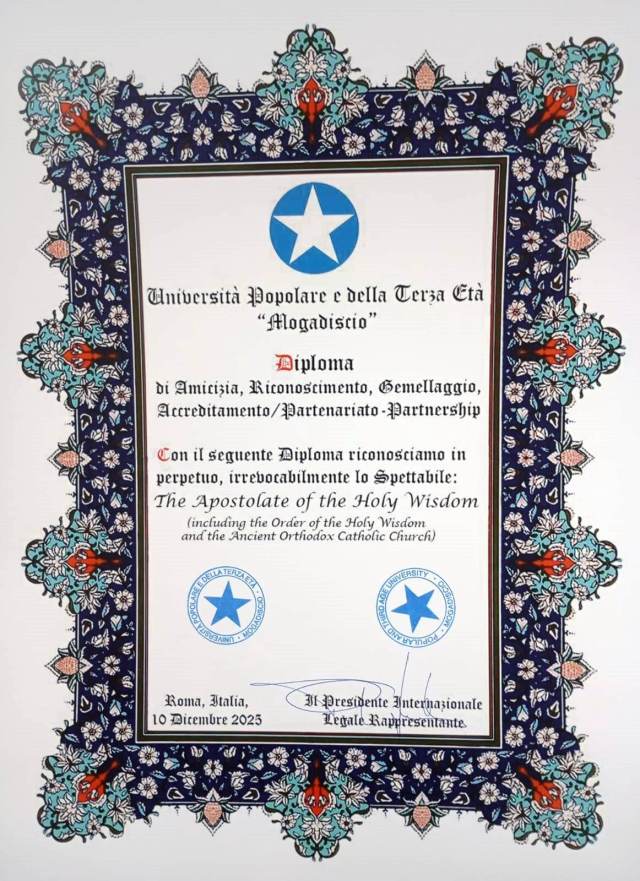
The Order of the Holy Wisdom

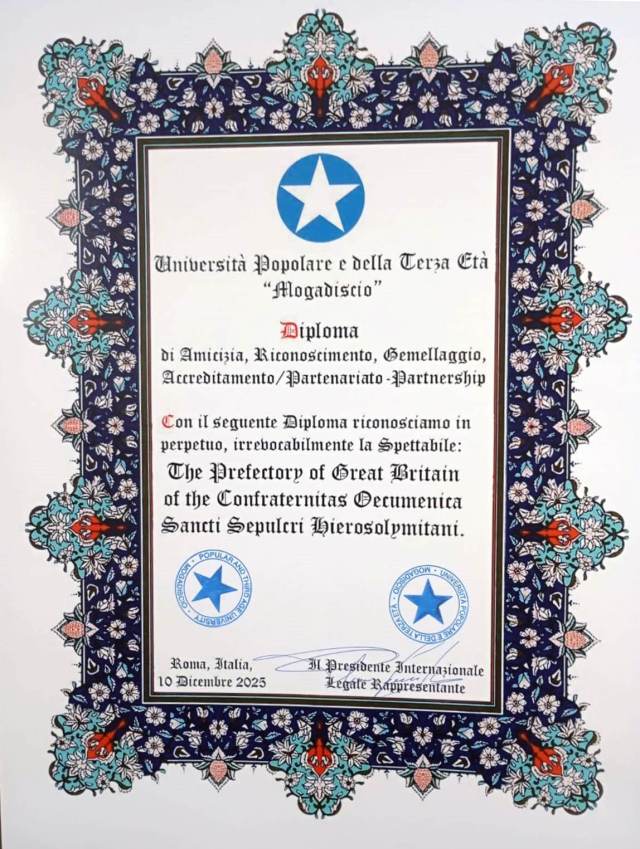
The Prefectory of Great Britain of the Confraternitas Oecumenica Sancti Sepulcri Hierosolymitani

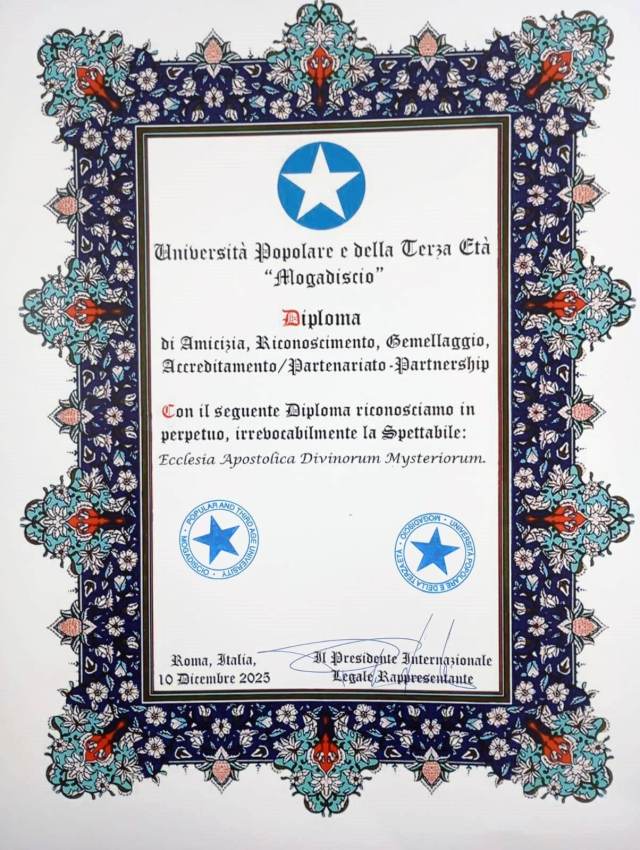
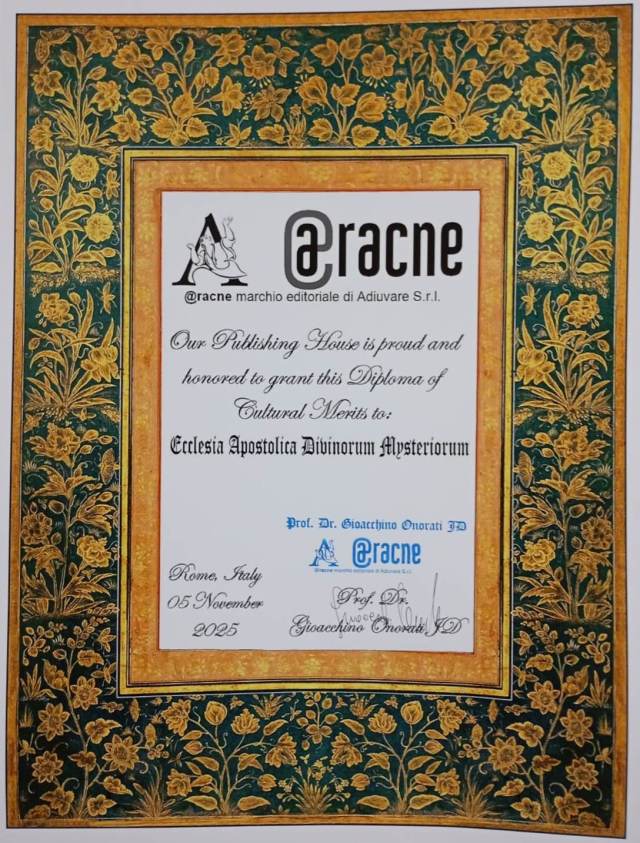
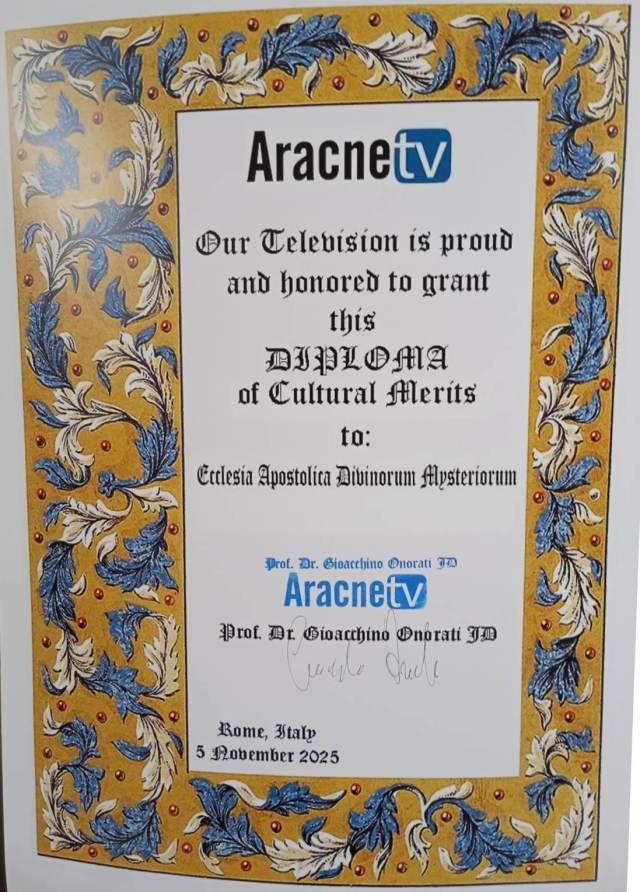
The Ecclesia Apostolica Divinorum Mysteriorum

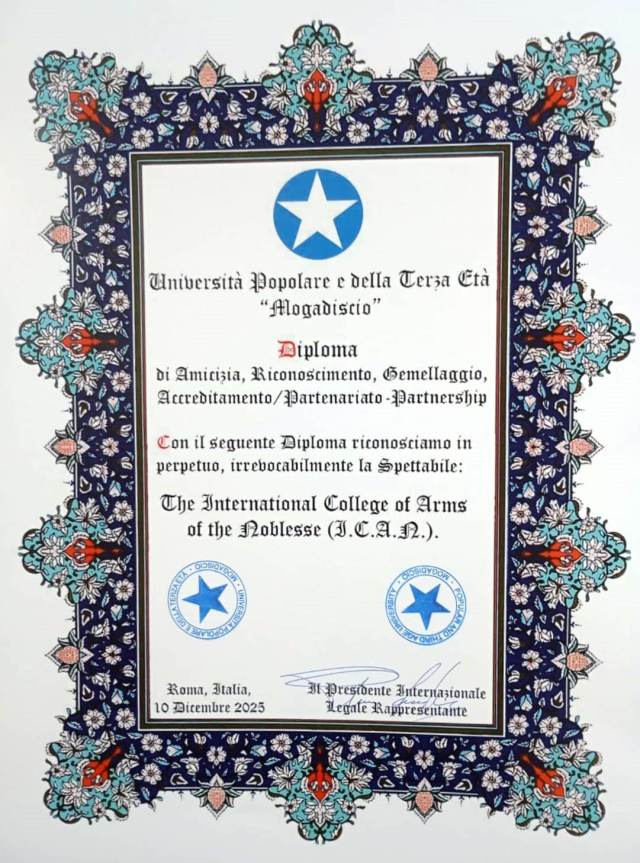
The International College of Arms of the Noblesse
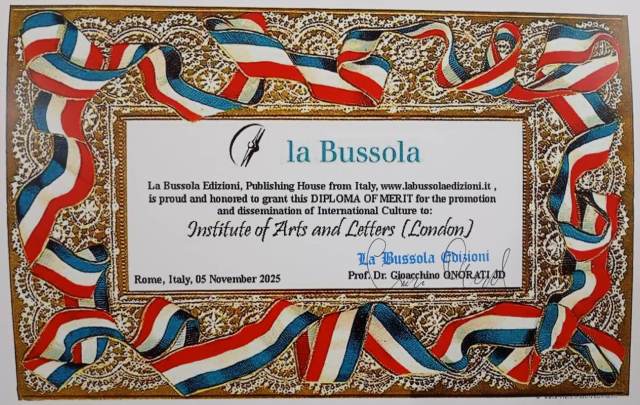
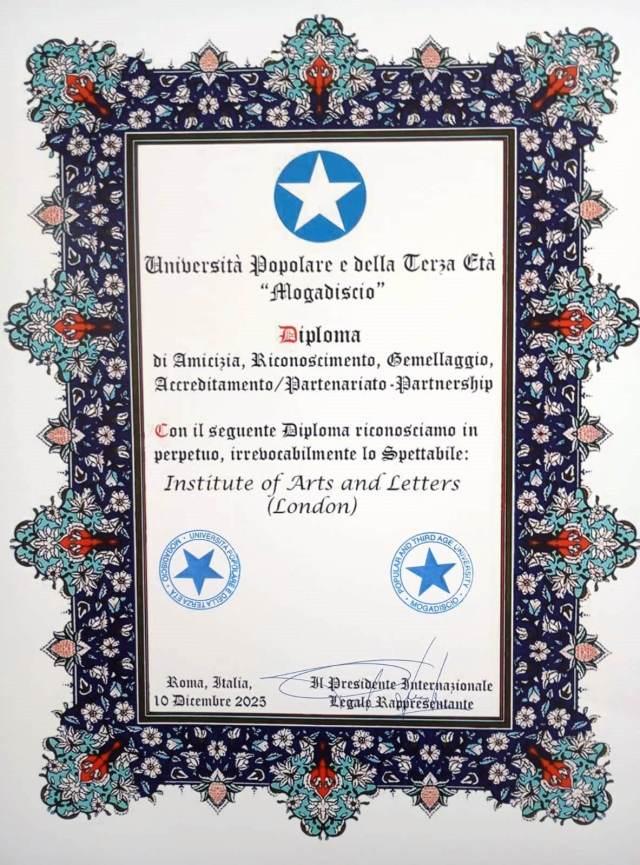
The Institute of Arts and Letters (London)
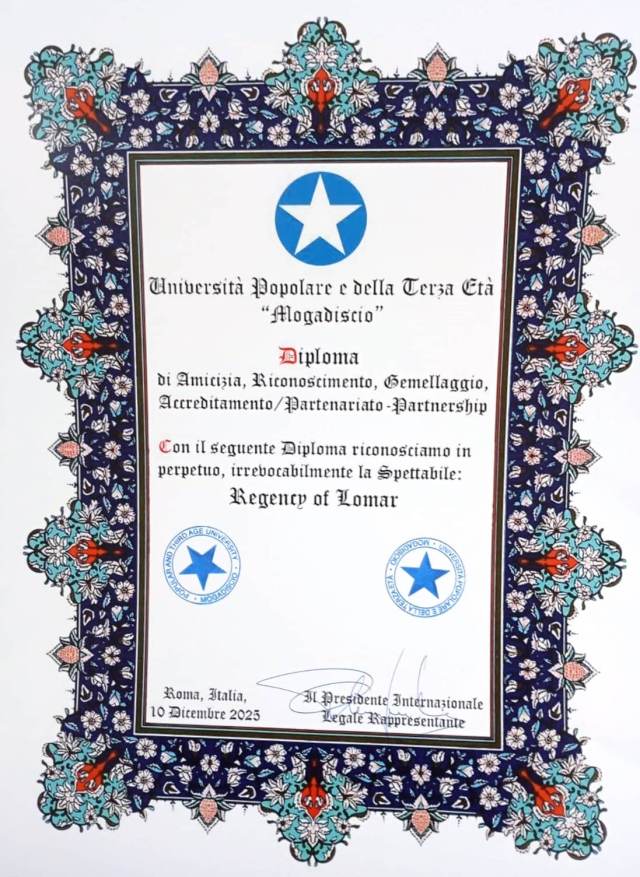
The Regency of Lomar

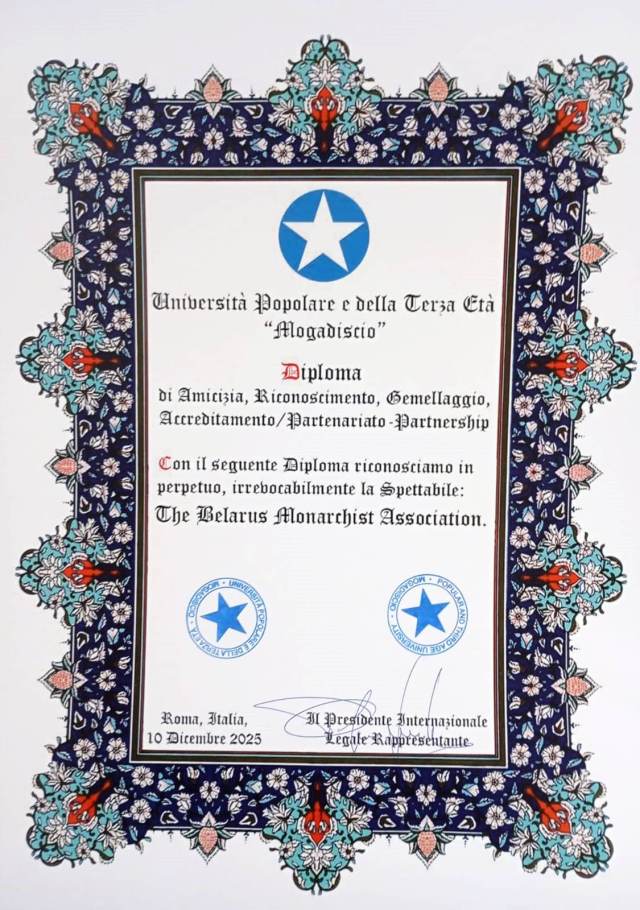
The Belarus Monarchist Association

Notice of dissociation and fraudulent imposture – Bishop Demetrius Brown

The Catholicate of the West came into being as a union of the smaller sacramental churches in the United Kingdom in 1944 calling on the model of the nineteenth-century Catholic Apostolic Church (sometimes called “Irvingites”). It was initiated following the 1943 Council of London, which had been convened to discuss the response to the Syrian Orthodox Church repudiation of the Western successors of Prince-Abbot Joseph III of San Luigi. The Council concluded that the then-Syrian Patriarch should be deposed for schism and elected its own candidate in his place, who was designated as the Patriarch of Antioch of the Ancient Orthodox Catholic Church. The resulting movement, embracing the Ancient Orthodox Catholic Church and the Catholicate of the West, became the only indigenous representation of true Western Orthodoxy in Britain at that time.

The Catholicate under the leadership of Maran Mar Georgius (Hugh George de Willmott Newman) pursued a mission as an ecumenical federation of autonomous church bodies, achieving a wide international membership by the late 1940s. In 1950, it was incorporated in India. In 1953, Mar Georgius and several other members of clergy left the Catholicate, which continued to exist via its American representation. In 1977, the Catholicate was formally merged with the Apostolic Episcopal Church in an act registered before the Secretary of State of California, and in 2015, the Prince-Abbot of San Luigi became both the primate of the Apostolic Episcopal Church and Prince-Catholicos of the Catholicate of the West, having served as a bishop of the Apostolic Episcopal Church since 2008.

The Prince-Abbot of San Luigi (H.S.H. the Most Revd. Edmond John Kersey de Polanie-Patrikios) is the current Prince-Catholicos of the West, British Patriarch, and Patriarch of Caertroia and Malaga etc.; he is the sixth Catholicos and the seventh British Patriarch. Following the Syriac tradition of the Catholicate, his official designation as Catholicos is Maran Mar Joannes Edmundus.

Today, the Catholicate of the West is the federative ecumenical body under which the various churches and religious orders of the Abbey-Principality are organized. Full information is given at this page:
>>The Catholicate of the West

The Decree promulgated by the current Catholicos on this website sets out the formal history of the Catholicate of the West and its jurisdictional descent to its present position, and reproduces a number of key historical documents:
>>Catholicate of the West – Decree
Our jurisdiction asserts that it is the legitimate representative of the Catholicate of the West as it was established in 1944 on the basis of the facts recorded in the Decree.

In making a Notice addressing defamation and fraudulent imposture, our jurisdiction states its position based on these facts, holding that this is a matter of public concern and that where others make public statements about our communion we are fully entitled to respond to them and to defend our patrimony.

We have recently been informed of the baseless and fraudulent imposture of one Demetrius Brown, who has claimed on Facebook that he has acquired the “rights” to the Catholicate of the West. This claim is a lie. Inasmuch as a church such as the Catholicate of the West has “rights”, they have been owned by the Abbey-Principality of San Luigi since 2015 and the historical and legal basis for this assertion has been openly promulgated since that time. As ever, our jurisdiction makes no claims other than those which it can demonstrate to be valid.

We are informed that Brown is a Pentecostal bishop of an organization calling itself the “Orthodox Church of Christ” – a designation which is usually employed to describe the Eastern Orthodox Church. He is not and never has been a member of the Catholicate of the West and has no legitimate claim to authority over our communion. The Pentecostal Churches have nothing to do with the Catholicate of the West and as an Orthodox body the Catholicate does not recognize their sacraments as valid. The faith of the Catholicate is set out in the Glastonbury Confession (1952) which is a comprehensive statement of the beliefs of traditional Orthodoxy.

Brown wrote to our jurisdiction in July 2018 in a thinly-veiled bid to be appointed to office, “I was wondering if you had a Bishop here in America (South East)”, to which no reply was given. It would appear that, having not found his approach to us fruitful, Brown has now decided to make a wholly fraudulent claim to our patrimony, for which we have a responsibility that we take with the utmost seriousness and which we are honour bound to defend. Such an action must place his credibility as a Christian leader in doubt, but is sadly all too typical of the careless and mendacious attitude of some independent clergy of these days towards important matters such as valid jurisdiction and succession.

Shortly after the initial publication of this Notice, the Prince-Abbot of San Luigi as Catholicos of the West received a legal threat by email from Brown. This was made by one Mary Roman of Greenville, South Carolina, who asserts that she is “International Secretary” to “His Holiness Catholicos-Patriarch Demetrius I” (sic). The (misspelled) address given is that of a location that according to Google is the “No Limit Holy Temple”, whose appearance for a place of public worship is somewhat unprepossessing in our view:

This is also the registered address of a nonprofit corporation called the “Body of Christ Sanctified Church International” first filed in 2014, of which Brown is the agent.

The usual policy of our jurisdiction is to ignore legal threats that are not made by lawyers, although on occasion a purpose is served by their exposure to public scrutiny. This example shows that ignorance and aggression are no substitute for an actual knowledge and awareness of the law. It threatens that if we do not remove all information relating to the said Demetrius Brown that he will “immediately file a defamation lawsuit in the amount of 5 million dollars in the Eastern District of the United States Federal courts. We have taken pictures of your webpage and your comments as evidence of your guilt.”

In the first place, our jurisdiction does not make any statement in public without extensive prior investigation and without establishing that the facts put forward are truthful. We hold that what we have said is what we believe to be true, and we do not hold that anything we have said is defamatory. However, even if it were to be held to be defamatory, it would still be protected speech under the First Amendment.

In 2014 the Ninth Circuit Court ruled in Obsidian Finance Group, LLC v. Cox that liability for a defamatory blog post involving a matter of public concern cannot be imposed without proof of fault and actual damages. Bloggers saying libelous things about private citizens concerning public matters can only be sued if they are negligent i.e., the plaintiff must prove the defendant’s negligence – the same standard that applies when news media are sued. The Court held that in defamation cases not the identity of the speaker, but rather the public-figure status of a plaintiff and the public importance of the statement at issue provide the First Amendment foundation.

This website is hosted by the blogging platform WordPress and the Notices page contains its blog posts, including this one. Our Notice constitutes comment on a matter of public concern.

The communication from Brown’s office continues in a similar unpleasant vein of threat that is entirely inappropriate for anyone claiming to represent a Christian organization. It requires us to “Immediately cease from using the registered name of Catholicate of the West in any and all publications and media. H.H. Mar Demetrius is OVER the Catholicate of the West and is the registered agent according to the United States of America and as it was passed from patriarch Owen, and patriarch McGuire.”

The “United States of America”, by which is assumed to mean the Federal government of the USA, does not record that Brown or anyone else is the “registered agent” for the Catholicate of the West. This claim is therefore false.

We also fail to see that Brown can be “OVER” our jurisdiction, for he is not and never has been a member of it, and treats its members with hostility and contempt. And we have no intention of surrendering anything to him. We could quote any number of Bible verses in support of our position, but the most appropriate quotation that comes to mind is in fact “Tu ne cede malis sed contra audentior ito”, which comes from Virgil’s Aeneid, Book VI. The motto means “do not give in to evil but proceed ever more boldly against it.” Alternatively, we could give the response of World War II US Army general Anthony McAuliffe when asked by the Germans to surrender, “NUTS!”

Moreover, the USA has clearly established the freedom of religion and the separation of church and state, such that the American courts will not interfere in disputes about matters of religious belief such as who is the rightful head of a church or its teachings. There is therefore nothing that is capable of litigation in the present matter.

The names of “patriarch Owen and patriarch McGuire” are unknown to the Catholicate of the West and it does not appear from any information available to us that these men were ever members or had anything else to do with our jurisdiction. The only Patriarch McGuire we are aware of was Patriarch George Alexander McGuire, who was a senior member of the San Luigi Orders and the first Patriarch of the African Orthodox Church. He died in 1934, a decade before the Catholicate of the West was founded in 1944. As for Owen, this may possibly refer to bishops Michael Owen of the Communion of Evangelical Episcopal Churches or Owen Augustine of St Augustine American Catholic Church (who died in 2024), but neither of these bishops was ever a member of the Catholicate of the West or to our knowledge made any claims concerning it. It is also not clear that Brown holds any authority in the communions these bishops were associated with.

The present Catholicos has assiduously researched the history of the Catholicate for the past two decades. He also underwent a spiritual experience in which he received the commission to restore the Catholicate of the West. In our archive are all of the Catholicate’s major publications, many private documents, and a number of artefacts, all of which are extremely rare. In addition, we have met, worked with and interviewed a number of clergy and laity who were well acquainted with the first Catholicos, Mar Georgius, and who were able to speak of his presence, his work in ministry and his personal qualities.

Does Brown possess any such link to the Catholicate’s history? Has he too researched its origins, legal status and the clergy who have served it? Has he read its publications, and gone through its statement of faith, the Glastonbury Confession (1952) to establish his agreement with the propositions contained therein? We suspect the answer to these questions may well be in the negative.

We are well aware that in the course of the fragmented history of the Independent Catholic churches, splits in the various communions can lead to situations where there are multiple claimants to a given heritage or jurisdiction. In general, our policy is to live and let live on these matters. We do not, for example, pass comment regarding the 1982 California corporation “Old Catholic Church of North America (The Catholicate of the West)” of which Bishop Carlos Florido is president, nor did we do so on the similar California corporation that was maintained by the late Karla King, although both of these would make for an interesting chapter in parenthesis in the wider history of our jurisdiction. Our response in the form of Notices is reserved solely for those who make fraudulent public claims that constitute an attempted interference with our jurisdiction.

Brown makes much of the fact that our jurisdiction is relatively small. It is intentionally so, for it serves a specialist mission within the Church and is directed specifically at those who may be called to its particular charism. For our part, we are not impressed by numbers and do not seek to compete with other churches by establishing networks of parishes or duplicating the things they already do well. Our aim is to preserve our jurisdiction and its character for the benefit of those who find a home within it for whatever length of time. Even were it to become smaller than it is at present, that is no argument against its continuing existence or its legal status. As for Brown, where are the extensive church buildings and congregations of thousands of the “Orthodox Church of Christ”? We cannot even find a website for his denomination.

Following this, an associate of Brown placed a telephone call to one of our clergy, which was deflected by that clergyman’s wife. Any further unsolicited contact of this kind will be treated as harassment and reported to the Police.

To state our position clearly, Brown’s threats are unbefitting behaviour for any person claiming religious office. If he had a legitimate historical and jurisdictional claim to the Catholicate of the West, we would have been prepared to have discussed this with him. If he had wanted to join our jurisdiction and petitioned accordingly by providing full information and a clear statement of his background and intentions, including evidence of conformity to the faith and practices of the Catholicate and ordination in the valid Apostolic Succession, we again would certainly have granted him consideration and the courtesy of a reply.

But it appears that he believes that he can simply succeed against us through threats and intimidation, which are the tactics not of a bishop but of a street thug. In that belief he is gravely in error. We therefore refer him to the reply given in Arkell v. Pressdram (1971).

Death of Pope Francis

Requiem æternam dona ei, Domine
Et lux perpetua luceat ei
Requiescat in pace.
Amen.

The Abbey-Principality of San Luigi extends its sincere condolences on the death of Pope Francis. In 2020, Pope Francis bestowed the Apostolic Blessing upon the Prince-Abbot. Through all our ministry, and particularly that of the Order of Corporate Reunion, the Pope is looked upon as a centre for Christian unity and is always held in prayer, signifying that we remain one in Faith even though we are jurisdictionally separate from the Holy See.

Pastoral Letter for the Week of Prayer for Christian Unity 2025

This Pastoral Letter was issued to members and friends of the Order of Corporate Reunion. It responded to a recent circular from a Roman Catholic archbishop in The Philippines that was directed against a number of traditionalist Old Roman Catholic churches based in the United Kingdom and the USA.

In recent times it has been the practice of certain senior clergy of the Roman Catholic Church to issue polemical statements to the faithful and to the media concerning Old Roman Catholic and related groups which they allege are proselytising within their dioceses.

The issue of the relationship between different religious bodies is in the modern world regarded as a question of law and specifically of human rights. In most democratic countries where freedom of religion is guaranteed by law, a person has the right to belong to, leave, or create a religious body. The right to discuss the differences between religious bodies on particular issues, and the right to criticise their doctrines and practices, is a matter of freedom of speech, but there is an exception for this in many jurisdictions where speech constituting religious hatred is forbidden by law.

The World Council of Churches in The Challenge of Proselytism and the Calling to Common Witness states the following:

“19. Proselytism as described in this document stands in opposition to all ecumenical effort. It includes certain activities which often aim at having people change their church affiliation and which we believe must be avoided, such as the following:

  • making unjust or uncharitable references to other churches’ beliefs and practices and even ridiculing them;
  • comparing two Christian communities by emphasizing the achievements and ideals of one, and the weaknesses and practical problems of the other;
  • employing any kind of physical violence, moral compulsion and psychological pressure e.g. the use of certain advertising techniques in mass media that might bring undue pressure on readers/viewers;
  • using political, social and economic power as a means of winning new members for one’s own church;
  • extending explicit or implicit offers of education, health care or material inducements or using financial resources with the intent of making converts;
  • manipulative attitudes and practices that exploit people’s needs, weaknesses or lack of education especially in situations of distress, and fail to respect their freedom and human dignity.”

The issue of proselytism has been a problematic one for the Roman Catholic Church, as witness the foundering of the 1993 Balamand Declaration that sought to reach an understanding on the matter between the Roman Catholic and Orthodox churches. It may be argued that it is the duty of all Christians to follow the Great Commission, but where dialogue goes beyond this to compare the merits of different religious bodies or seek to persuade a person to leave one and join another, this will inevitably cause controversy and conflict. Let us then examine the background to this issue and some solutions to it.

Whether or not anyone agrees with them, the fact remains that Old Roman Catholic and similar churches enjoy a legal existence in most countries and conform to the precepts that govern the definition of a religious body in law. That they may be small is of no consequence in this context, since the size and material wealth of a religious body is not a factor that leads to its recognition or non-recognition in law.

Most such bodies descend from the Catholic Church, and from their perspective any separation is as a result of the misdirection of that church’s leadership and the adoption of false teachings or doctrines that in their view do harm to the faithful. Those who objected to the First Vatican Council, which proclaimed the infallibility of the Pope, are generally referred to as Old Catholics, which term also refers to an earlier development of the Church in the Diocese of Utrecht in The Netherlands where a hierarchy developed independently after the Pope refused to approve the election of its archbishop. Old Roman Catholicism is a movement that subsequently developed within Old Catholicism that sought a closer relationship to the Holy See, and some Old Roman Catholic groups have come to accept both the First and Second Vatican Councils and to petition the Holy See for recognition and reconciliation. There are also groups that accept the First Vatican Council but not the Second, of which the most prominent is the Society of St Pius X. Others which developed a separate identity at around the same time embrace sedevacantism, which is the belief that the Papacy is vacant, or sedeprivationism, which is the belief that the Pope has been morally deprived of valid office for cause. All of these groups use as their liturgy the Traditional Latin Mass.

It can be seen therefore that to these separated groups a Catholic identity is of their very essence. In each case, it can also be seen that radical change or division within the Roman Catholic Church has brought about a separation between the official hierarchy and those who believe that they should in conscience hold fast to the traditional belief and practice of their forebears. All concerned hold themselves out to be Catholics and believe that their interpretation of doctrine and practice is in accordance with their express mission. From a scholarly perspective, much more unites all of them than divides, and it would certainly not be impossible to imagine a situation where, if traditional doctrine and practice were again to be accepted by the Holy See, the separated groups could once again become reconciled.

Even where the term “church” is used by separated groups, it does not generally mean that they are setting themselves up in deliberate opposition to the Roman hierarchy. Some groups have close relations with Rome, and some define themselves as apostolates, confraternities or religious orders so as to make it clear that they are not claiming any jurisdiction other than that which is necessary to regulate their immediate affairs. All the major groups under discussion teach that they are Catholic and that the Catholic Church is necessary for salvation.

What does the Roman Catholic Church teach regarding this situation? To see it addressed explicitly, we should refer to the Declaration “Dominus Iesus” of the Congregation for the Doctrine of the Faith issued under Pope St John Paul II. Here, we read,

“The Catholic faithful are required to profess that there is an historical continuity – rooted in the apostolic succession – between the Church founded by Christ and the Catholic Church: “This is the single Church of Christ… which our Saviour, after his resurrection, entrusted to Peter’s pastoral care (cf. Jn 21:17), commissioning him and the other Apostles to extend and rule her (cf. Mt 28:18ff.), erected for all ages as ‘the pillar and mainstay of the truth’ (1 Tim 3:15). This Church, constituted and organized as a society in the present world, subsists in [subsistit in] the Catholic Church, governed by the Successor of Peter and by the Bishops in communion with him”‌.  With the expression subsistit in, the Second Vatican Council sought to harmonize two doctrinal statements: on the one hand, that the Church of Christ, despite the divisions which exist among Christians, continues to exist fully only in the Catholic Church, and on the other hand, that “outside of her structure, many elements can be found of sanctification and truth”‌, that is, in those Churches and ecclesial communities which are not yet in full communion with the Catholic Church. But with respect to these, it needs to be stated that “they derive their efficacy from the very fullness of grace and truth entrusted to the Catholic Church”‌.

Therefore, there exists a single Church of Christ, which subsists in the Catholic Church, governed by the Successor of Peter and by the Bishops in communion with him. The Churches which, while not existing in perfect communion with the Catholic Church, remain united to her by means of the closest bonds, that is, by apostolic succession and a valid Eucharist, are true particular Churches. Therefore, the Church of Christ is present and operative also in these Churches, even though they lack full communion with the Catholic Church, since they do not accept the Catholic doctrine of the Primacy, which, according to the will of God, the Bishop of Rome objectively has and exercises over the entire Church.”

Since all the groups under discussion here profess, and in some cases have been explicitly acknowledged by Rome as having “apostolic succession and a valid Eucharist” it can be safely concluded that they are true particular Churches and that the Church of Christ, which is to say the Catholic Church, “is present and operative also in these Churches”. It is for that reason that Canon 844(2) of the current Roman Catholic Code of Canon Law states, “Whenever necessity requires it or true spiritual advantage suggests it, and provided that danger of error or of indifferentism is avoided, the Christian faithful for whom it is physically or morally impossible to approach a Catholic minister are permitted to receive the sacraments of penance, Eucharist, and anointing of the sick from non-Catholic ministers in whose Churches these sacraments are valid.” 

We may see then, that the Roman Catholic Church teaches that these communities are entirely justified in describing themselves as Catholic, although they are not in full communion with the Holy See. This is further elaborated in Dominus Iesus,

“The Christian faithful are therefore not permitted to imagine that the Church of Christ is nothing more than a collection – divided, yet in some way one – of Churches and ecclesial communities; nor are they free to hold that today the Church of Christ nowhere really exists, and must be considered only as a goal which all Churches and ecclesial communities must strive to reach”‌.  In fact, “the elements of this already-given Church exist, joined together in their fullness in the Catholic Church and, without this fullness, in the other communities”‌. “Therefore, these separated Churches and communities as such, though we believe they suffer from defects, have by no means been deprived of significance and importance in the mystery of salvation. For the spirit of Christ has not refrained from using them as means of salvation which derive their efficacy from the very fullness of grace and truth entrusted to the Catholic Church”‌.

What then of the term “schismatic”, so often thrown as an insult by ultramontane Roman Catholics at these brethren? Or indeed the charge of heresy? Canon 751 of the current Code of Canon Law provides that “Heresy is the obstinate denial or obstinate doubt after the reception of baptism of some truth which is to be believed by divine and Catholic faith…schism is the refusal of submission to the Supreme Pontiff or of communion with the members of the Church subject to him.” It will be obvious that the communities concerned do not teach heresy but instead carefully maintain the essentials of the Faith. It will be equally obvious that they do not meet the definition of schism. They do not refuse communion with Roman Catholics, indeed many have good and close relations with them, and it might be argued that their activities termed by Roman Catholics “proselytisation” are in fact a demonstration of their desire to bring this communion into greater being. Nor have they been asked to submit by the Pope and refused. They are not at present under his jurisdiction, but that does not mean that if they were not asked by proper authority to submit as a body to a just ruling of his that they would necessarily refuse that command. Were they to do so, they could rightly be termed schismatic.

Even were they to be so termed justly, that would not cut them off from the Church, nor would it mean that they were to be counted among the damned. Ludwig Ott, in his “Fundamentals of Catholic Dogma” (1955) explains, “Schismatics in good faith (material) like heretics in good faith, can by a desire to belong to the Church, belong spiritually to the Church, and through this achieve justification and salvation.”

“Pope Alexander VIII, in 1690, condemned the Jansenistic propositions that Christ died for the faithful only and that Pagans, Jews and heretics receive no grace from him. Denz 1294 et seq. cf Denz 1376 et seq.”

In conclusion, we can therefore see that what is actually the case here is not that certain clergy of Roman Catholic Church are promulgating polemics against other churches, nor are those other churches necessarily trying to persuade people to abandon the Catholic Faith, but rather that this is a conflict borne of differences within the Catholic Church as a whole, where radical changes have caused genuine and deeply-felt divisions among the clergy and faithful. As is always the way in the sociology of groups, a group gains its identity not only from what it is, but from what it is not, and at worst, that identity is reinforced by comparison with out-groups.

How, then, can we seek unity? It is high time that rather than condemning traditional Catholic groups, the Holy See considered the possibility that dialogue with them might produce a common understanding and serve as a step towards greater unity. The prohibition of the Traditional Latin Mass in the Roman Catholic Church has also been handled in a deeply divisive and authoritarian manner, and it could easily have been seen that this would cause traditionalist Roman Catholics to be attracted to separated Catholic groups that maintain the TLM.  The question then must be asked: does Rome wish to be the source of a genuine unity borne of Christian love, tolerance and respect, or will it impair that unity through the insistence on imposing a modernist agenda and vilifying or excluding any who resist it? Let us at this time pray for all who are affected by past and present changes in the Church, that they may learn to concentrate on the things that unite us, and work towards a common understanding and a toleration of difference in all things that are not of the essentials of the Faith.